What started as a conversation one winter’s evening, in front of the fire, turned into one of the most enjoyable holiday experiences that we have had.
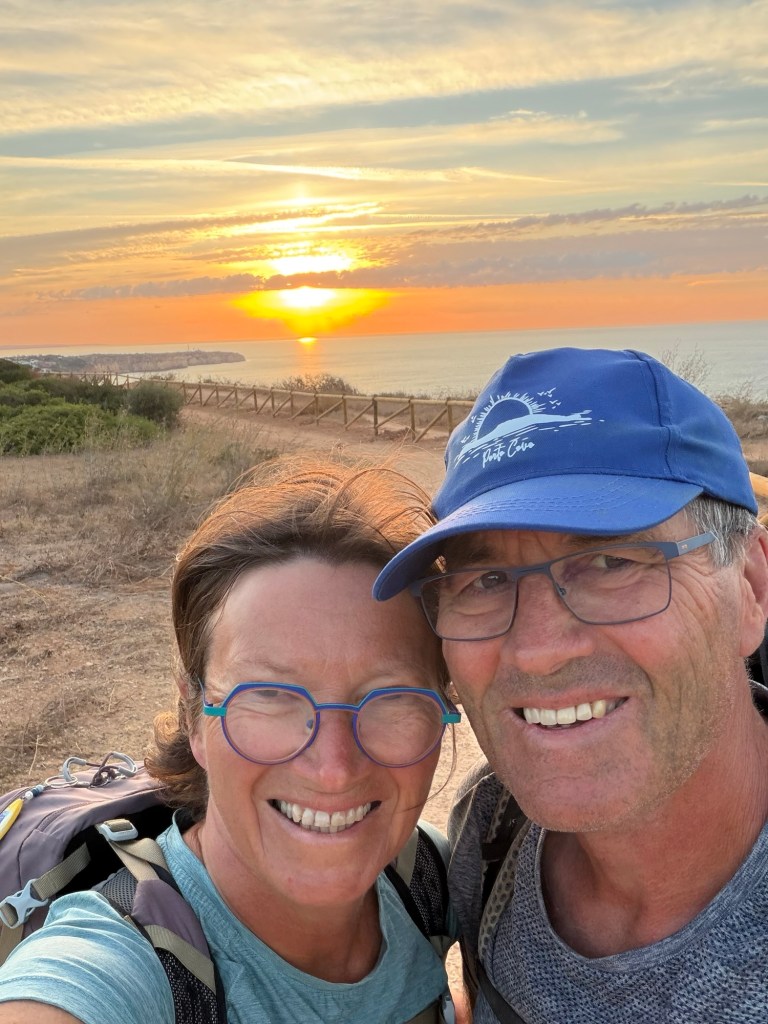
We’re home now, but before the last grains of sand fall from our gaiters. I thought I would just write a final review of our first multi-day, walking adventure.
I should probably start by saying that we are not youngsters, I’m on the cusp of turning 60, and my husband is just a few years older. But the older we get, the more we are enjoying our little adventures, and after cycling from Provence to the UK and back, this summer, we thought we would try something new.

We had considered various options for our first walk, looking at some sections of the Caminos, the South West Coast Path, and others, before we found a link to the Rota Vicentina.
It was far enough, from start to finish, to be a big adventure, and was along what looked to be a stunning coastline too. It seemed to have easily manageable stages, and it would give us the opportunity to explore Portugal as well.
There was also a range of different accommodation options, in all the towns and villages. So we took the plunge, ordered a little guidebook, which covered both the Fisherman’s Path and the Historic Way, and booked some flights.
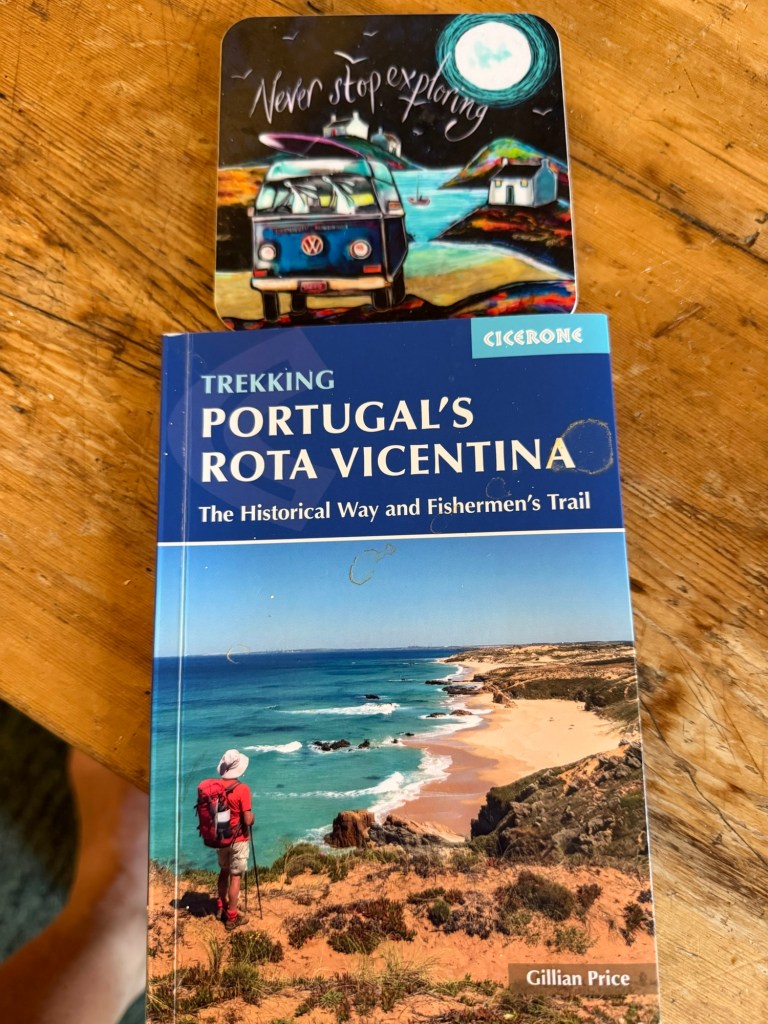
We always like to have lots of things planned, so we had got everything booked, by the end of February. This may have seemed ridiculously early, but having read posts on the Facebook Group, it appeared that finding places to stay (especially in some of the smaller villages) can be a bit of a challenge, nearer the time. We were also able to find places, every couple of days, where we could wash clothes too.
All we had to do then was to buy rucksacks, and to simply look forward to the beginning of October, and doing something new.
We had decided to walk the full trail, from Sines to Lagos, and because we had absolutely no idea how we would get on, walking back to back 20kms, over a series of days, we built in 2 rest days too. One at Zambujeira, and the second at Carrapateira, where (if needed) we would be able to nurse our aches and pains and have a breather, before heading on again.
Between booking, and setting off, I kept an eye on the FB group, following questions that were being asked and getting a sense of the general responses.
Apart from the regular queries about where to stay, there were 4 other main themes.
1. Could you buy food and drink easily, on the stages
2. To use sticks, or not, especially to help walking through the sand
3. What to wear on your feet,
4. Is it as easy as suggested?
So, perhaps I’ll respond to each of those, based on our experiences during the last 2 weeks
1. Food and Drink
Starting at Sines, we were able to treat the first day’s walk into Porto Covo as a bit of an opportunity to settle in and one of the things we said at the end, was that we wouldn’t pass a bar without stopping.
We may have had water with us, but it was unseasonably warm, so we would be stupid to turn down any chance of having a drink.
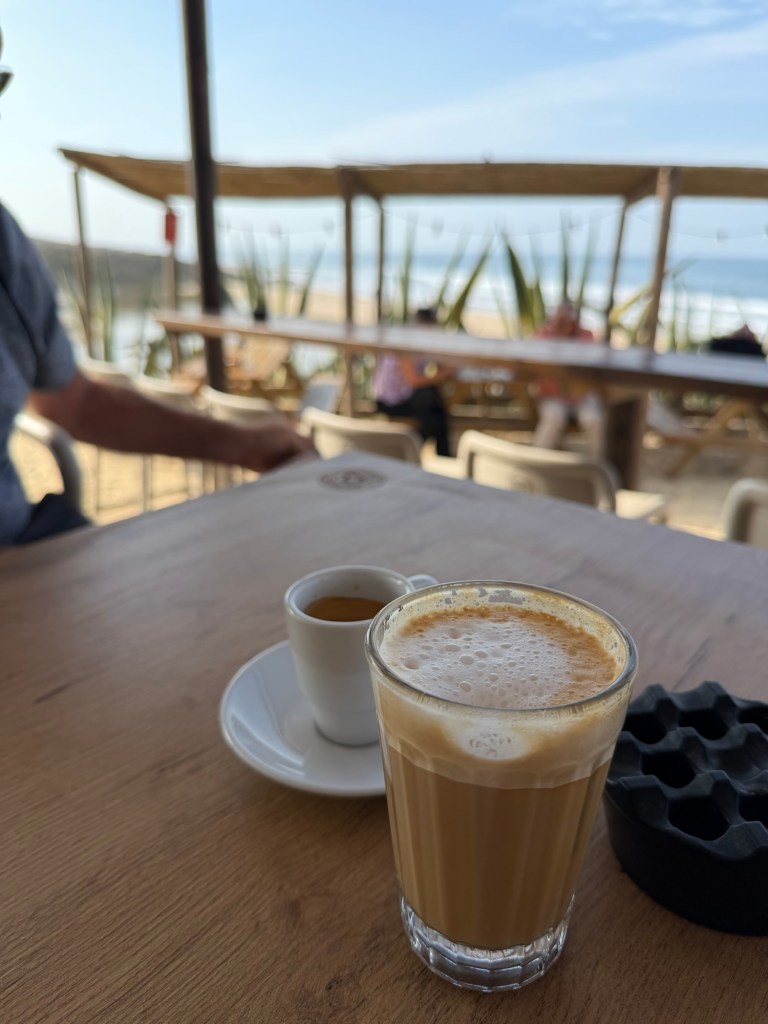
Along the trail, some of the little villages have cafes, in the centre and they were clearly thriving, busy with walkers, as well as locals too. On other stages there were beach bars, and we were true to our word, taking the opportunity for a cold drink (and a coffee) before continuing. Yet on some stages there is nothing, between leaving one village and arriving in the next.
We each carried 2 litres of water each, with electrolyte tablets in them, and scoured google maps to see if there were any bars, cafes, or mini-markets during the next day’s walk. We always had snacks in the bags, and found rolls and cheese, or bought sandwiches before we left, so that we could simply sit at the side of the path and have a picnic, whenever hunger struck.
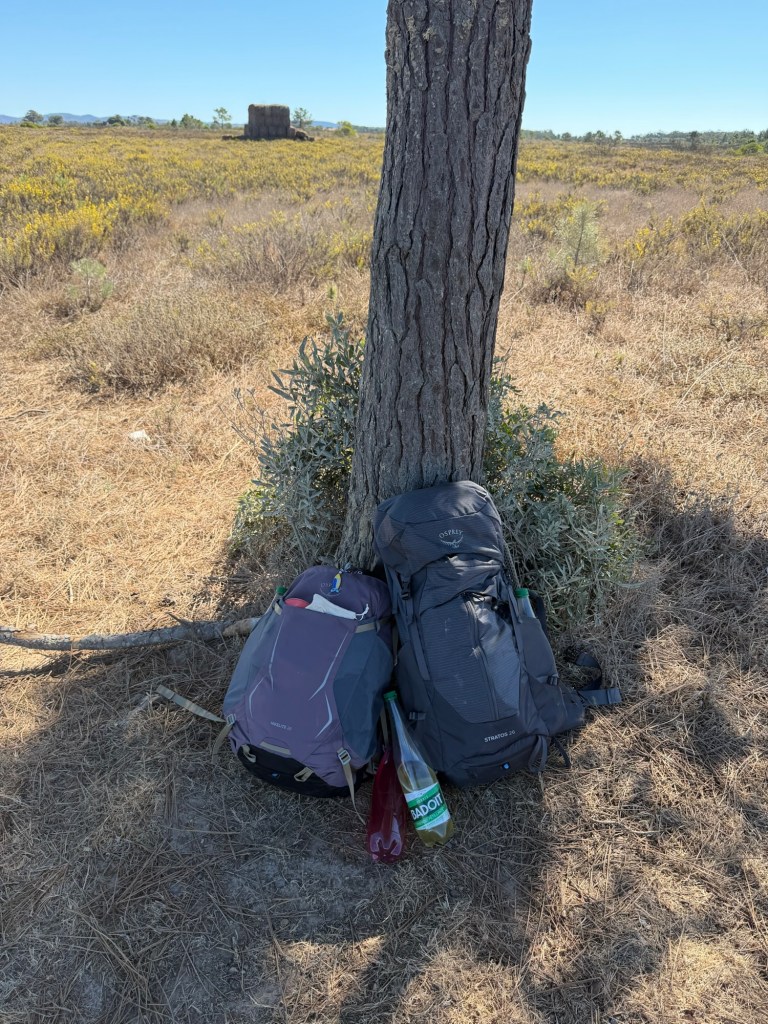
It worked well for us, and the lesson learned on that first day, to always stop if we passed a bar, served us well for the rest of the walk.
2. To use sticks, or not?
I think the best answer here is to do what you feel comfortable with. We have never walked with sticks, and at no point on the route did we feel that we needed them.
There is a lot of sand, and some steep rocky climbs and descents too, but even with this being our first multi-day hike, we never felt that we needed sticks to help us through some of the more challenging sections.
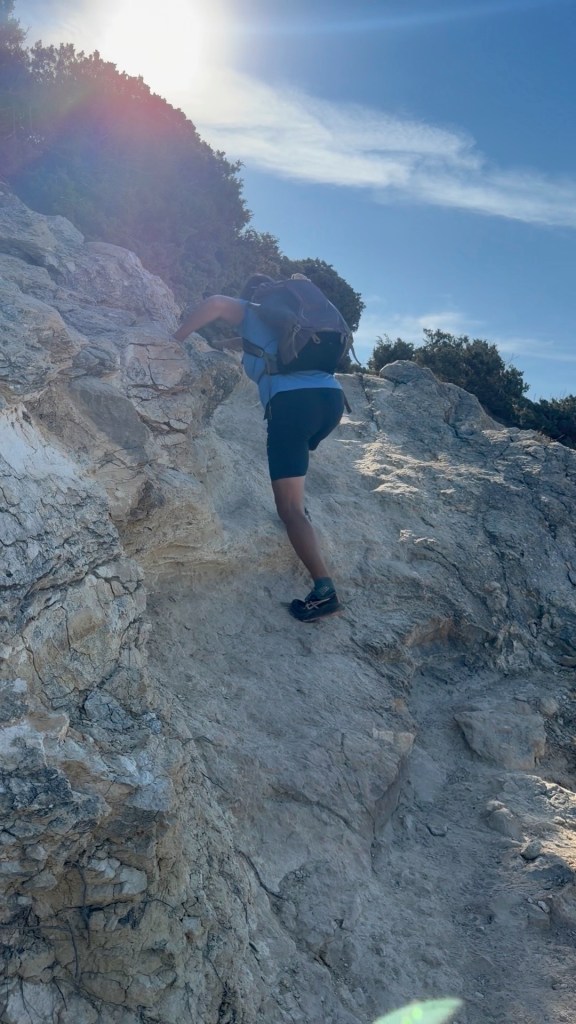
I have a feeling that if I had taken them, simply because others had recommended them, then I would have felt awkward and ungainly, worrying more about what to do with the sticks than focusing on the route.
Like everything, there is no right, or wrong answer. Just do what feels comfortable for you.
3. What to Wear on your Feet?
I think this was the most regular topic of conversation, and I watched this one closely, as I have walking shoes, but find them too warm, in hot weather, so knew I would have to buy something better, for the trail.
A lot of posts mentioned trail runners, and a lot more ,mentioned sand-gaiters, with a big difference of opinion whether they made any difference to the walk, or not.
We knew that the route was sandy, with the stage from Porto Covo, being almost exclusively on beaches and sandy cliffs. In the end, there seemed to be no definitive answer, so we popped into a hiking shop and had a chat to a member of staff there, who regularly runs on dunes. Her advice was to get gore-tex lined trail runners, and to use sand-gaiters, so we decided we’d go with that advice.
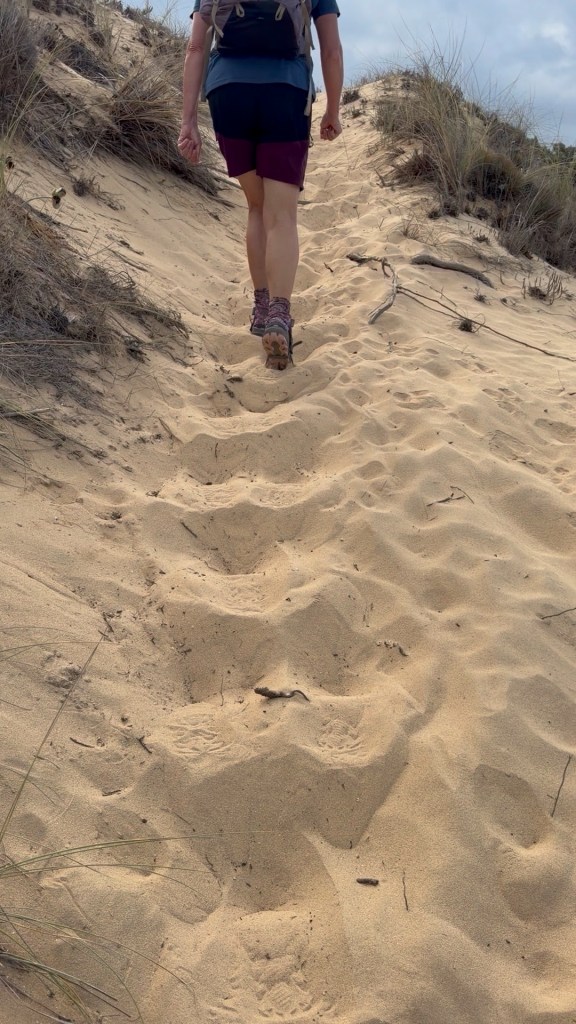
I must admit that before the walk, I had never heard of sand-gaiters, yet by the end of the walk, they were my best friends and I would happily frame them!
To say that that the first couple of days are the sandy ones is an understatement. Almost every day, we were walking in gaiters and with the gore-tex lining of the shoes, we finished each day without a grain of sand having got in,
They were the most effective bit of equipment that we took. The trail runners were great for walking in, were incredibly grippy on the climbs and descents, and not too heavy for the sand, either.
If you know you have to buy new for the walk then I couldn’t make any better recommentdation. No discomfort, or blisters during the whole adventure.
4. Is it As Easy as suggested?
A lot of the posts we read described this as an easy hike, in comparison to some of the other options, but I’m not sure I would describe it as easy.
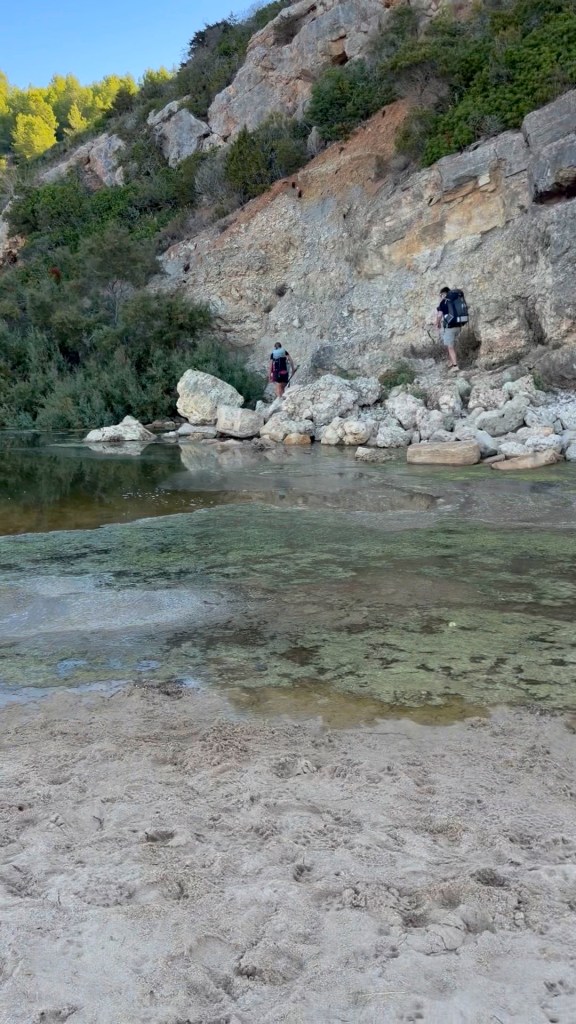
I know everything is relative, and I am sure that it doesn’t come close to some of the other long distance routes. It’s not over high mountain passes, and (sand gaiters apart) you don’t need specialist equipment. There are also plenty of places to stay, and distance-wise it can be done in a compact period of time.
But I wouldn’t describe it as ‘easy’
Easy suggests a stroll, with little or no challenging sectors, nothing to make your knees wobble a bit, or leave you a little relieved to get through a particular section of the walk.
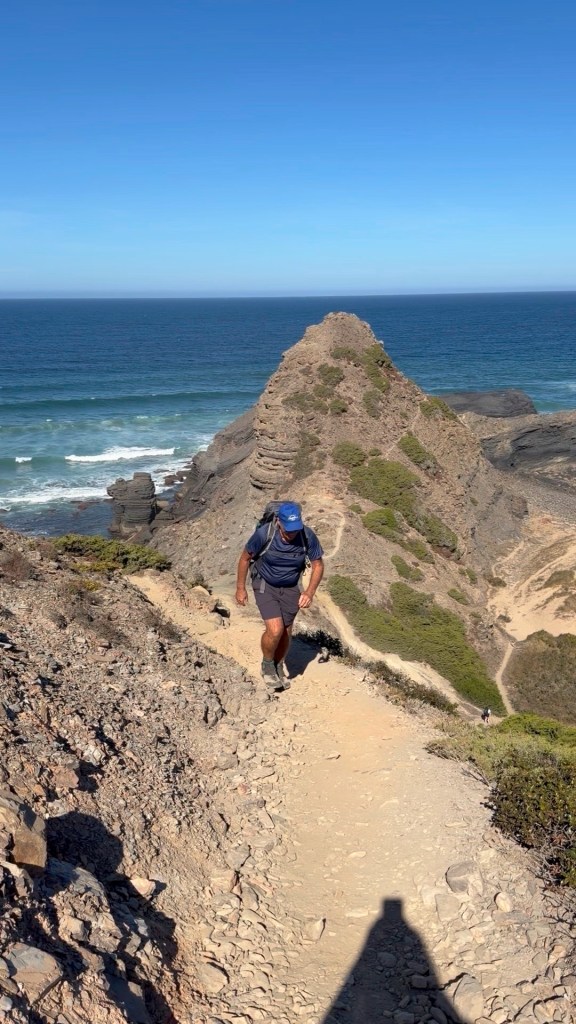
That isn’t how I would describe this walk.
Don’t get me wrong – I loved every moment of it, perhaps even more so, because of the physical and mental challenges it gave us.
Walking on deep sand is tiring. We are fit, after the summer of cycling, and walking too, but kilometres of deep sand sucked the energy from our legs. We were also amazed that the sand wasn’t just at beach level, but on the cliffs too, and at times, we felt we were slipping half a step backwards for every 2 steps we took.
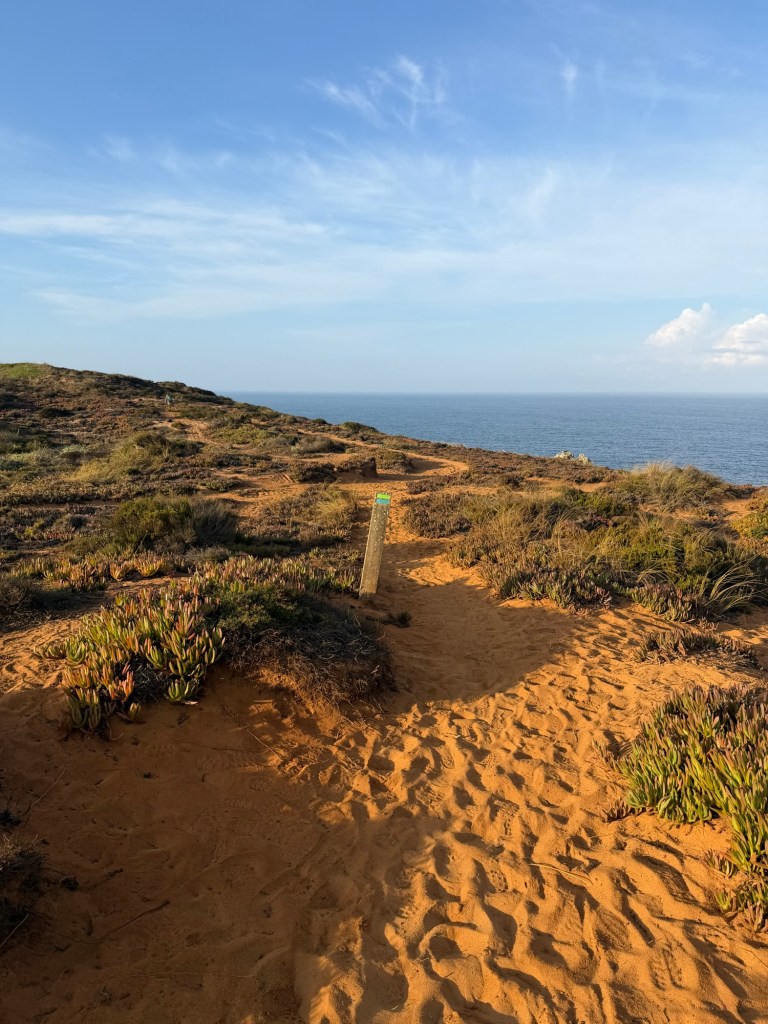
It is just something to be aware of, as despite comments that the sand really ends after the first 2 or 3 stages, it really doesn’t and you’ll be wearing the gaiters, a lot more than you imagined.
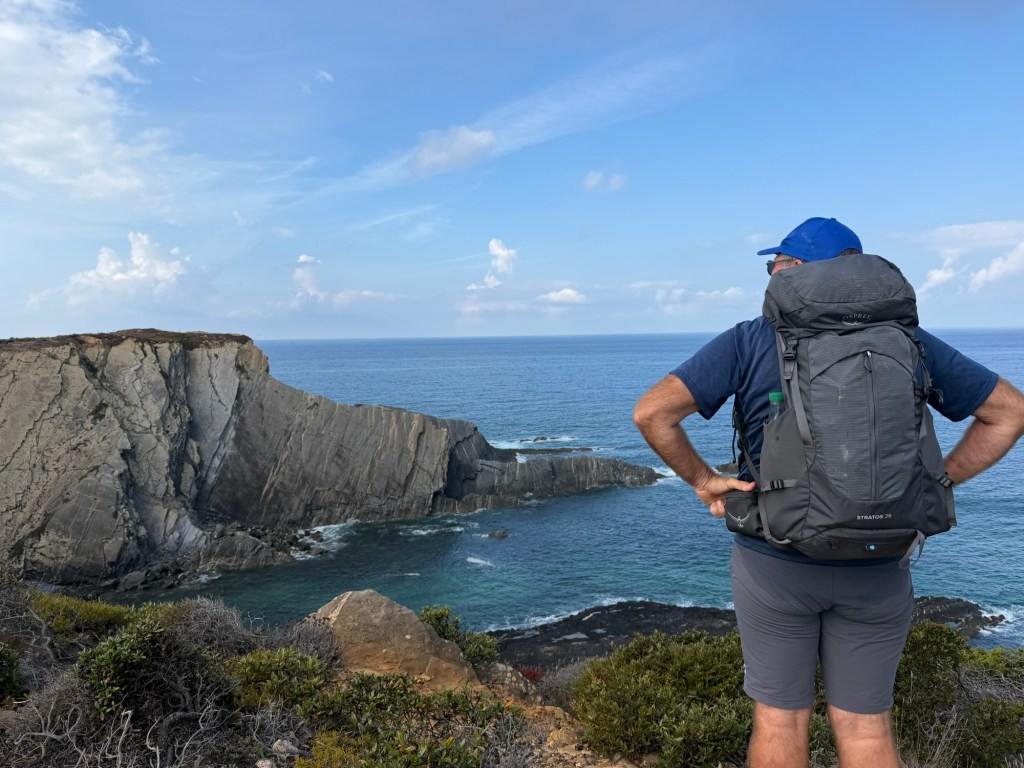
As well as the sandy sections, there are also some steeper climbs and descents, especially later in the walk, where the cliffs are more dramatic, and the path takes you in and out of the little coves and beaches.
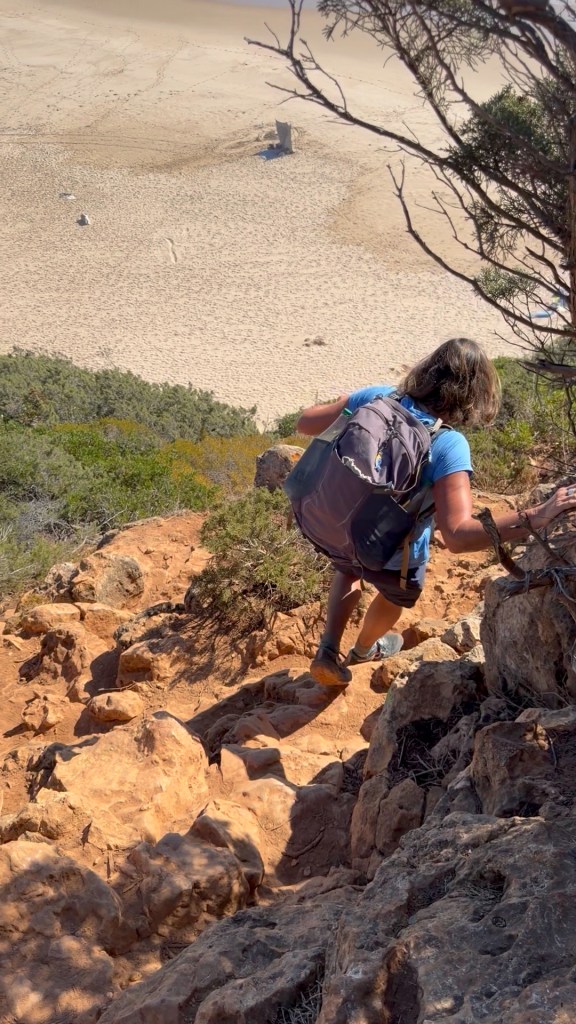
The routes are spectacular, but you do need to concentrate on the path, and your footings, as any distraction may end in a slip or trip.
They are not terrifying, but I have a long history of being able to fall over anything (with numerous injuries as a result). So for me, I found these sections almost more mentally exhausting than physically. But the views from the top, or the sight of a peaceful, unspoiled beach kept the smile on my face.
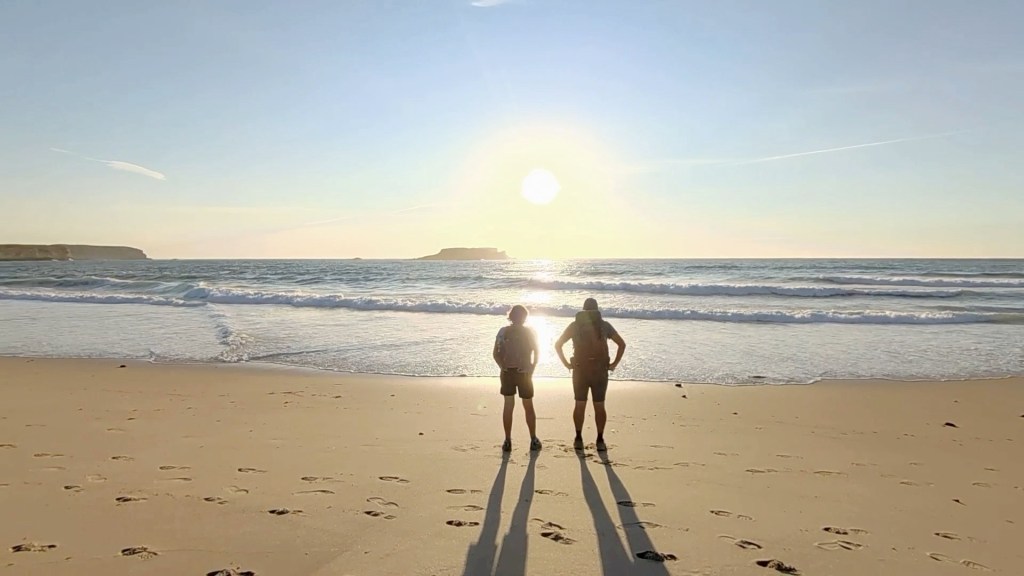
I suppose what I would say is that this is not an easy walk, but more of a wonderful hike. It’s a delightful mix of terrain, along a spectacular, and wonderfully wild coastline.
We found that it challenged us enough to take us out of our comfort zone, and simply whetted our appetite for more.
We found the distances of the stages easily manageable, and in the end felt that we didn’t really need the rest days. In fact, it felt very strange, as we had just got used to seeing one group of people on the trail, for them to continue, leaving us feeling we were amongst strangers again.
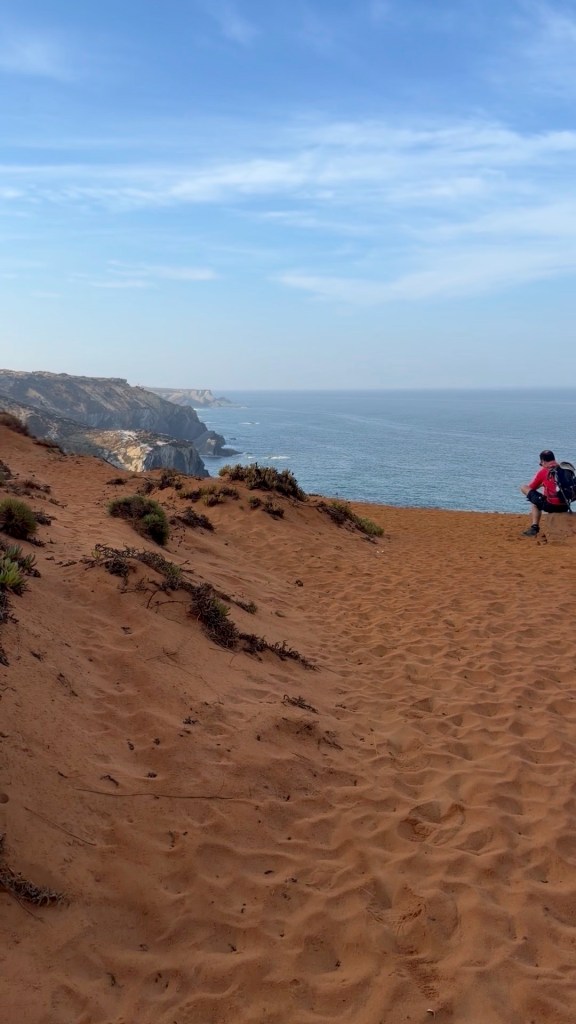
There is a delightful sense of camaraderie on the trail between the walkers. We didn’t stay in hostels, but we could see the friendships that were being built, between those who did, and it was lovely to see.
We had a taste of the camaraderie, when we shared a large table with other walkers, at a restaurant in Carrapateira. It was a delightful, gentle evening, with people from Italy, Belgium and Germany, sharing our experiences and just enjoying each-others company.
By the time we arrived in Lagos, we weren’t ready for the walk to finish, and had time allowed, we would have been very tempted to just turn around and walk back to Sines.
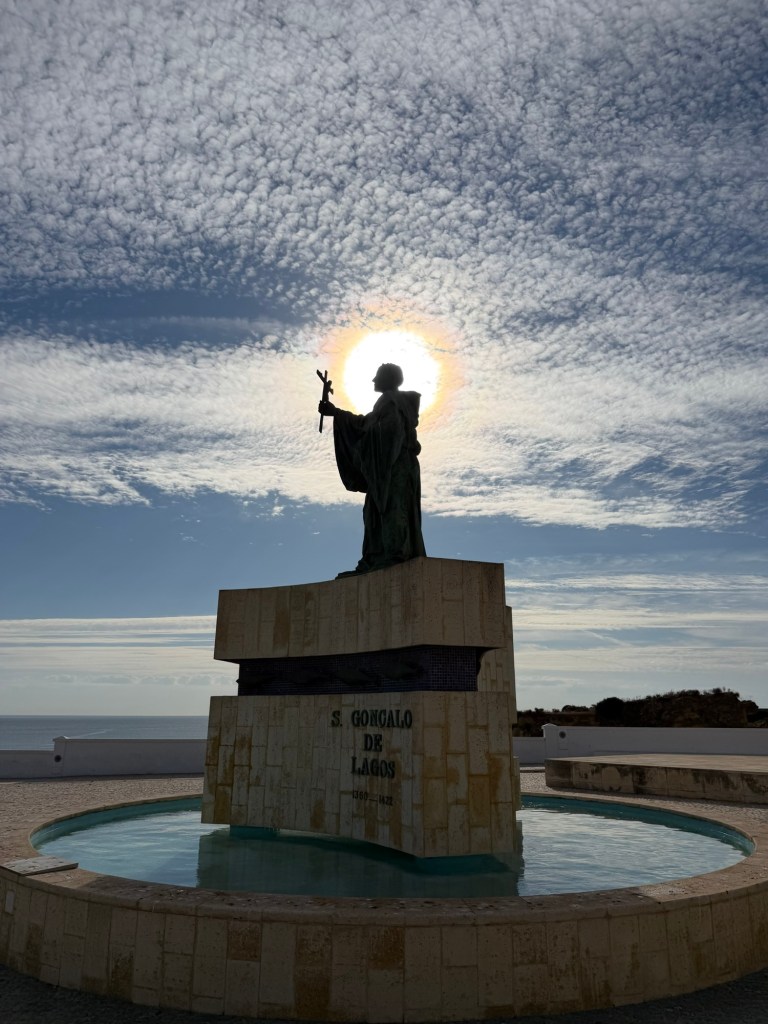
It was our first experience of an unsupported multi-day hike, and I think it was the perfect choice, as it has just encouraged us to look for more.
The Rota Vicentina is a stunning route, along a dramatic and beautiful coast that captured a little bit of our hearts.
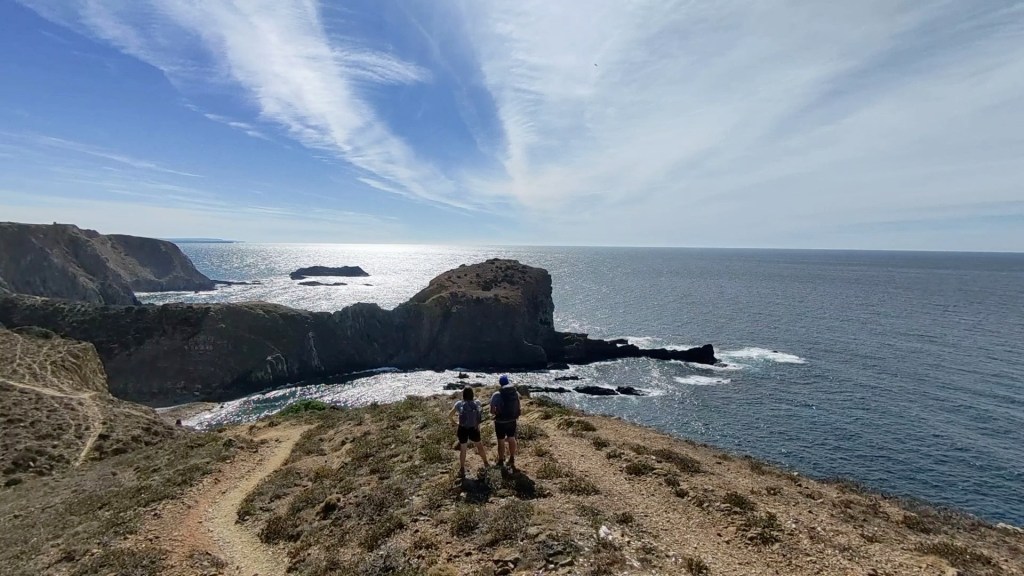
It’s not easy, but it is doable, and the range of people walking it, proved this to be the case.
We can put our hands on our hearts and say that we loved every moment of it, (yes, even the sand!) and we were both desperately sad, when it came to an end.
We are already talking about planning a return to walk from Sines to Aljezur when the wild flowers are in bloom, and the storks are nesting in the cliffs.
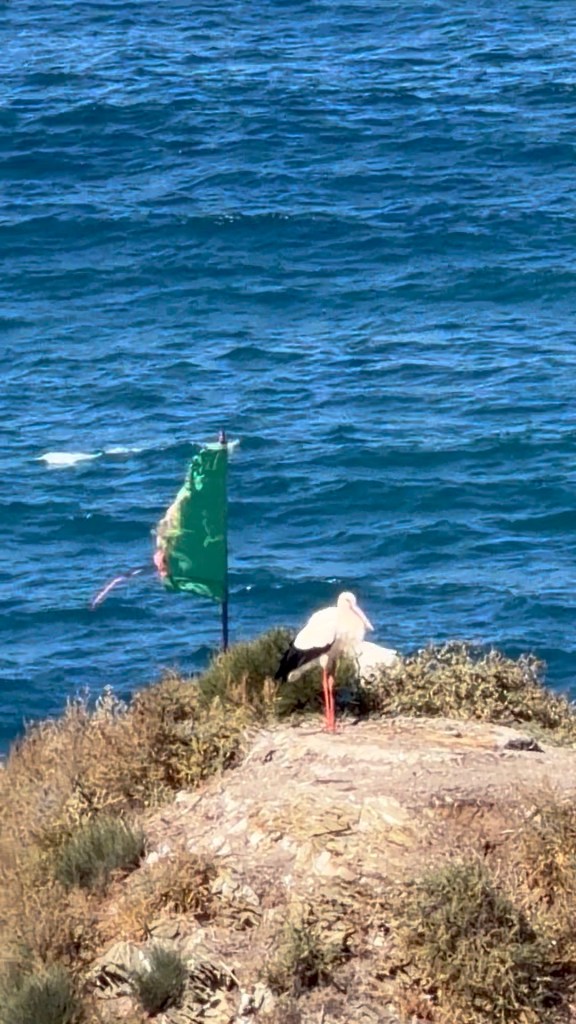
But, for now we’ll simply enjoy the memories, and start planning anew,
If you want to read about individual stages then I wrote a blog, each evening detailing the route, and what it was like. (Andy calls it my homework, but its the easiest way to remember it all)
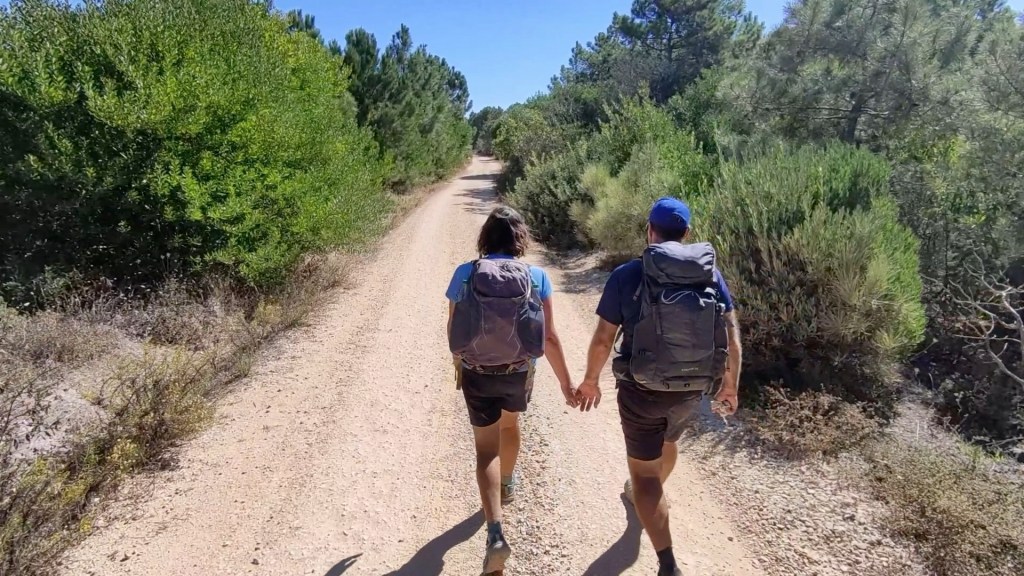
There are also little videos of each day on You Tube Postcards from Provence and Beyond here if you want to know what a specific stage is like.
I hope this is useful, and that perhaps it has convinced you to do the walk too.
You really won’t regret it.

