After 2 weeks of spectacular walking, along the Rota Vicentina, from Sines to Lagos, it was finally time to sit down. Although, the sit down only lasted as long as it took for us to go by train from Tunes to Lisbon.
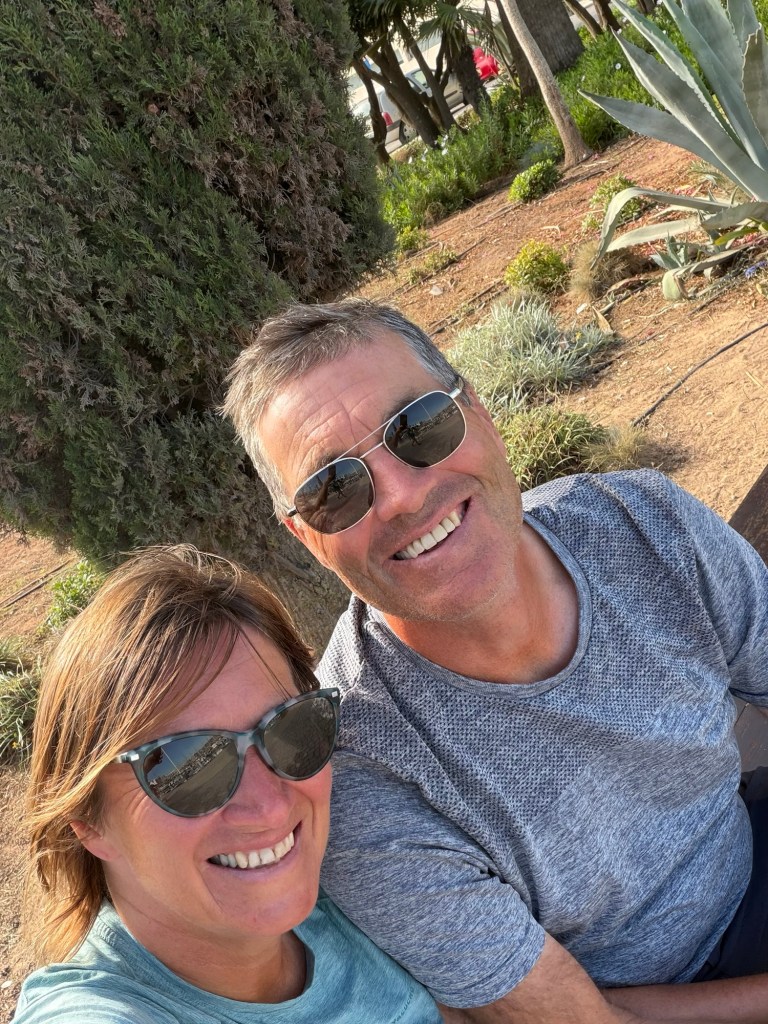
We had always planned to have a final day, exploring the city, before heading home to Provence, as we were fascinated to see what it was like, especially the tile-fronted buildings, which looked amazing. But, as we sat on the train, we both said that we wished we were still walking.
In fact, we agreed that we would have been happy just to turn round and start walking all the way back to Sines, where we had started.
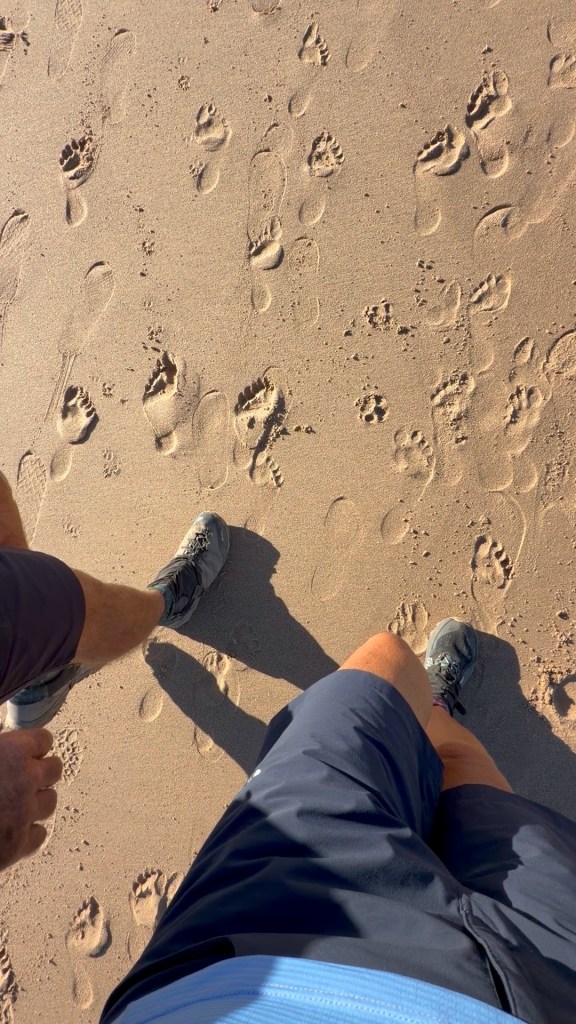
As we have found before, we book these days at the end of a trip, but then get so consumed by the adventure that we don’t give it another thought, until we arrive.
Our experience in Tokyo, at the end of our Japan trip, last November was the same, although at least in Lisbon, we wouldn’t find ourselves walking out of the station into the absolute madness of the Shibuya Crossing!
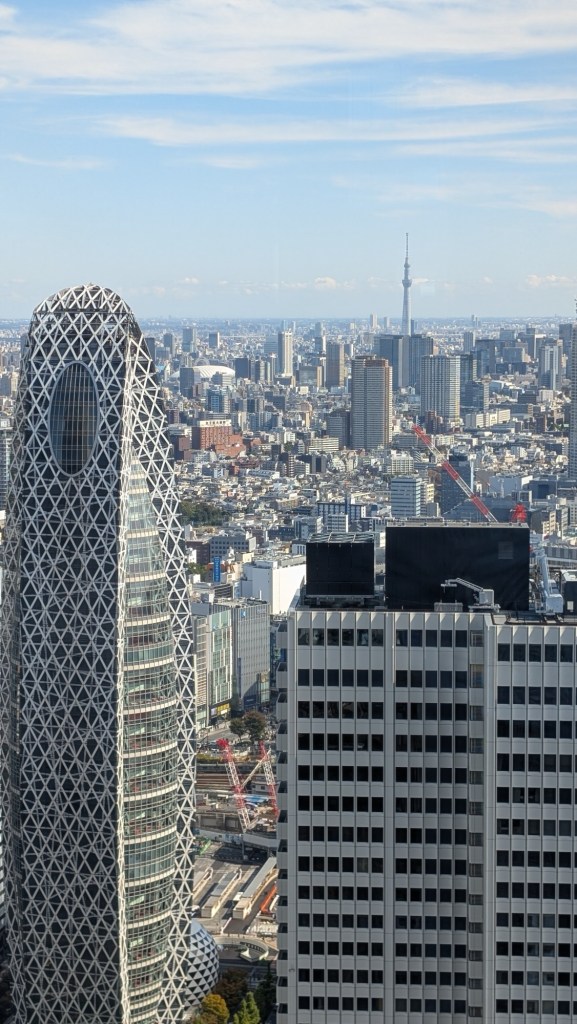
The thing is that after 2 weeks of doing something we have absolutely loved, where we have been immersed in the natural environment, we find that arriving in a city can feel a bit overwhelming, and we almost end up resenting having to step back into the ‘real world’
But, there was no turning back, so we sat back in the seats and watched the glorious Portuguese countryside flash past the window.
We had booked a little apartment that seemed to have a nice little view towards the river, and it turned out to be so much better than we had imagined.
We were dropped off in the busy, narrow streets of the Alfama district, and were encouraged by staff, to go into every restaurant that we passed, as we wandered through to the house.
Once there, we climbed the 4 flights of steep stairs, which would not be an easy task with more than a backpack, opened the door and stumbled inside. We were shattered.
Then, we discovered the view. A little window, with a view across the rooftops to the river, where the boats were dapping about, reflecting a rosy light from the coming sunset. Just inside the window was a little bar-height table and 2 stools.
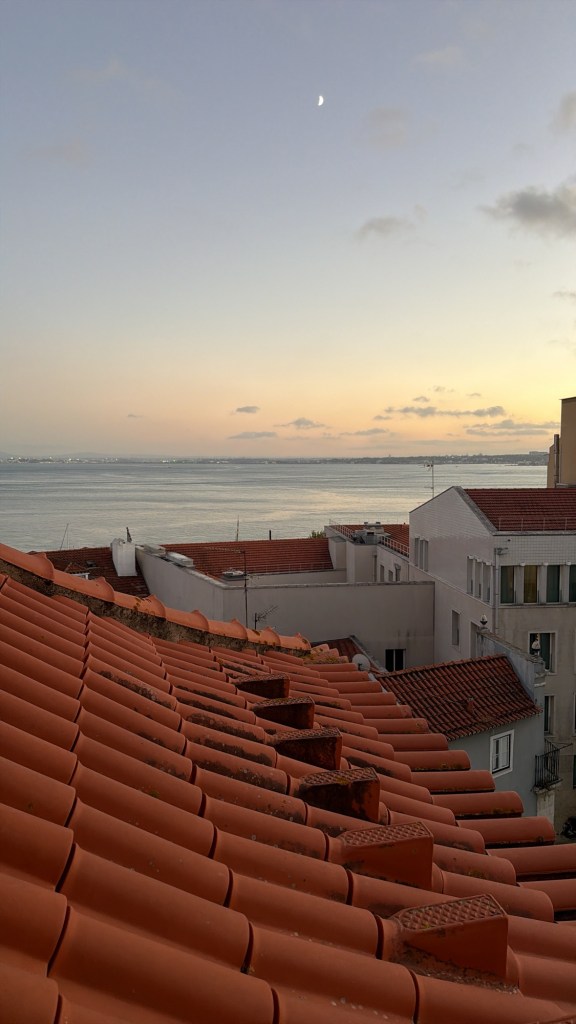
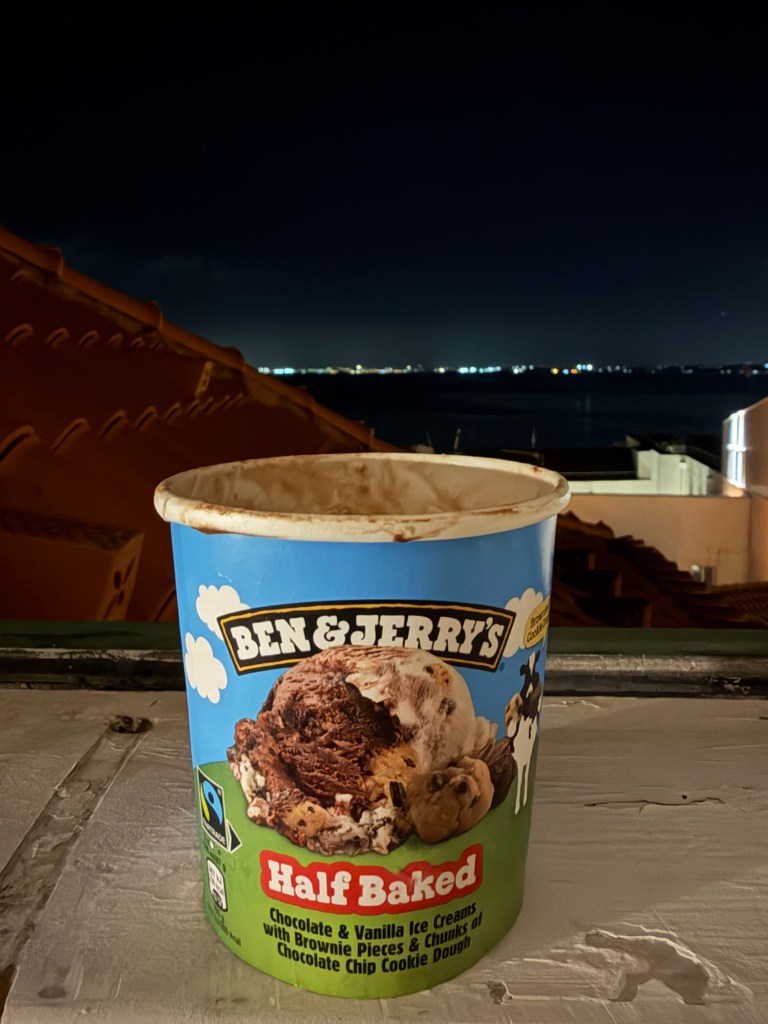
The restaurants could wait! We popped out, found a mini-market and bought frozen pizzas, ice cream and a bottle of wine & headed back to our little view.
We watched, as the sky turned from apricot to indigo, and just chatted quietly about what we had experienced, over the last 2 weeks.
We also looked at information on Lisbon, what to see, where to go and also a bit about its history too, marking points of interest on a map, and realising that a nice little circular walk around would enable us to see many of the places, the next day.
So we now had a plan.
We woke to watch the boats again, sipping tea, as the ferries shuttled back and forth between the yachts, before heading out for breakfast. It wasn’t quite 8.30, but we found somewhere that was open, and then set off to explore.
We started by the river, and the vast open square with the statue of Dom Jose 1 and the Rua Augusta Arch, which must have been a daunting and majestic sight for people, arriving in the city, when it was first built.
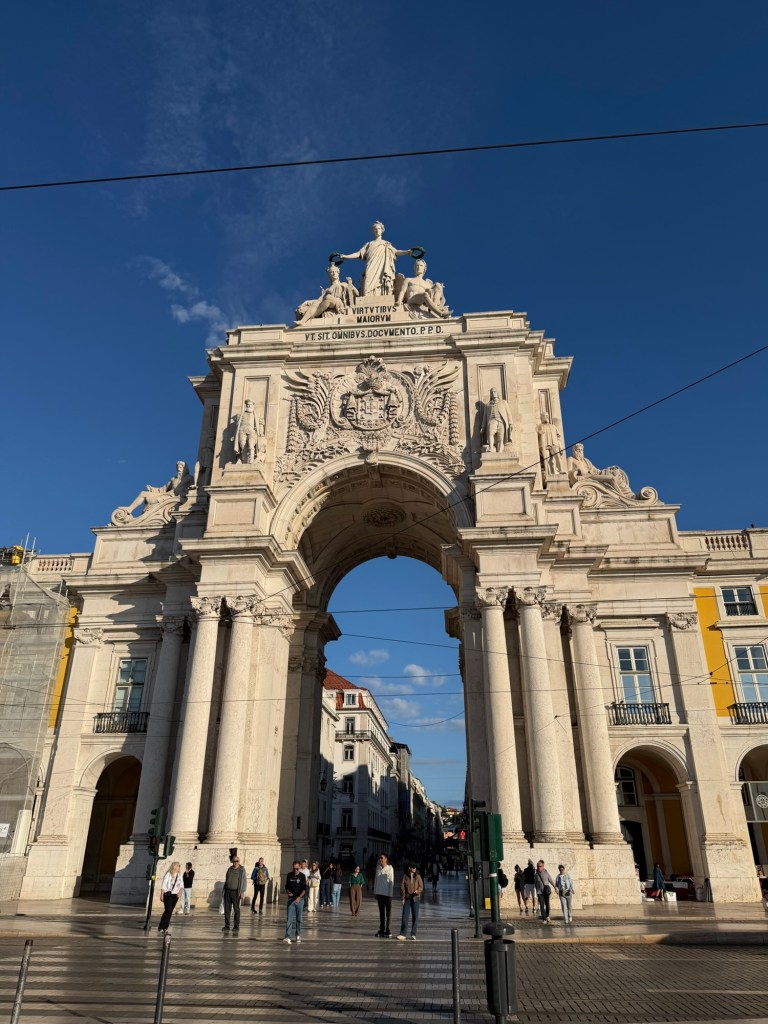
It was so open, and structured in comparison to the warren of narrow streets, just a stone’s throw away, in Alfama. This had a sense of the centre of Madrid & Place Massena, in Nice; elegant buildings, built on a grid system focused around this beautiful riverside square. We were already charmed.
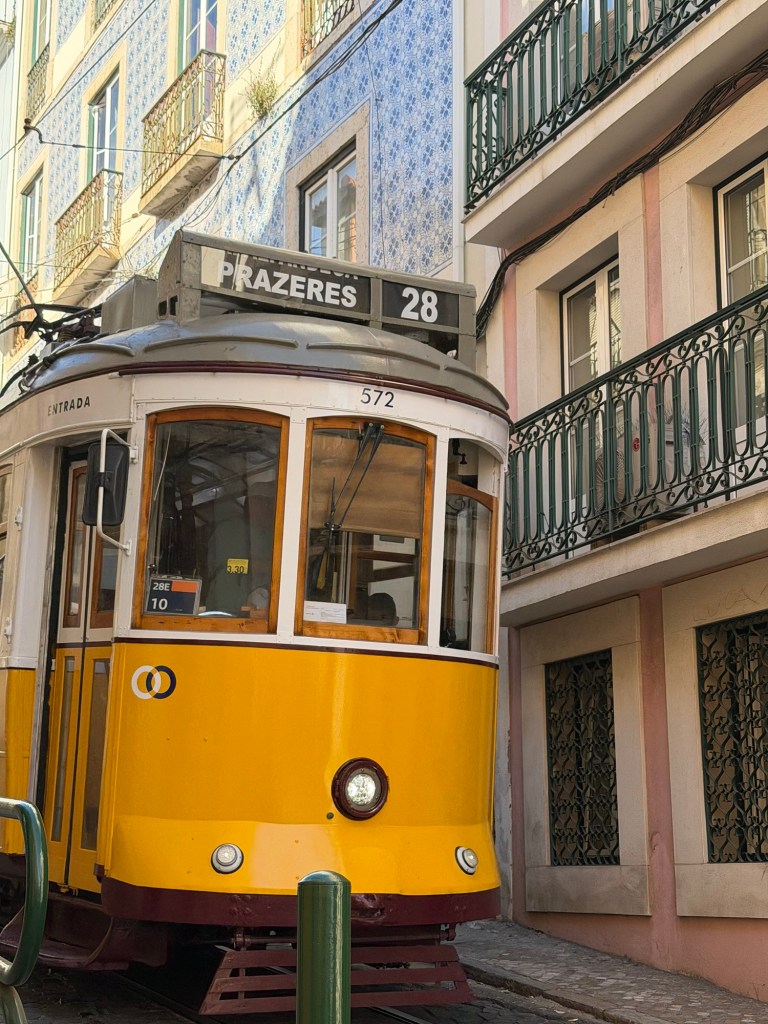
It was also where we first saw the rather wonderful old trams that are still in use, around the city. I love that so many cities have tram networks now, but this is delightful . These characterful yellow and red trams share the load with modern, sleek engineering, and give a timeless feel to some of the views.
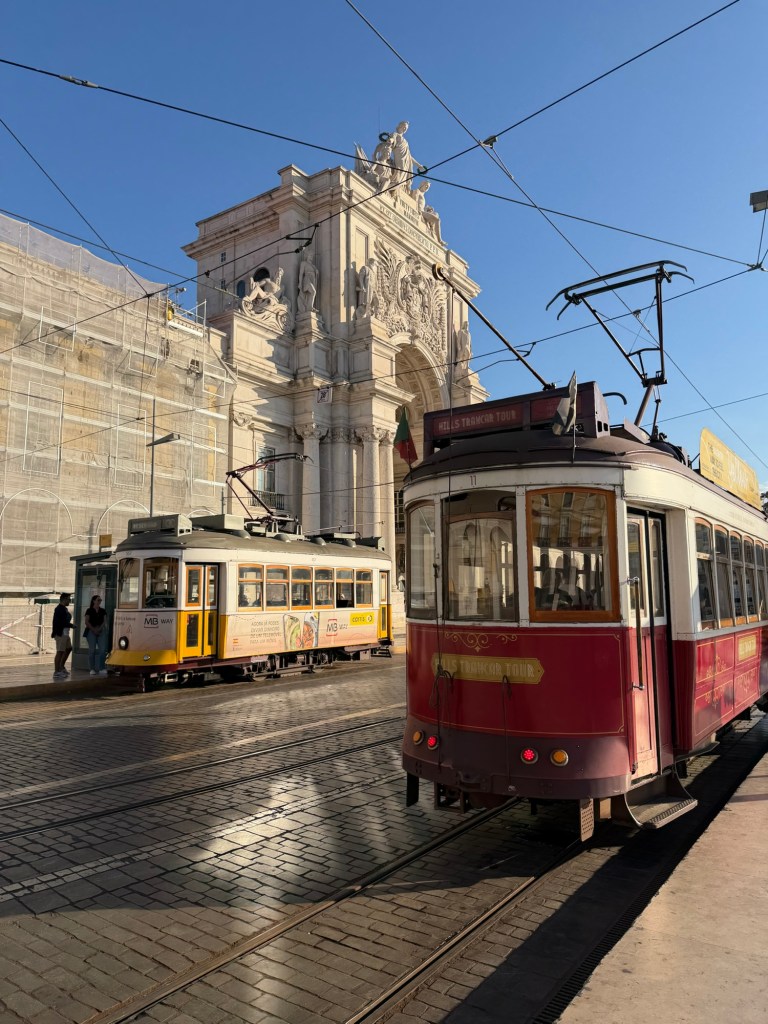
We had a sense that the view down this street, with the tram at the top probably hasn’t changed much since the trams first took to the rails in the 1870s
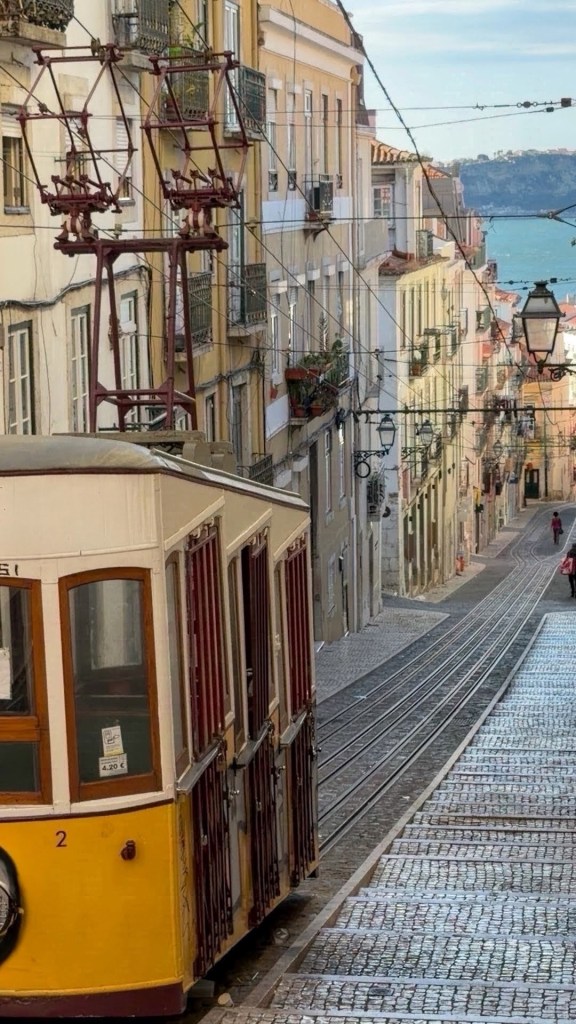
And we couldn’t help but stop and look, every time we heard one approaching, always happy to be watching them, rather than being in one, as they were inevitably packed, with long queues at the stops.
We walked on, stopping to take in the tile-fronted houses and buildings, which are so different to anything we’ve seen before. We had read about them, had seen photos too, but the colours, styles, and designs were beyond what I had imagined.
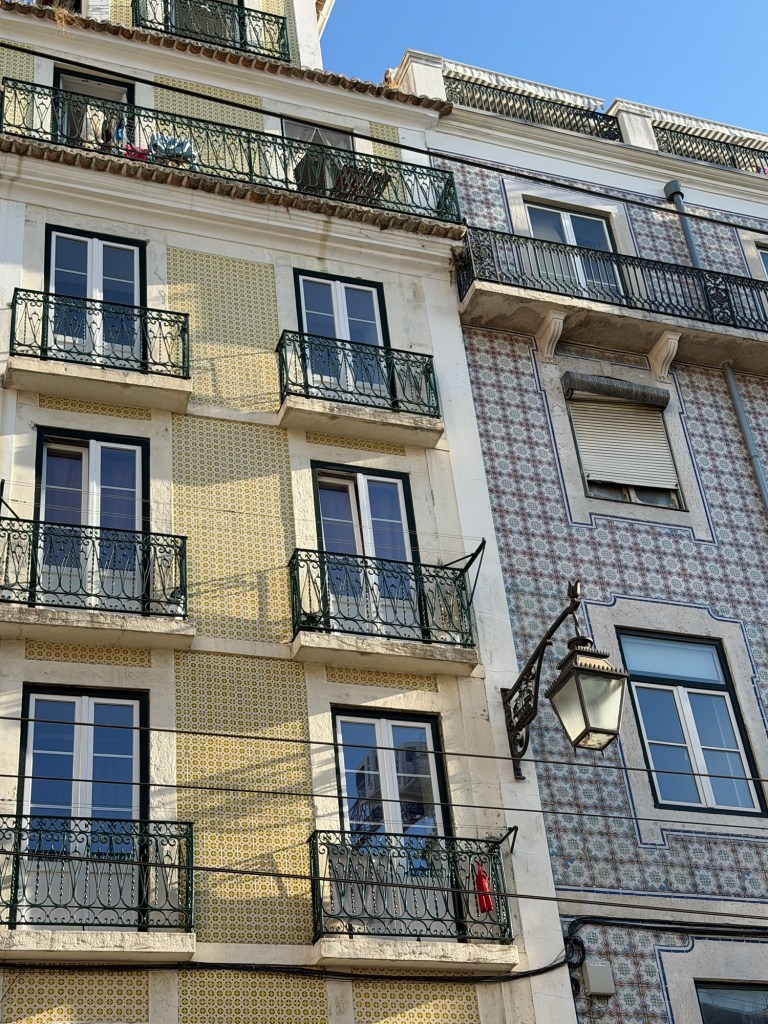
There were beautiful Art Nouveau -style flowers
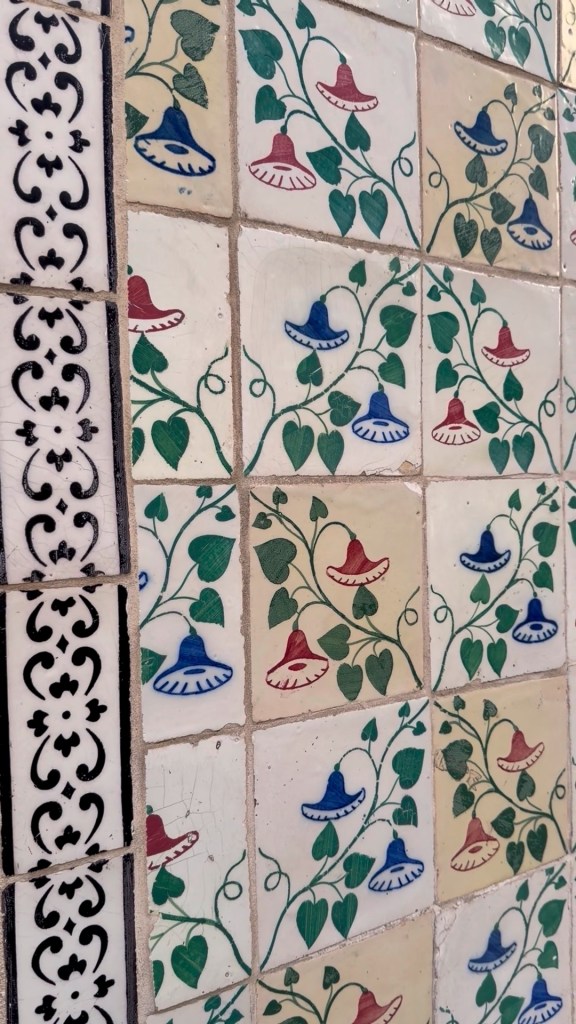
Stylish, and colourful geometric designs
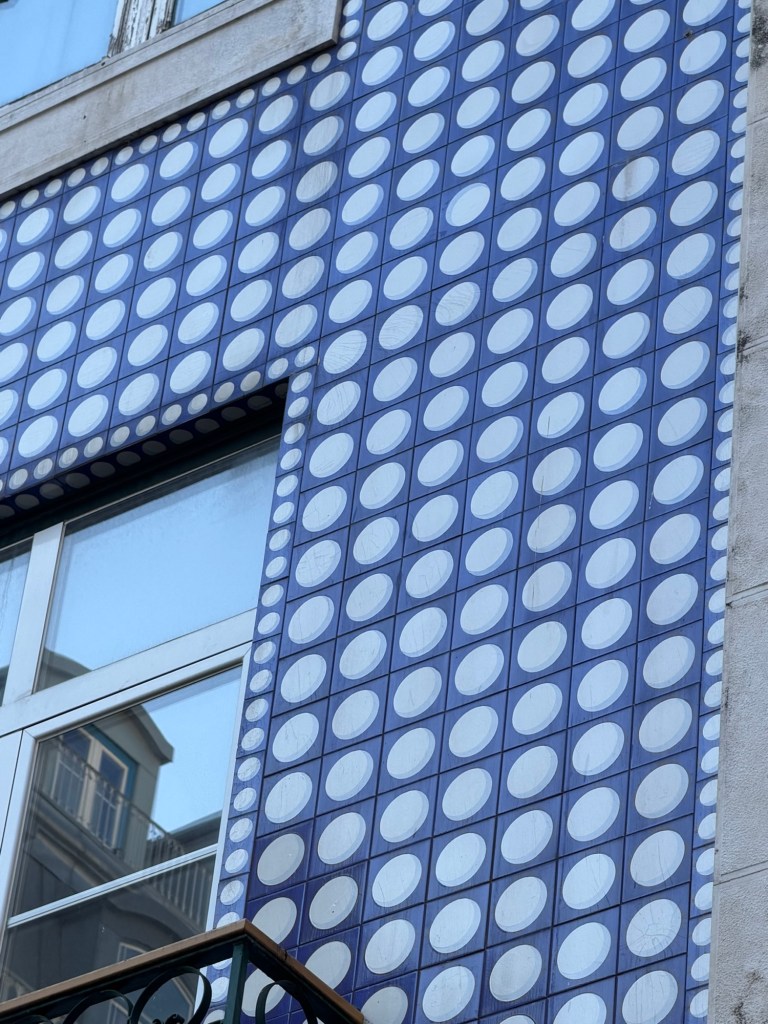
Traditional blue and white patterns
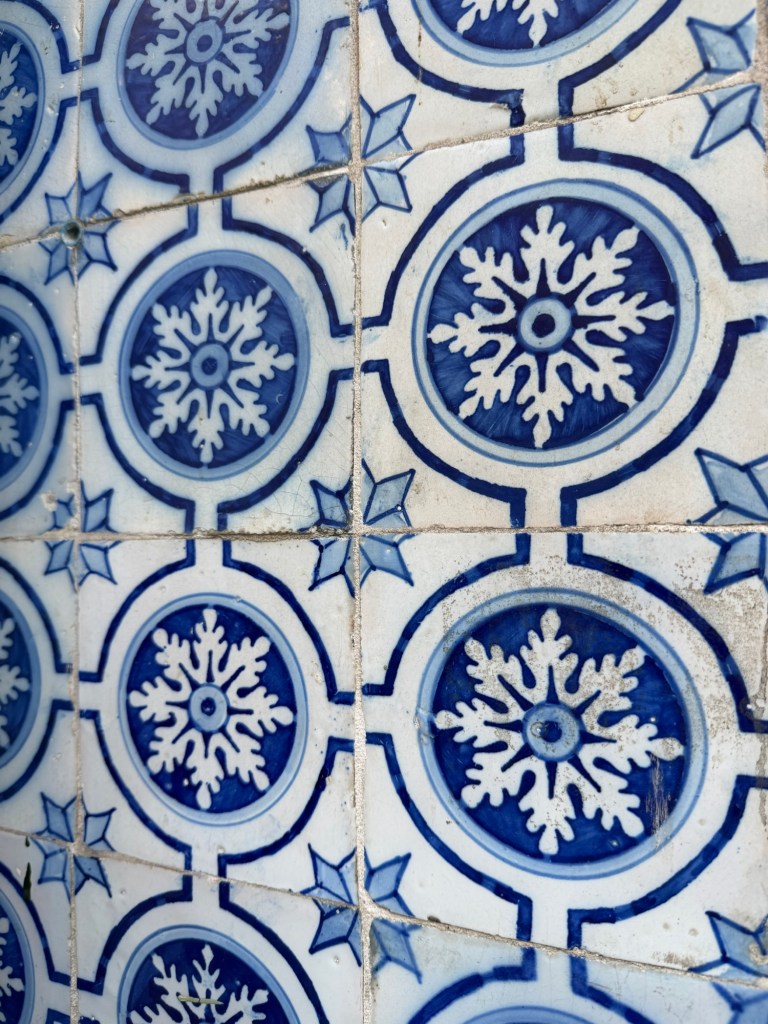
And intricate knots
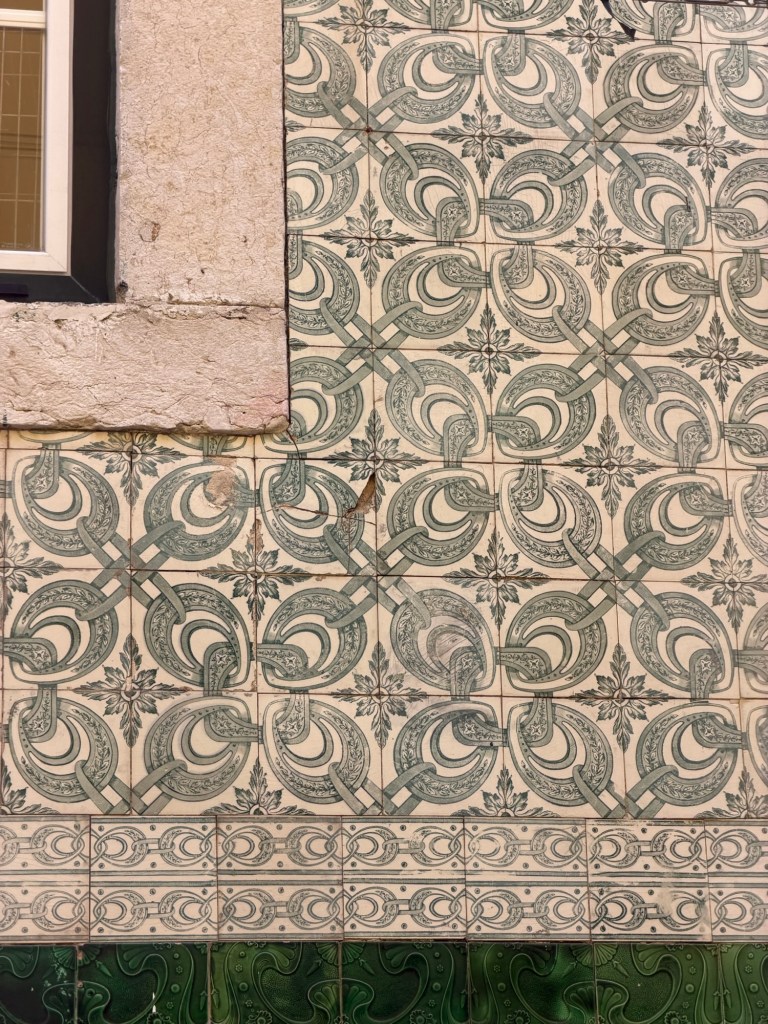
Some looked as if they had been inspired by Morocco
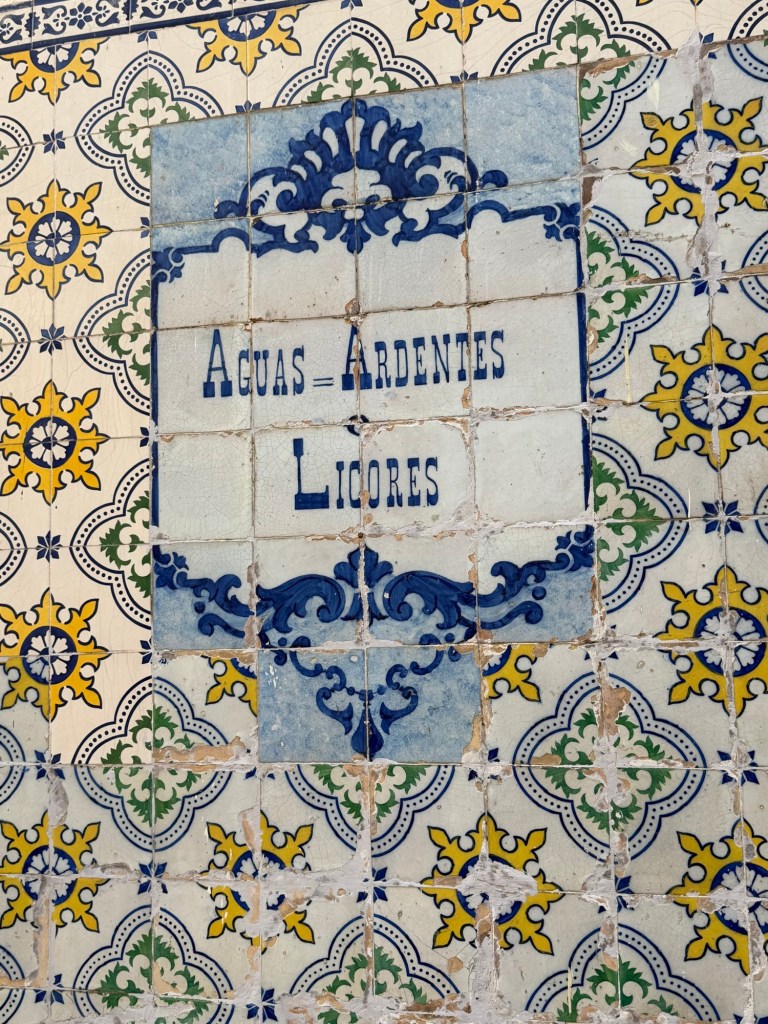
And others harked back to the traditional 19th century designs from the Jackfield Tile Works, in Ironbridge
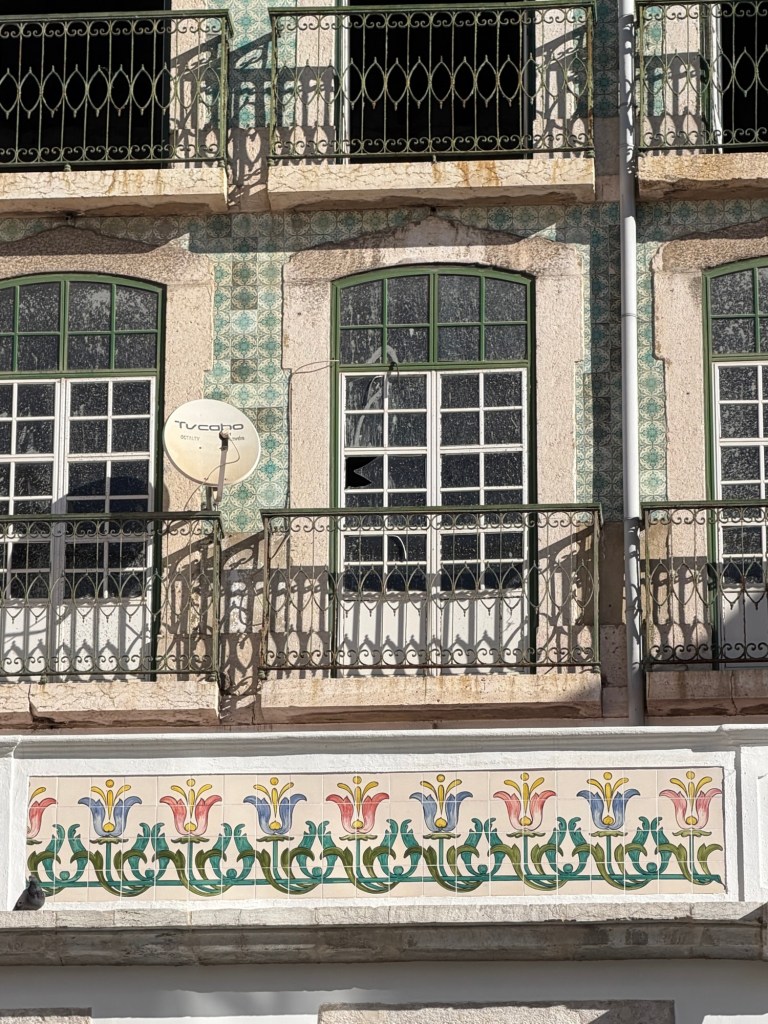
Some house fronts were immaculate, yet others were damaged. We spent most of the day craning our necks to look up, spotting where residents had used any tiles they could find, to make repairs, like here, where an eclectic mix of patterns and styles have been used to fill the gaps. It’s the little details like these that fascinate us
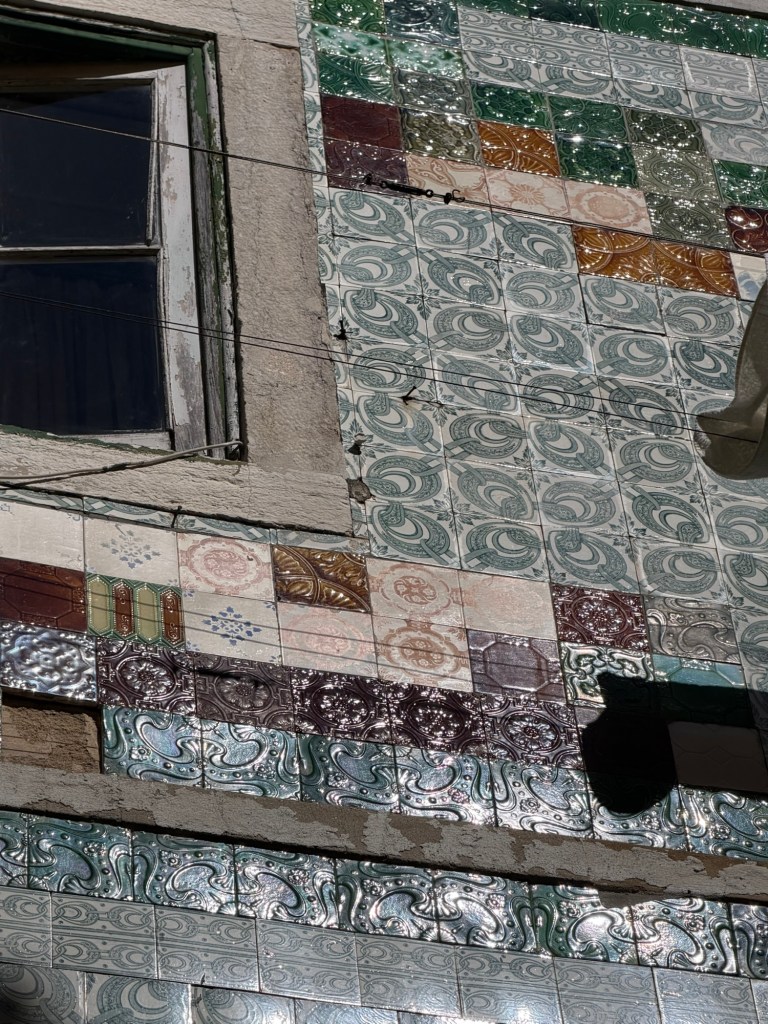
It’s clear that at street level, people have tried to prise the tiles from the walls, damaging them and ruining the frontage, which must be devastating for the owners, as the tiles must be pretty-much irreplaceable
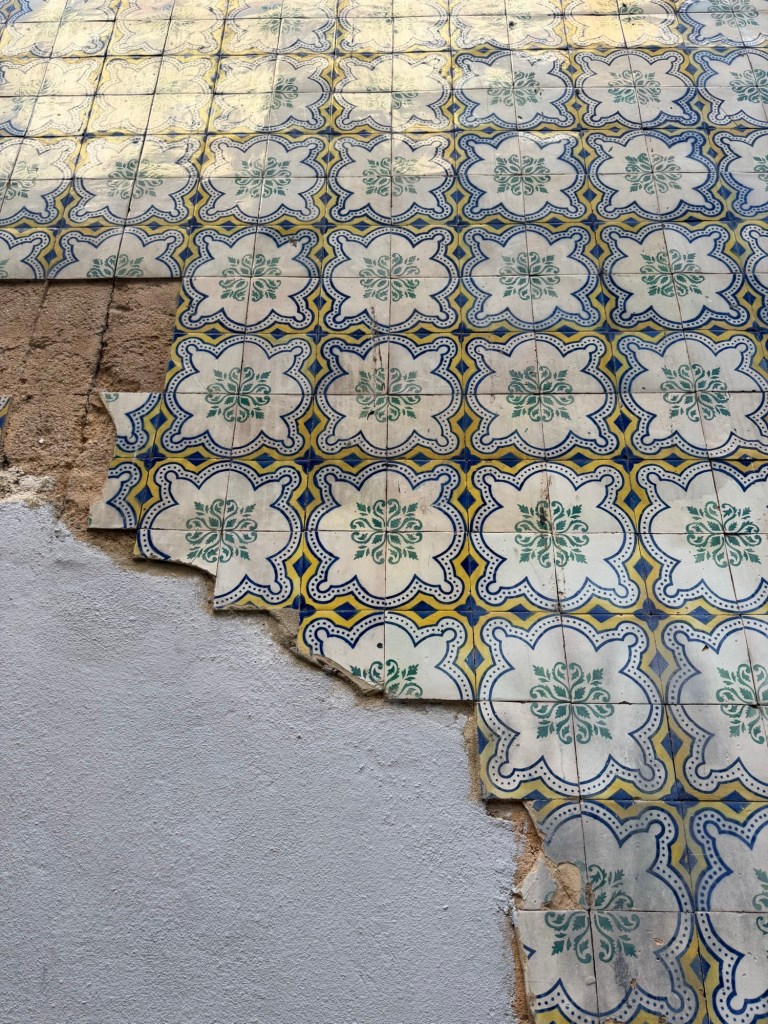
We heard a guide explaining that the costs of maintaining the tile frontages is so high now that many fall into disrepair, as owners can’t afford it. Looking at the tiles, and imagining the work that must go into replacing, or repairing them, I can totally understand.
Wingling our way between our marks on the map, we followed back streets, generally staying away from the main thoroughfares.
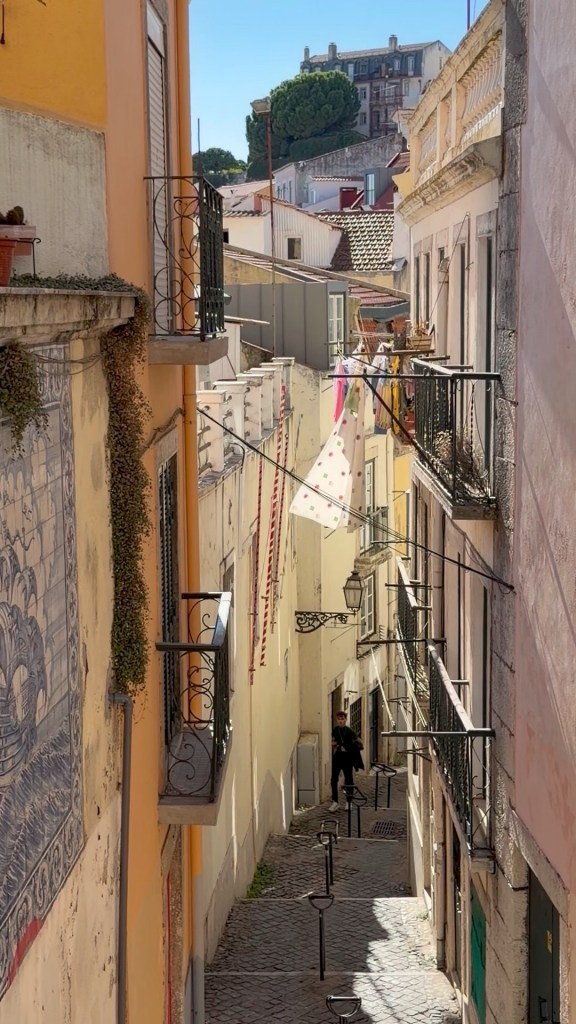
Away from the structured riverfront, we found ourselves walking through narrow streets, where washing was hanging from the balconies of the colorful houses.
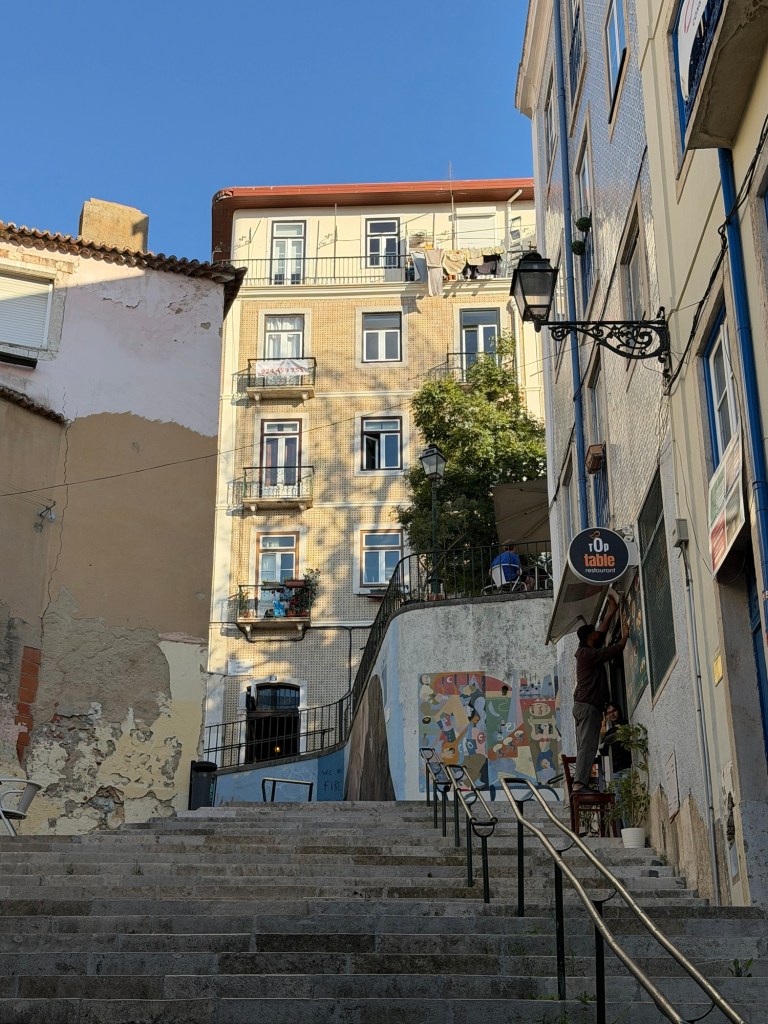
We also started to climb. Lisbon is a city of hills, and we found ourselves following steep paths
And even steeper steps, as we made our way towards the Edward 7th Park, at the top of the city
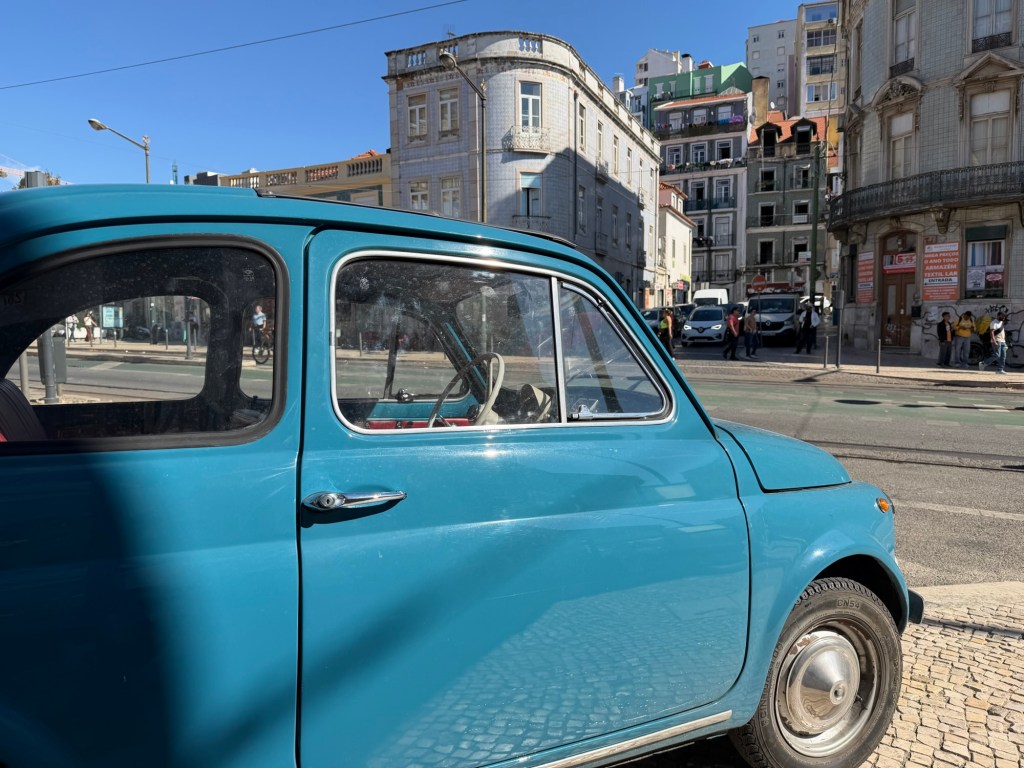
At times we would find ourselves on a road, busy with Tuk-Tuks, and tourist cars in all shapes and sizes, although my favourite had to be the little open-topped Fiat 500!
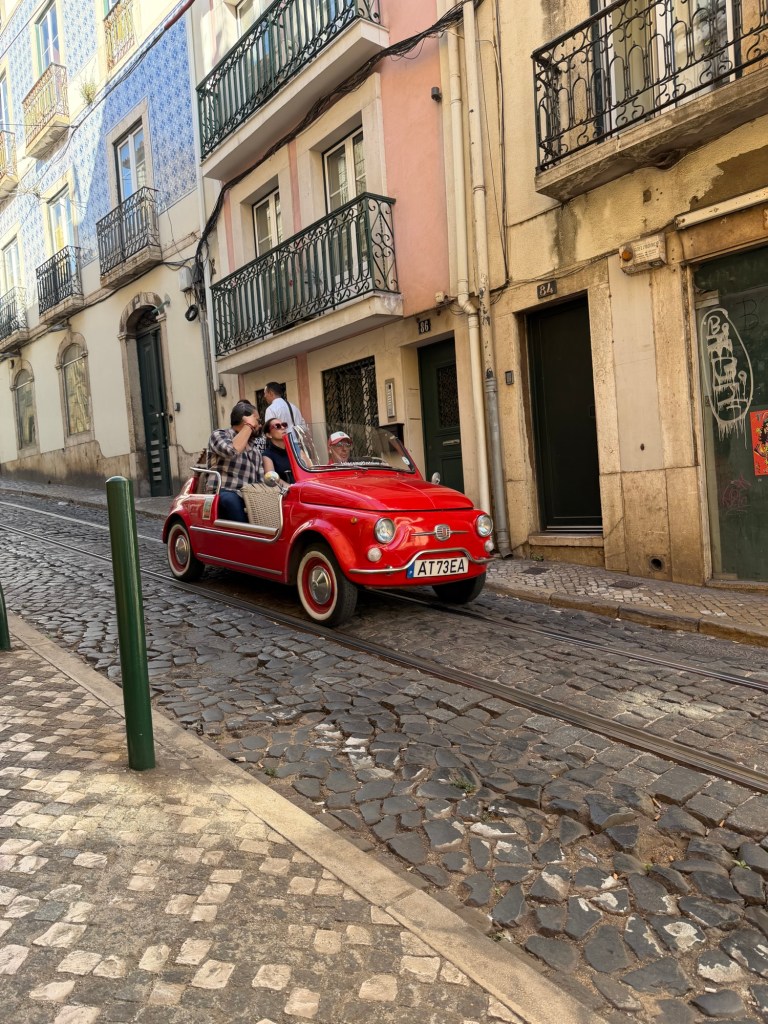
These seem to be the preferred method of transport for a considerable number of visitors, and they would certainly have made the climbs to some of the viewpoints, a little bit easier!
We walked through different parts of the city, getting a sense of how it was laid out and experiencing the sights and smells of the different districts.
The viewpoints ‘miradores’ are on high points around the city, and the views are certainly worth the climbs.
This one – the gave us a wonderful view back to the river, with the railway bridge and the statue of Christ the Redeemer on the opposite bank.
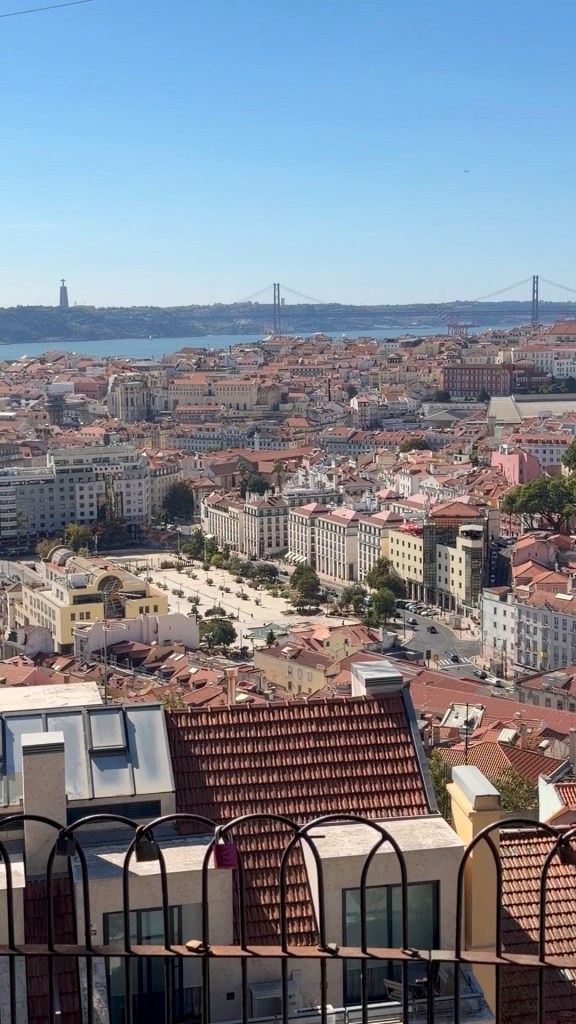
As well as a view of Saint George’s Castle and the ancient heart of the oldest part of the city.
We simply spent the day ambling, enjoying the sights
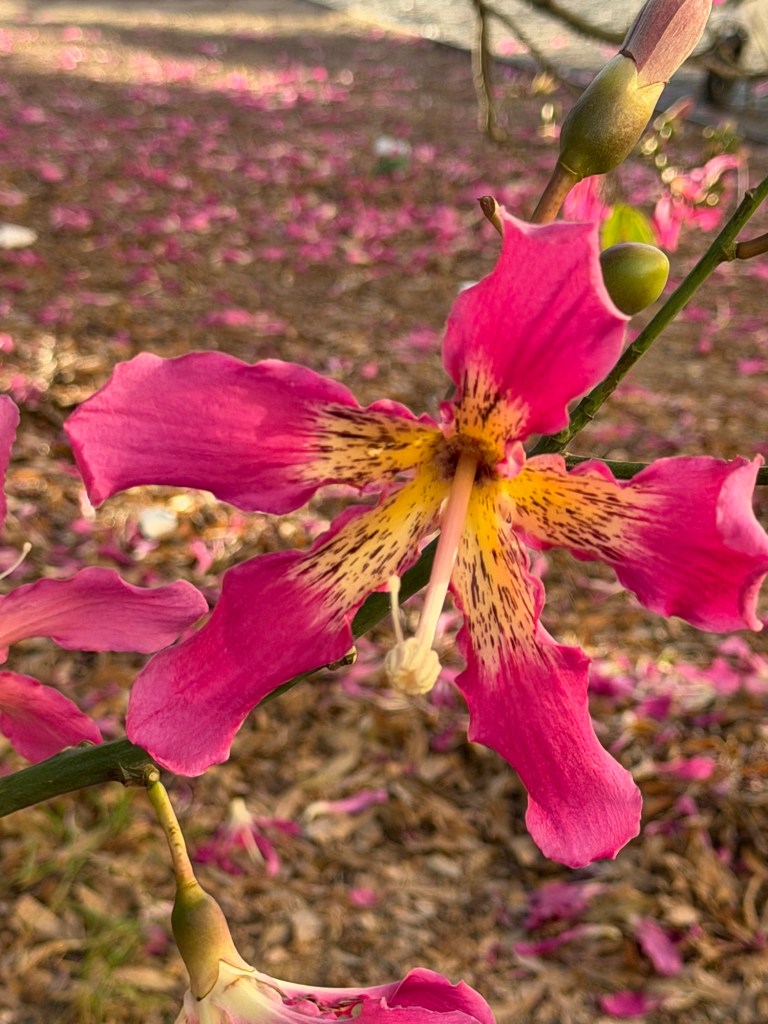
Sitting in parks, surrounded by pink blossoms of the Kapok trees
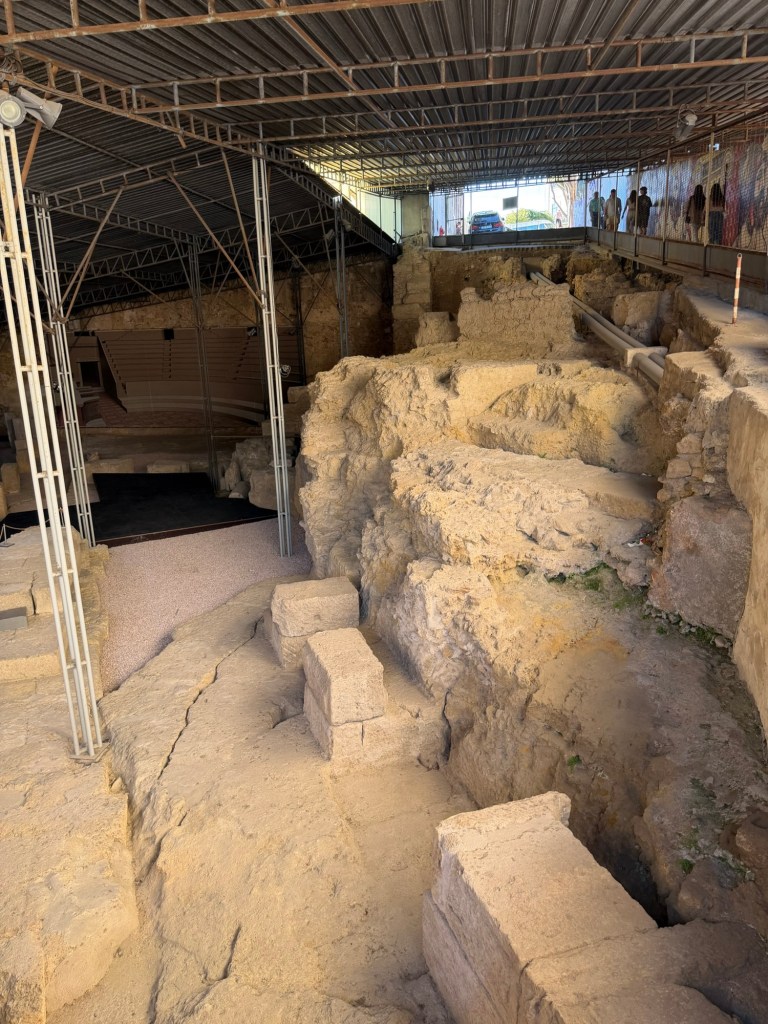
And stumbling across the remains of the Roman Theatre too.
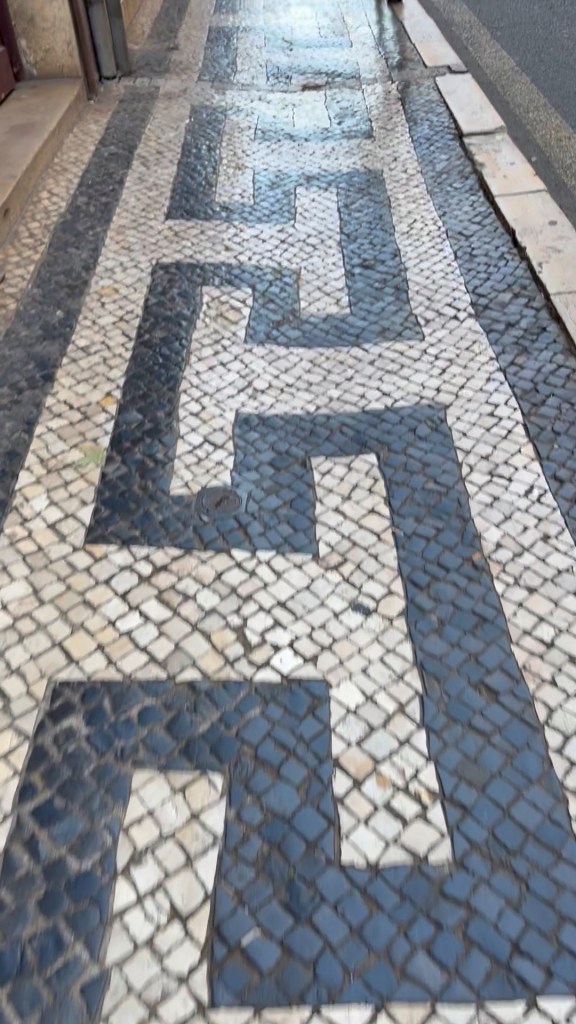
We found ourselves looking down, as well as up. The pavements here are works of art, in their own right. All made of square stone cobbles that we have seen through all the villages on our walk, but many have been laid in complex black and white patterns.
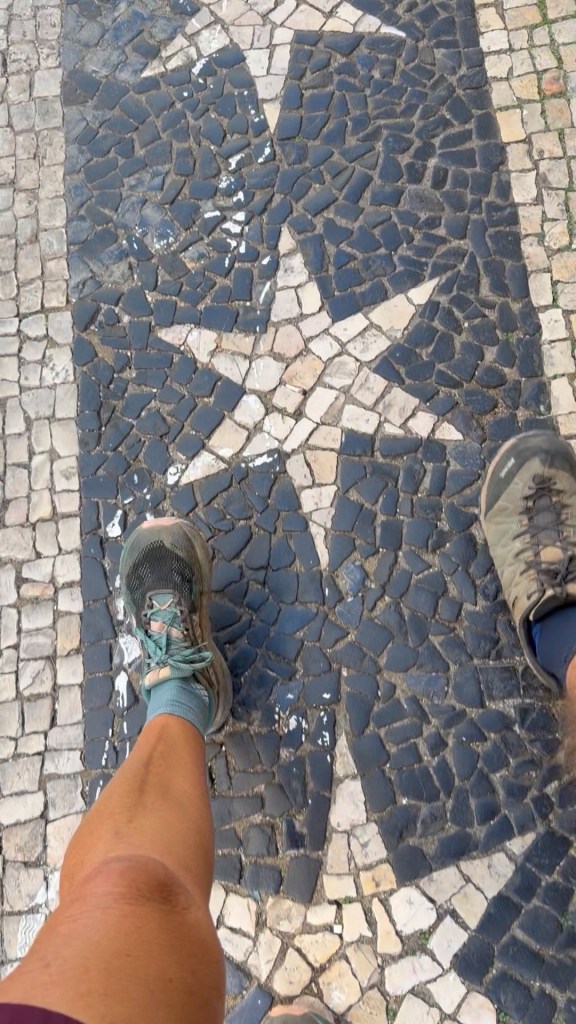
Creating patterns like this would be tough enough with uniformly shaped stones, but the cobbles are odd sizes and shapes, and to achieve the straight lines and continuous patterns could only be done by highly skilled people. They are exquisite
We walked up to the top of the park, and lay on the grass, in the sun, listening to rippling sound of the huge Portuguese flag, flying above us.
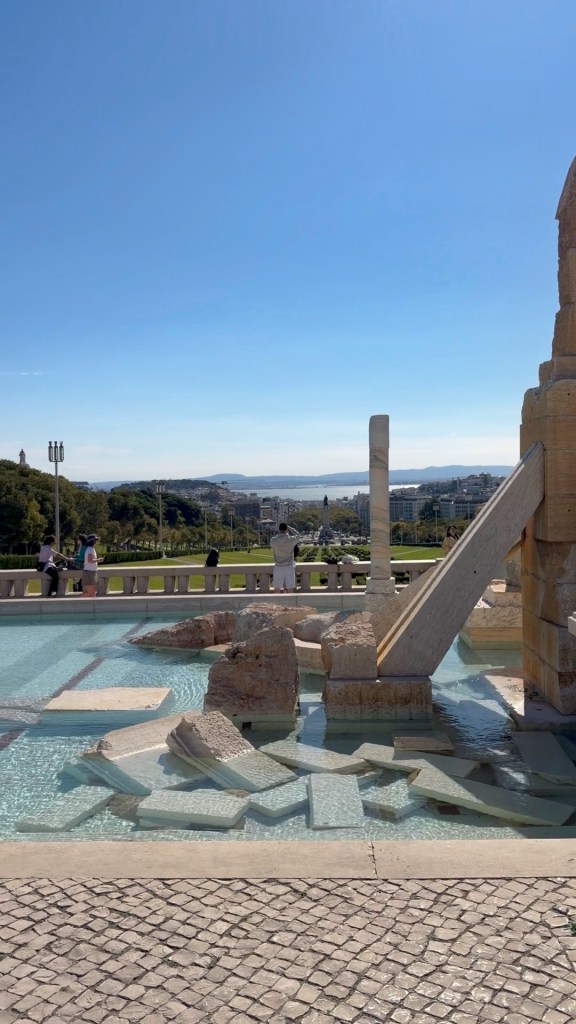
Before starting to amble back.
It was already early afternoon and our stomachs were growling, so after stopping to admire the beautiful frontage of the we popped into a bakery, and bought a few bits to eat. Nearby, we found a shaded bench, in a little back street, which turned out to be the best bench in Lisbon. (For us, anyway)
It was just after a sharp corner, on a narrow street, with a single tramline through the centre, and we passed a delightful hour (possibly slightly longer), just watching the trams pass by.
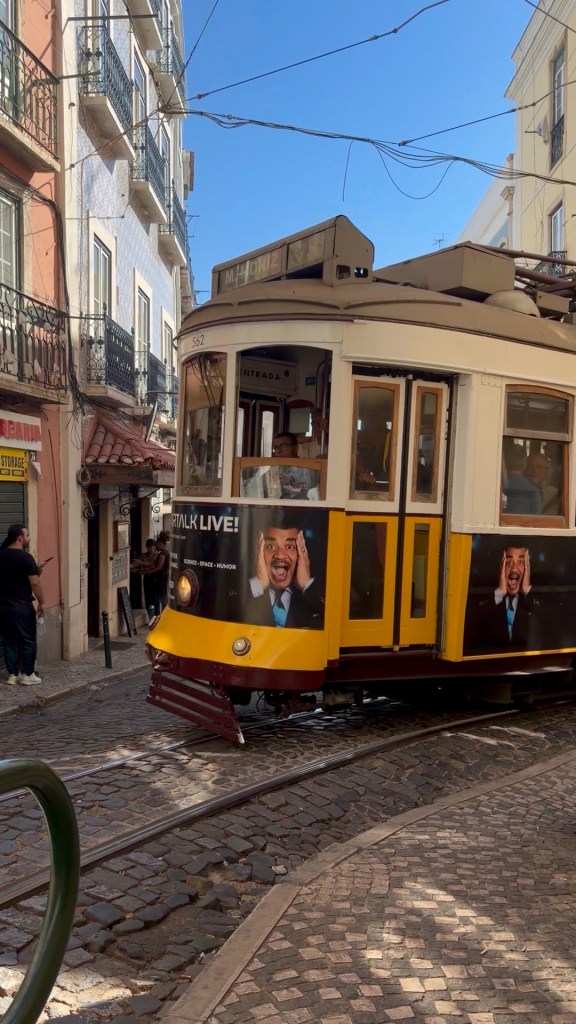
We’re simple souls and sitting, chatting, eating a snack and watching these wonderful old characters rattle and shake their way past us was just a joy.
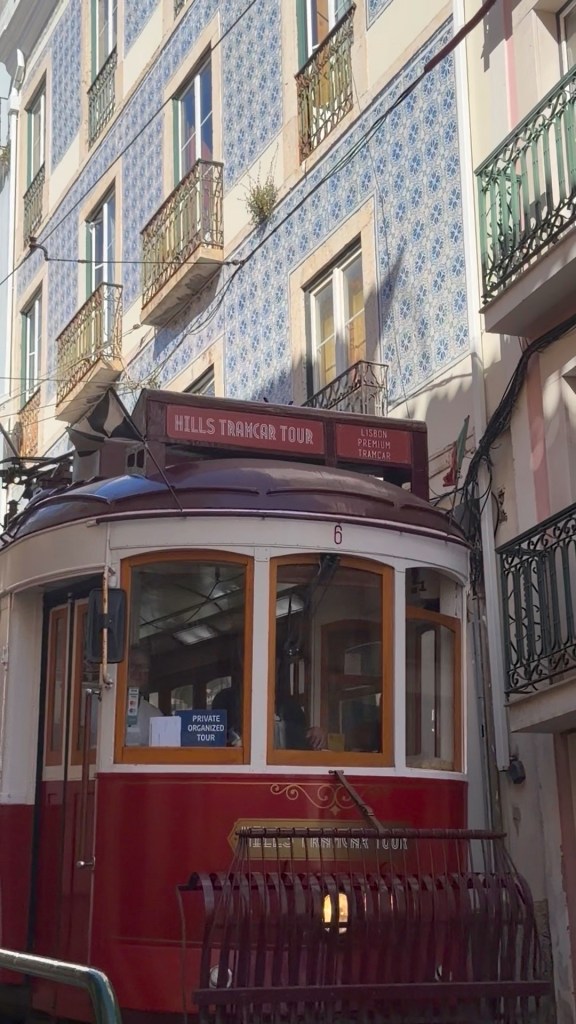
The electric cabling runs between the houses, with the balconies almost touching the infrastructure, in places, but it all runs smoothly, with a traffic light and points system, seamlessly controlling the flow of trams and cars
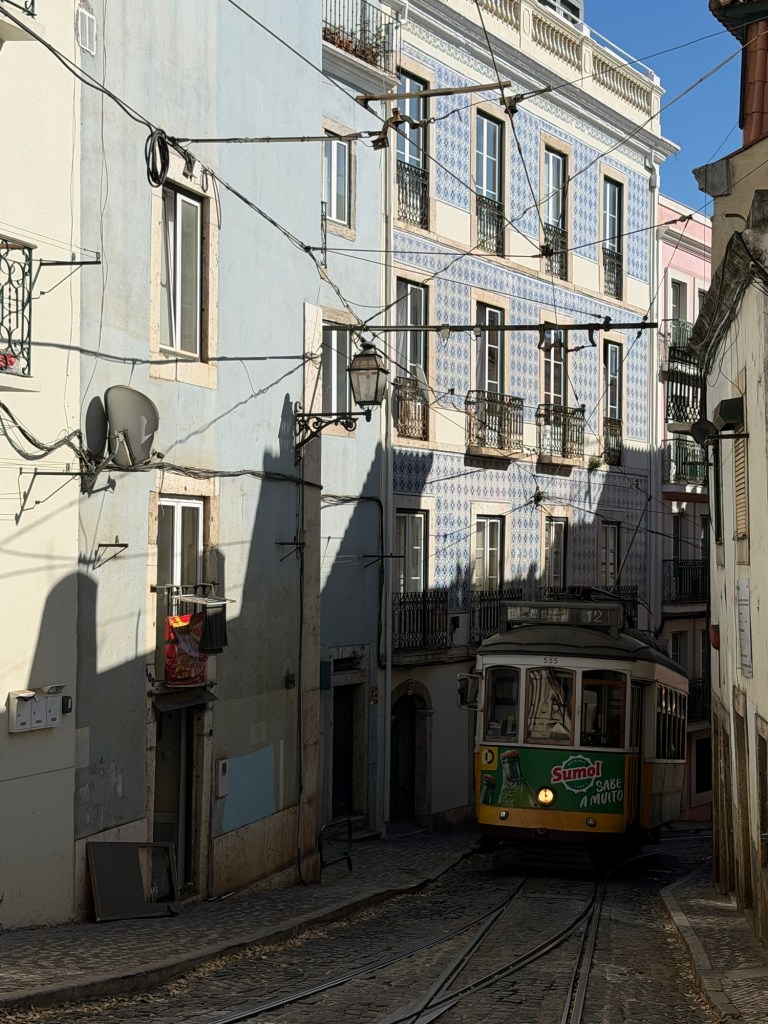
The tiled houses with the old tram passing by, again gave us a sense of having slipped back in time a little. It was very gentle and very lovely.
Whilst we were there, we spotted a chap rifling through the bins, pulling out cans and plastic bottles that had been deposited there, filling black plastic sacks. He came and sat on a step nearby, and we established that he was going to one of the collection machines in the city, where he would stand for 40 minutes, feeding them into the machine, and would make 20 euros, in the process.
He was clearly delighted with his haul, and it helped to explain why we had seen other people doing the same, in a couple of other places too. It reminded us of the ‘Corona pop lorries’, when we were kids, when you got a bit of money back for each bottle returned. In many ways it’s a shame it still doesn’t happen.
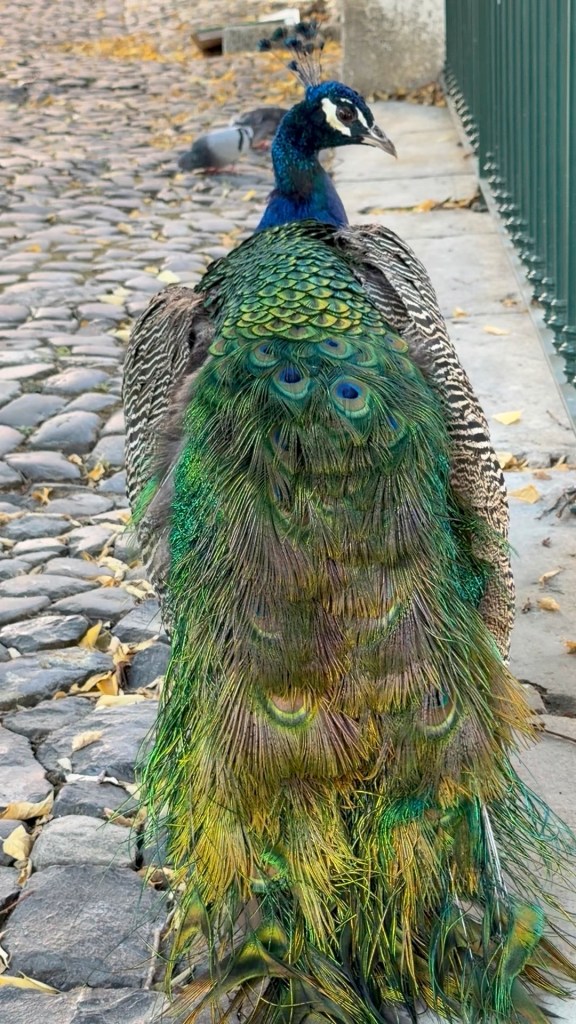
Eventually, we dragged ourselves away from the attraction of the passing trams and carried on to St George’s Castle, finding the busy-ness and queue for the ticket office, a bit jarring after the peace of our little bench, but it was the last dot on my map, so we had ticked it off, and seen the peacocks in the process
Finally, we returned to the narrow, bustling streets of Alfama, finding a shaded seat, where we sat with a drink, and toasted the end of an incredible last couple of weeks.
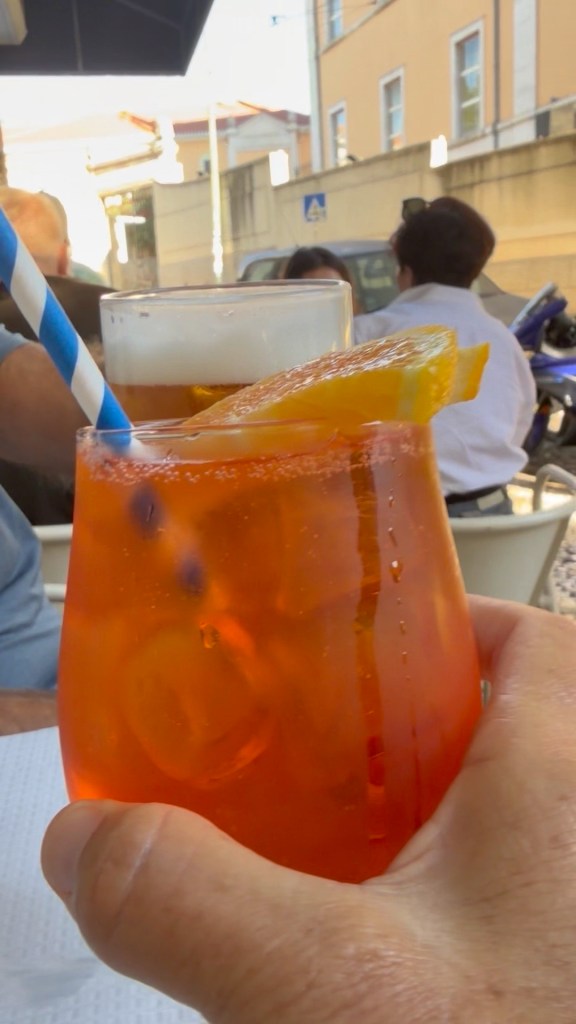
In the end, our walk around Lisbon had been like adding another stage to our Fisherman’s Trail walk. We had walked another 15km, and climbed an extra 310m too!
Not only had it been a pretty much perfect day, it had also relaxed us, and by the time we arrived at the house, we were exhausted. Once again, we sat in front of our view of the river and enjoyed a simple supper, watching boats, as the night fell.
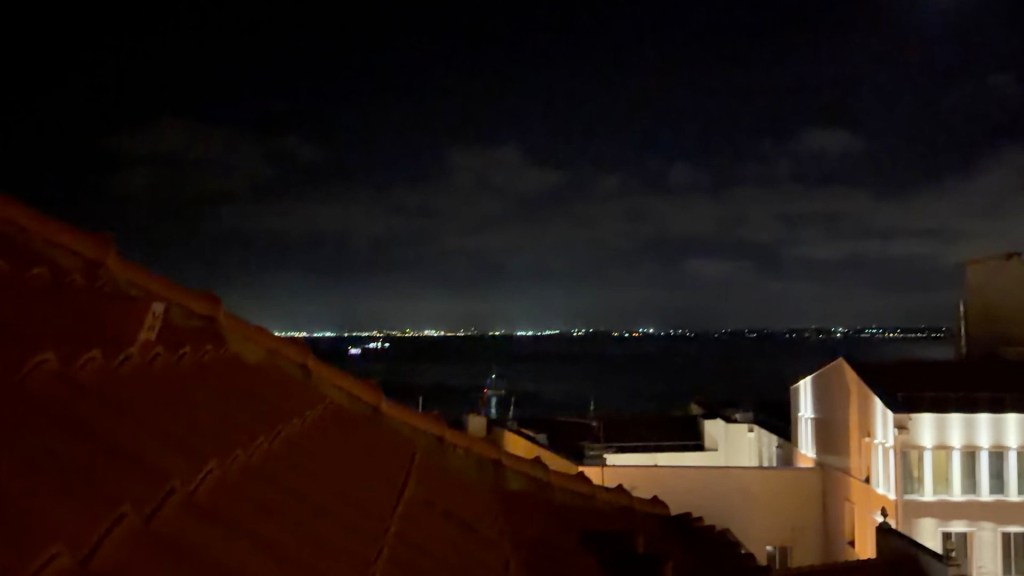
We didn’t see much of the night though, as we were in bed and asleep by 8.15, and slept for 10 hours straight.
When we woke, the first cruise ships were making their way up the river, filled with new visitors for the city.
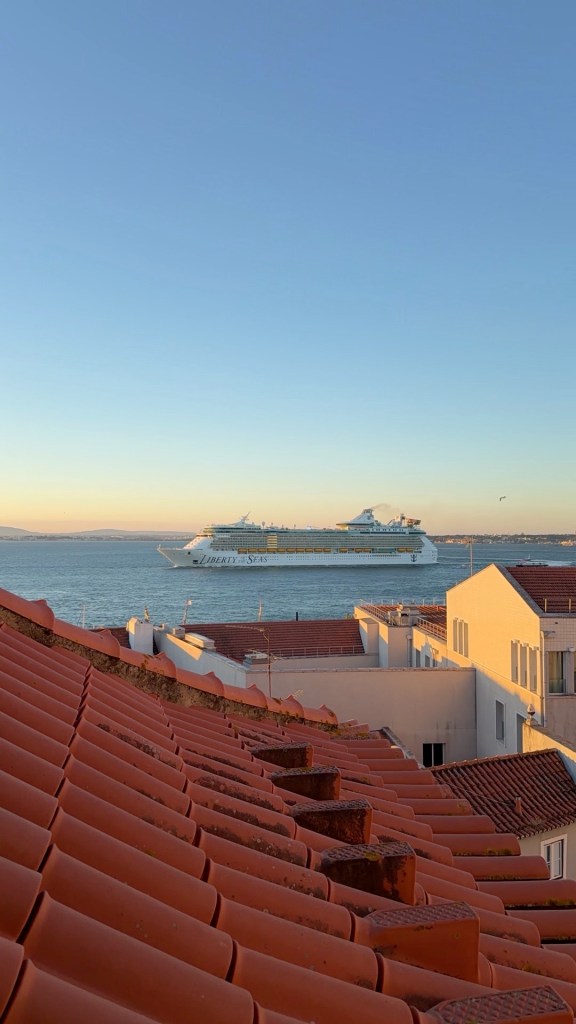
But it was time for us to leave.
The last 2 weeks have been incredible. Portugal is a stunning, friendly and welcoming country, and we have already decided that we will be back, to explore it a little bit more.
We also have some unfinished business with the Rota Vicentina, as we want to see the wild flowers and more of the nesting Storks, so a future spring visit will have to be planned.
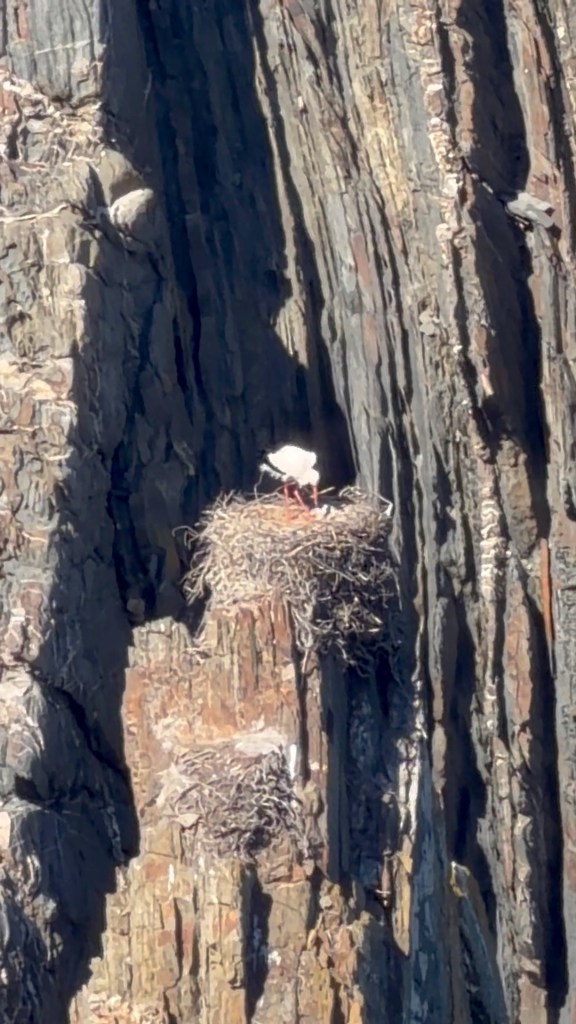
Time to head back home to Provence though now, and we can start planning our next adventures.
I wonder where we’ll end up!