After yesterday’s soaking, and last night’s rainbow, we hoped that today would be brighter, and by just after 6am, it was clear that it was going to be a lovely day.
The sunrise across the bay was stunning,
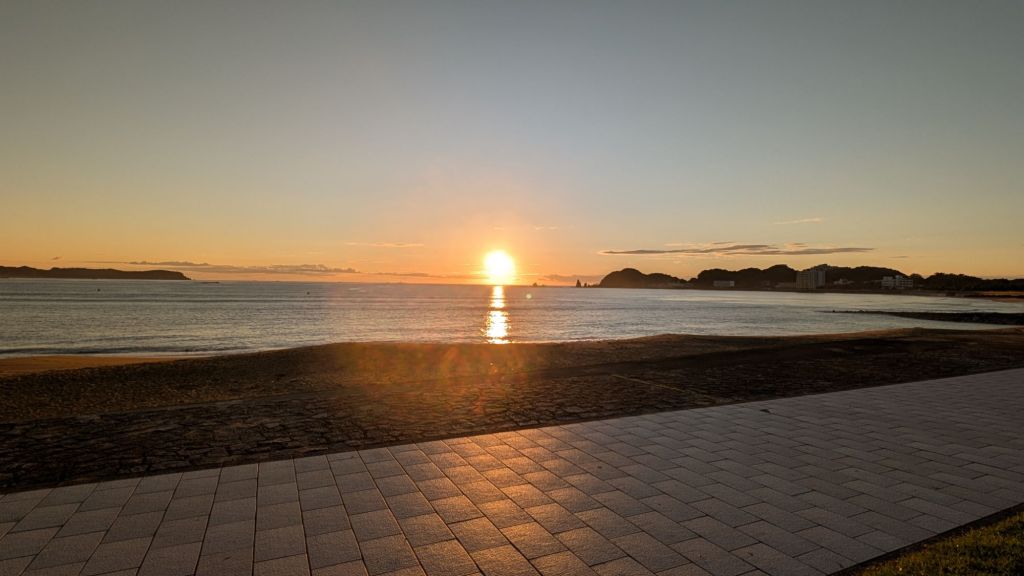
And we took out mats out to do our morning stretches, overlooking the bay. Simply a perfect start to the day.
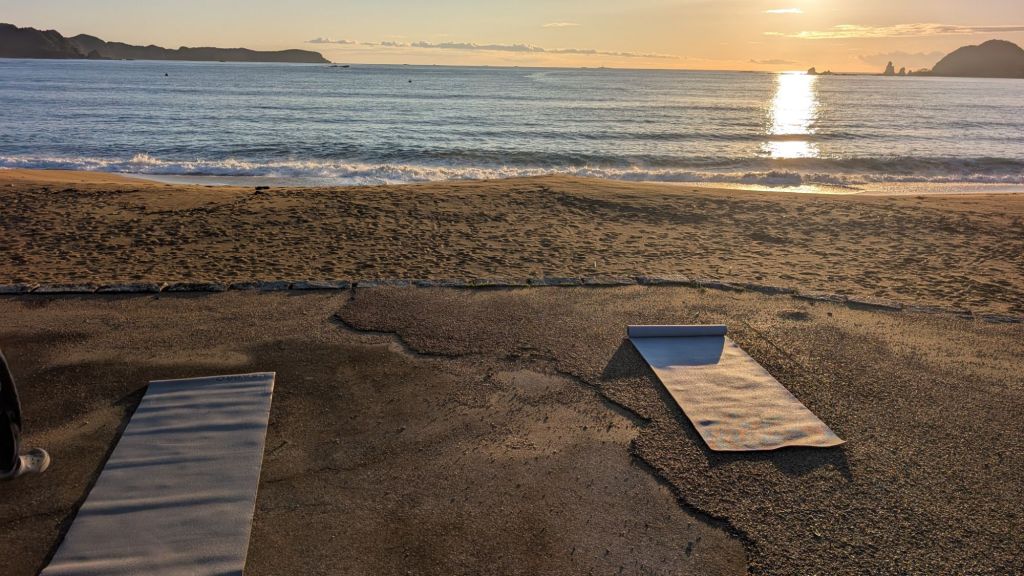
We had decided to walk another short stretch of the Kumano Kodo Trail, up to the Nachi Grand Shrine and Waterfall, just a short distance from where we were staying, so there wasn’t even any rush to get going.
Eventually, after a slow start, coffee and breakfast, we peeled ourselves away from our little spot by the beach and drove the short distance to the parking, a couple of kilometres below the Shrine and falls.
We joined, what was already a few hikers, on the trail, which left the road and started to climb through ancient cedar woodland.
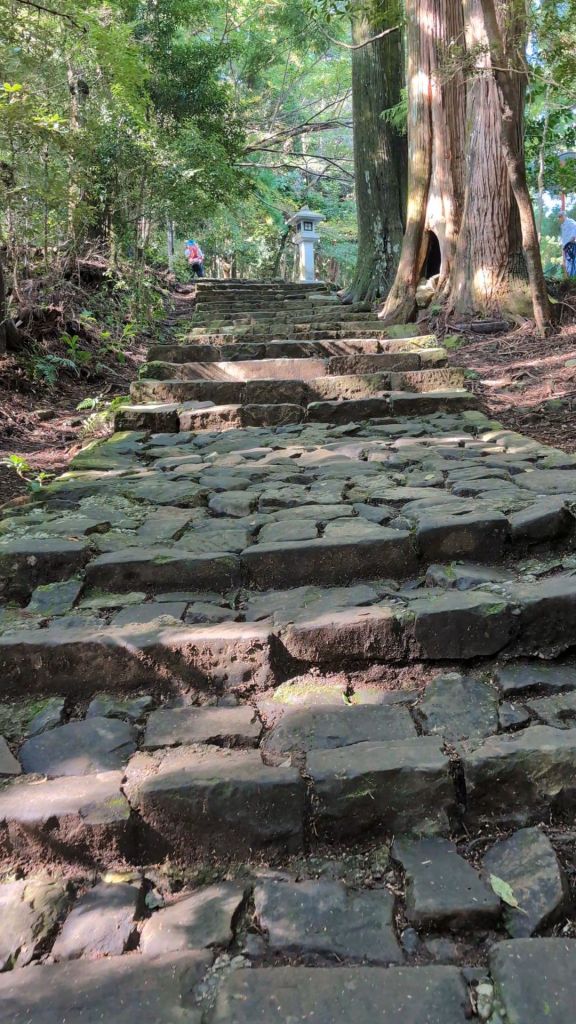
Once again, we found ourselves faced by a huge flight of old stone steps, and started to climb. One thing is certain, and that is that during this trip, we have become much better stair-climbers than ever. You can’t avoid them here.
As we climbed, we chatted about how much we have come to appreciate arriving at the laces we have visited, by foot. Whether it was the hilltop castles, where we had a sense of the effort that would have been involved in trying to attack the fortresses from below;
Or the Shrines, where the simple act of walking uphill, over uneven ground and steps makes us concentrate on that moment in time. You really can’t get distracted, as you risk turning your ankle, or stumbling, but the focus on each step is really rather meditative, and we could understand the impact that this would have had on pilgrims following the routes over many centuries.
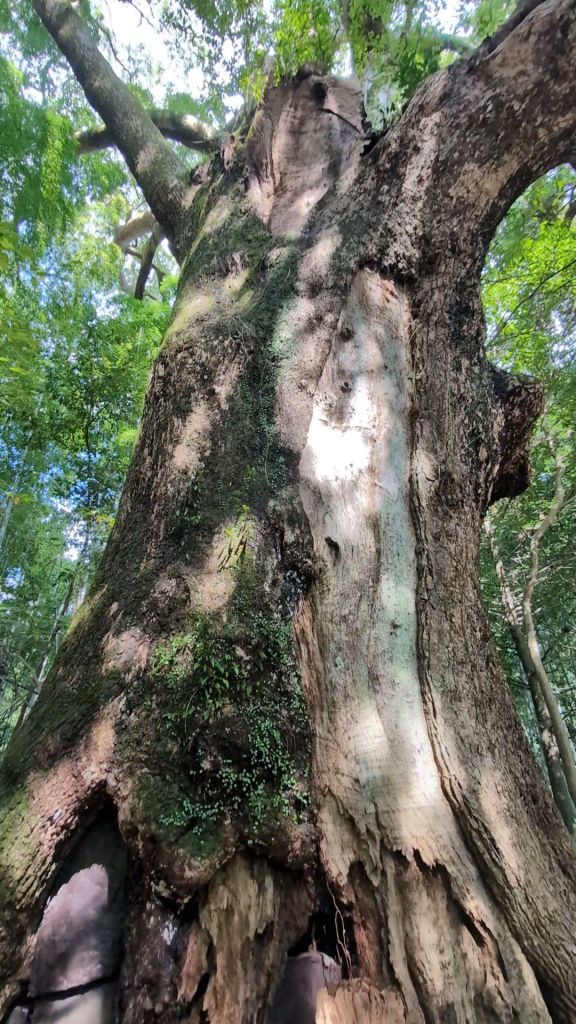
It was a lovely climb, with the dappled sunlight through the majestic trees, passing an ancient Camphor Tree, believed to be over 800 years old, which must have witnessed so much, in its time. It’s incredible to comprehend that people would have passed, and perhaps rested their hand on the same spot, in the 1200s, as we did today. That connection through time is tangible in places like this.
Eventually, we climbed the last flight of steps up to Nachi Grand Shrine, passing through the Tori Gates, on the way up and into the central courtyard.
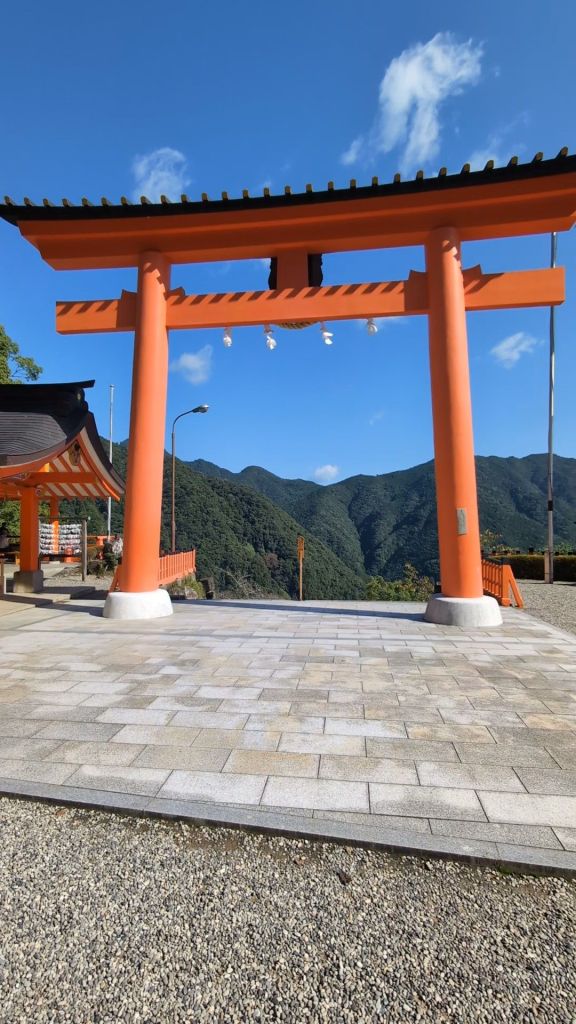
The Shrine here dates back 1700 years and was established as a new location for worhsip, which had originally started at the Nachi Falls, with a key aspect being the reverence for nature.
The Legend is that the site of the Shrine was chosen, when the ‘3-legged crow’ called Yatagarasu stopped here after guiding the Emperor ‘Jimmu’ to what is now, Nara.
It was a stunning space. with another ancient camphor tree, to one side, with its branches stretching across the roof of the shrine.

We decided that we would stay here for the night, and enjoy watching the sunset, in the peace of the mountains.
We made an offering, placing a piece of wood, carrying our prayers onto the fire in front of the Shrine, and just stood back to admire the buildings, and take in the atmosphere of this special place
We wandered through, and moved into the next area, which is home to a Buddhist temple, which reminded us of those we had seen in Koyasan. For most of the history, both the Buddhist Temple and Shinto Shrine worked together as a single religious site, only being forcibly separated in the Meiji Period, which we have learned had a huge impact in the country, on both religion and the ancient castles too.
Then, we walked on towards the pagoda, which overlooks Nachi Falls, which are the tallest ‘freefall’ waterfall in Japan. It is a dramatic sight, a curtain of water tumbling over the edge of a 133m tall cliff, and simply watching the flow is mesmerising, even from a distance.
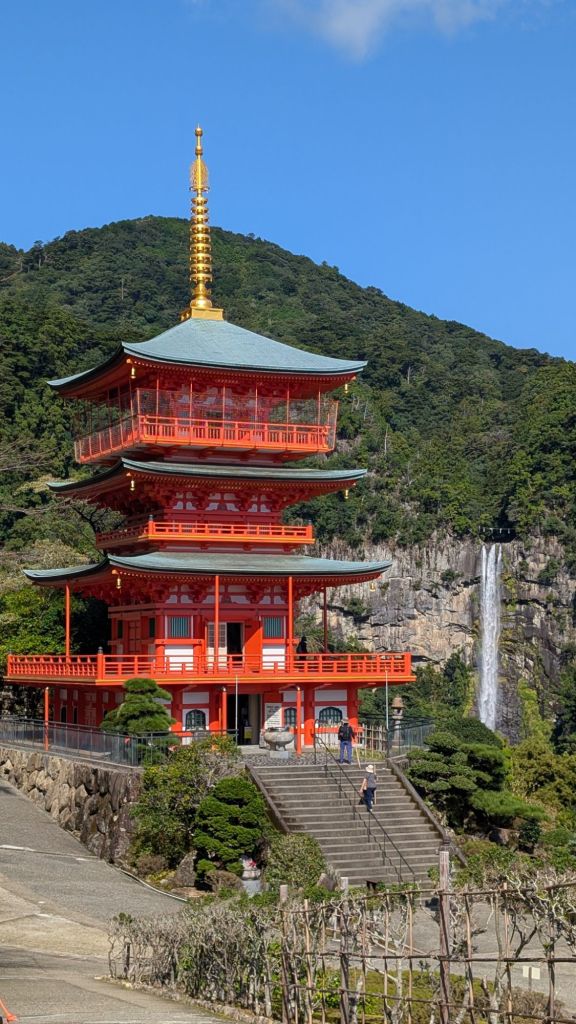
The Pagoda is a beautiful building, and sits elegantly in the landscape, with the Falls behind it. The original tower was destroyed by fire in 1581, but was rebuilt just less than 400 years later, in 1972.
Each storey houses a different deity, the first one Fudo Myo-o, who was worshipped at the Falls; the second Amida Buddha, who presides over the Pure Land paradise; the third, a statue of Kannon. In Buddhist belief, the waterfall’s deity Hiro Gongen is a manifestation of Kannon
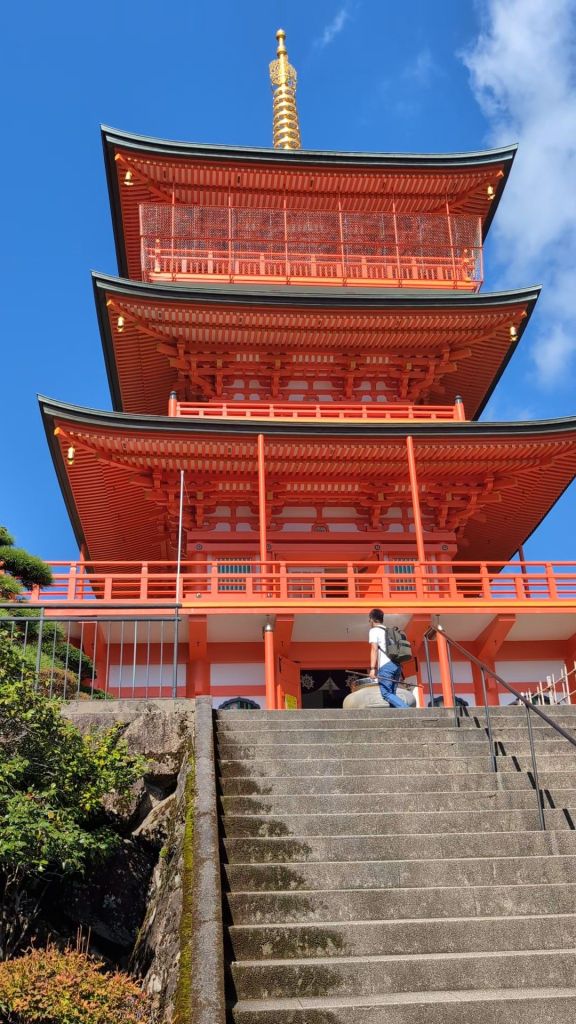
We paid the 500 yen each (£2.50) to visit it, and enjoyed the views across the valley and to the falls from each of its levels.
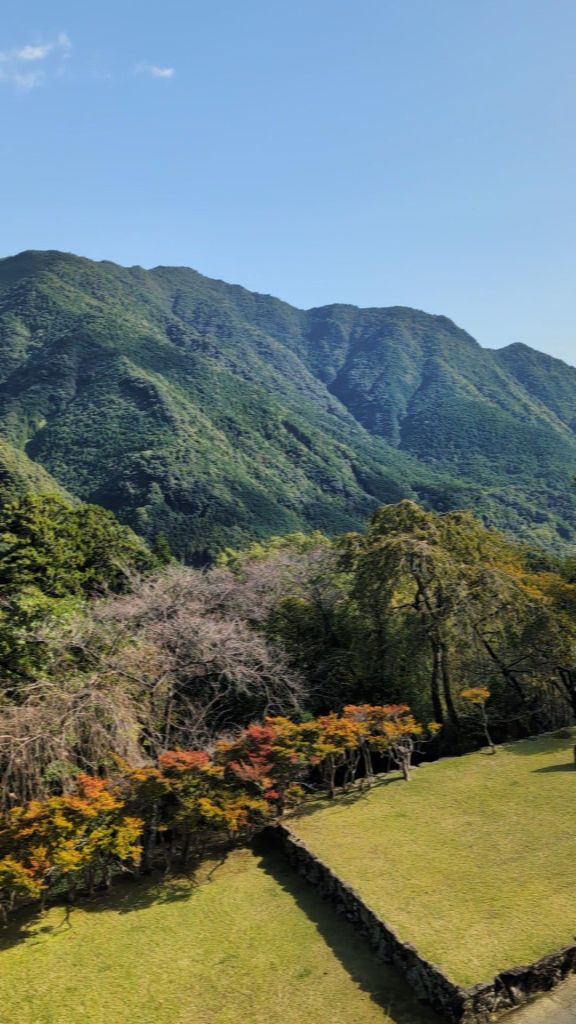
We walked to the Falls, which had been the original site of worship at Nachi, and realised the power of the water tumbling down the rock-face. Up close it is an awe-inspiring sight, and it is easy to understand why this has been a site of worship for hundreds (if not thousands) of years. It is a natural wonder, and the power, longevity and magnificence of it still capture us today.
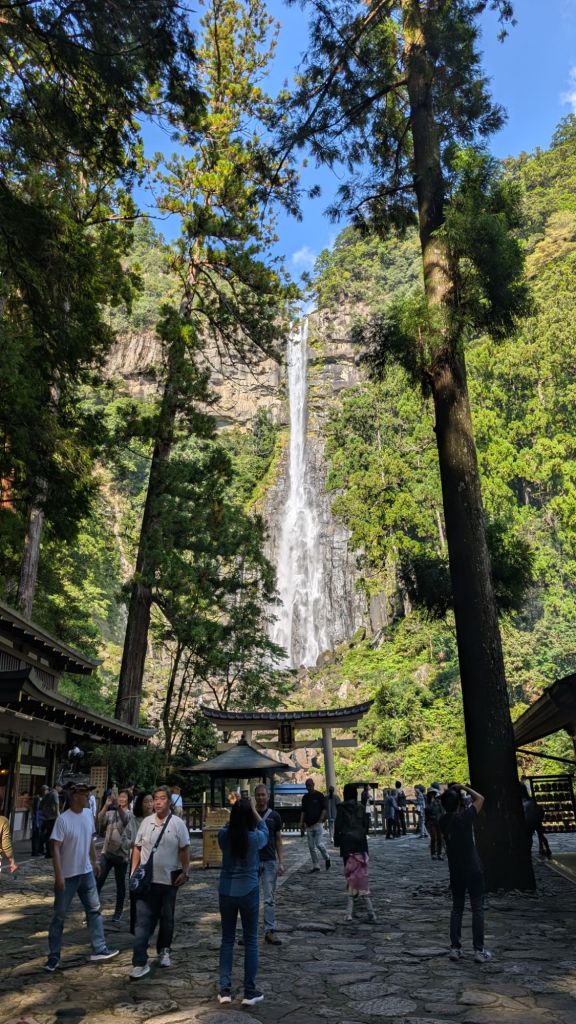
We sat on a bench, to one side of the path, watching people arrive, with many praying at the foot of the Falls, or adding their pieces of wood, carrying their wishes into the fire, and others simply posing for photos. there was a steady stream of visitors, and I can only imagine how busy it must be in the summer.
It is a stunning, natural place, and well worth the walk up the steps to visit it. But, however much we could have spent longer, just watching the world pass by, we needed to make a move, so wandered back down the steps, through the cedar forest and headed on again.
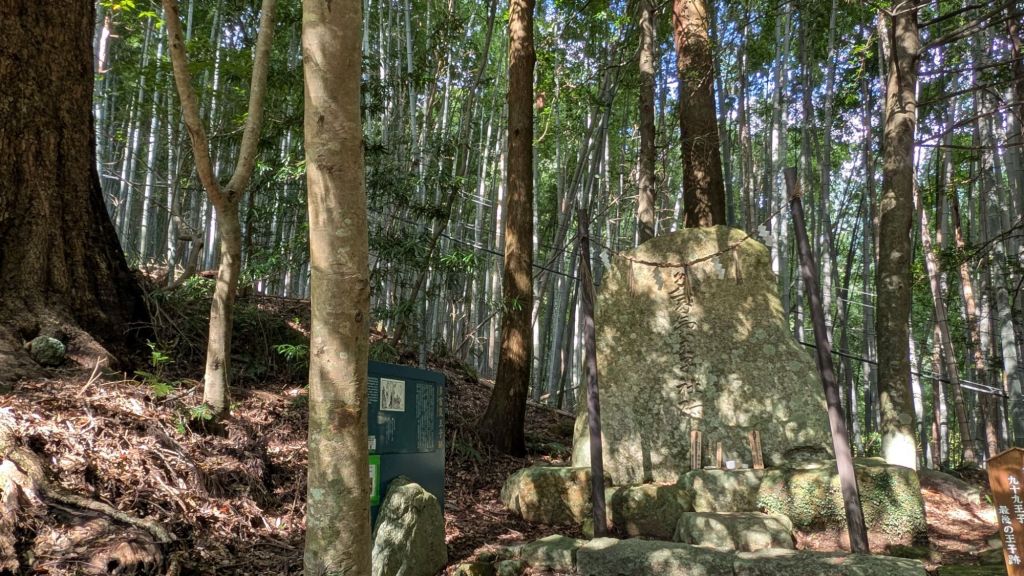
First stop was an onsen for a freshen up, and then we set off for an area of rice terraces that Andy had spotted, en route to tonight’s chosen park-up, near a ruined castle.
We didn’t get as far as the castle, as the Rice Terraces were just too beautiful, and so we have chosen to stay here tonight, instead.
You can watch A video postcard from today here
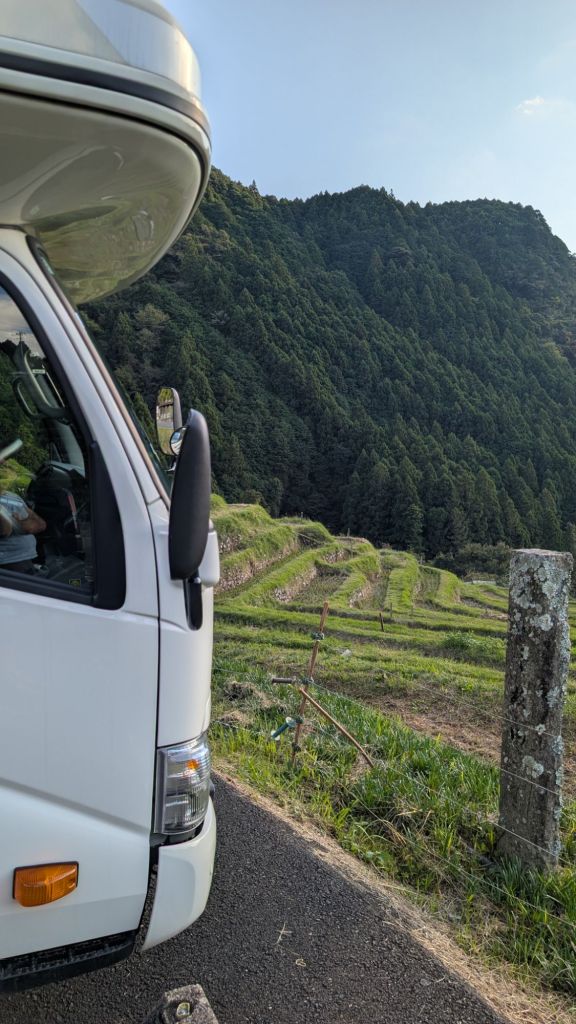
The Maruyama Rice Terraces are just inland from Kumano, and are an amazing sight, covering a vast area of hillside, with a dramatic view towards layers of distant steep-sided, forested hills.

It isn’t clear when the Terraces were originally built, but in 1601, it is listed as having 2240 fields, yet due to environmental factors and an aging population, the terraces fell into decline and by the early 2000’s there were only just over 500 left.
At this point local residents came together, recognising the important cultural heritage that was being lost and established a group to preserve and restore the terraces, securing them for future generations.
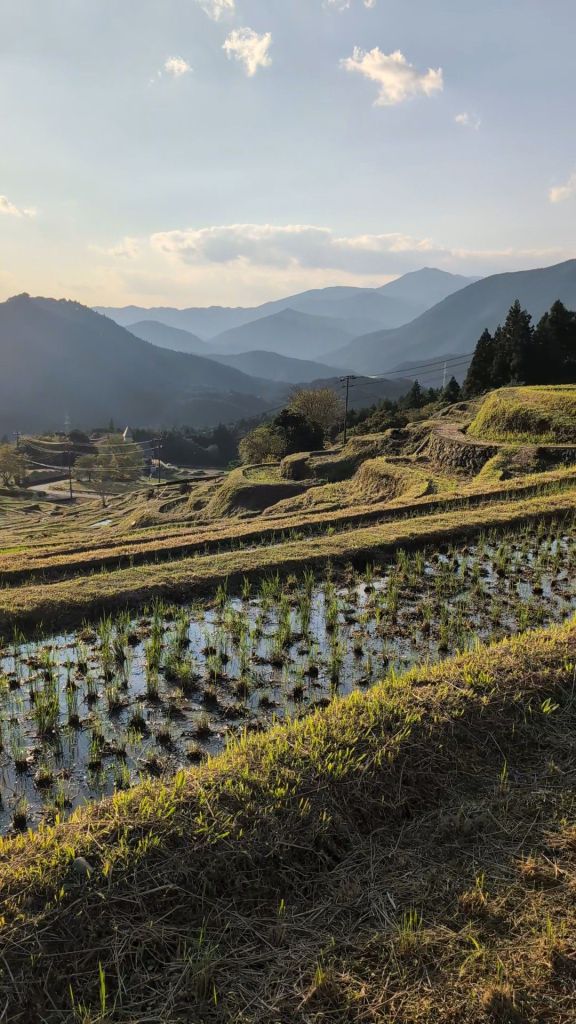
They have done an astounding job, and this is a spectacular sight, with the little arced fields, looking like fish-scales acrossthe hillside. They are filled with rice, and are fed with water, some pumped with the aid of a little waterwheel.
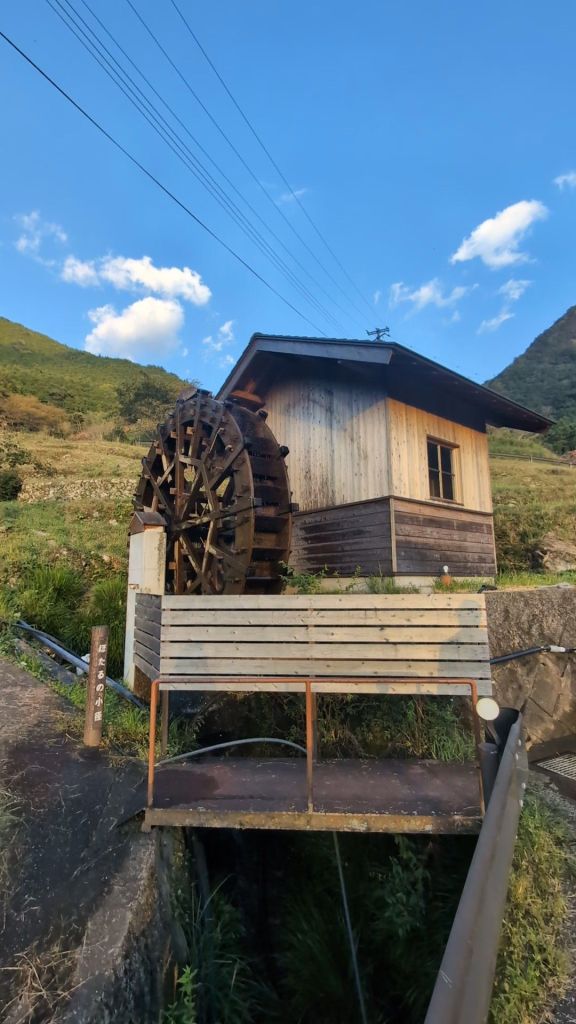
We stopped at a parking spot, halfway down the terraces, and after a walk through the fields, admiring the scarecrows
You can Watch a video from the rice terraces here
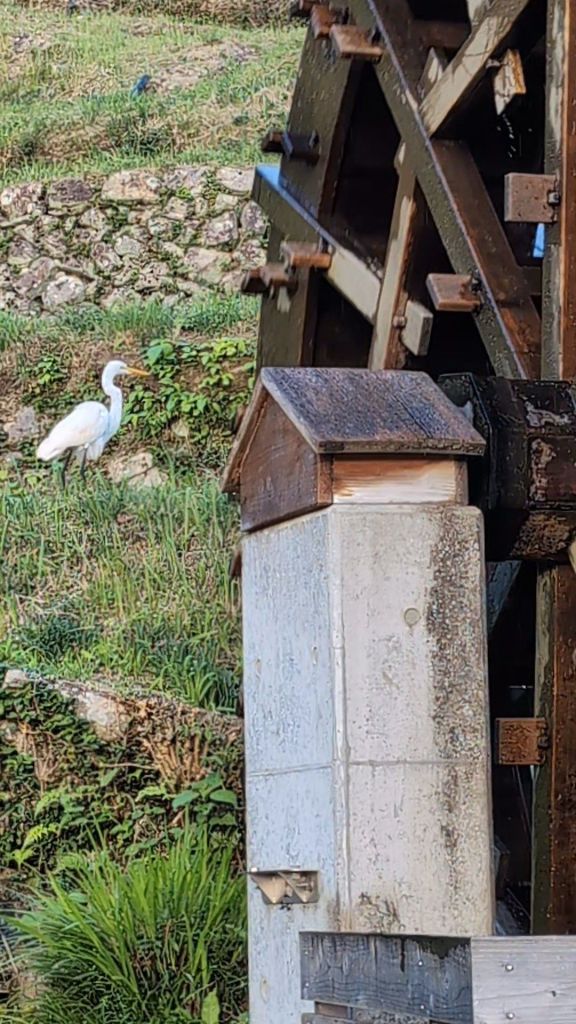
And watching the Great White Egret that is clearly very at home here
Before settling down to watch the sunset, and night settle on the terraces below us
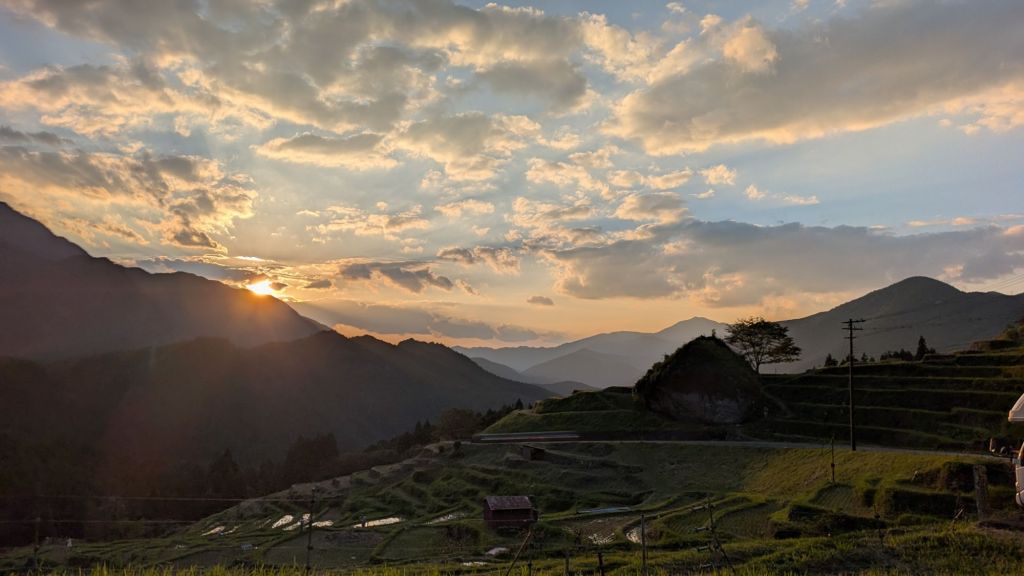
It was a stunning end to a perfectly wonderful day. A week tonight, we will have returned the camperan and will be in the madness, and chaos of Tokyo. So for the time-being, we will cherish the peaceful park-ups like this one, and relish every moment we have in the rural heart of japan.
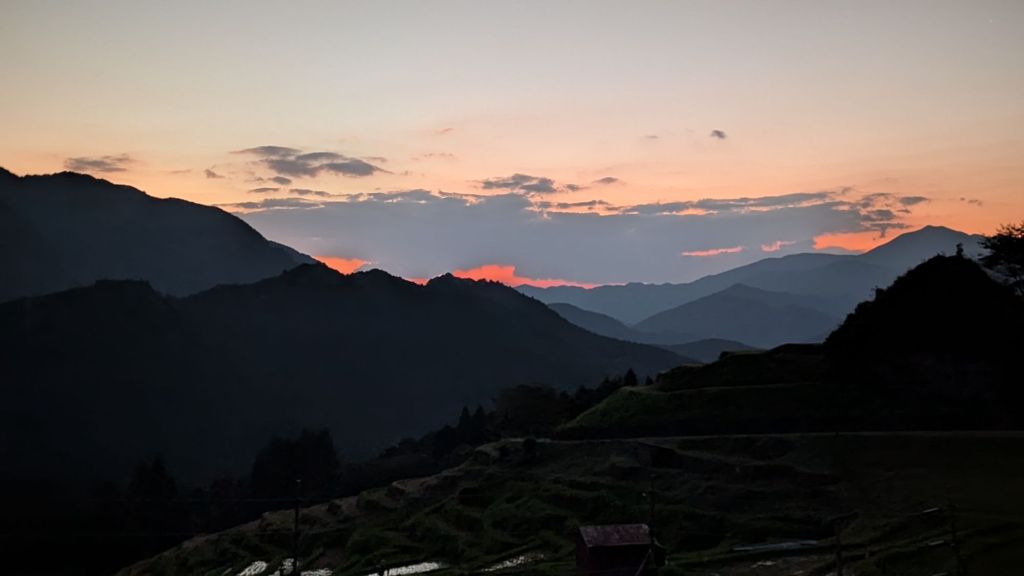
it’s so much more us than a city will be.
 Postcards from Provence and beyond
Thank you for these lovely dispatches filled with interesting detail and history. We had a lovely guide in Tokyo, email me if you are interested in her coordinates.
LikeLiked by 1 person
Thanks, we’ve really loved rural Japan. We only have one day in Tokyo, which will be a bit of a shock to the system after 5 1/2 weeks of peace
LikeLike
Gorgeous scenes
LikeLiked by 1 person
Really beautiful
LikeLiked by 1 person