Last night’s park-up was just a joy. It was incredibly peaceful, with just the eerie howls of the Raccoon Dogs to disturb our slumber. That, and the rain, which started pounding on the roof in the early hours and hasn’t stopped yet.
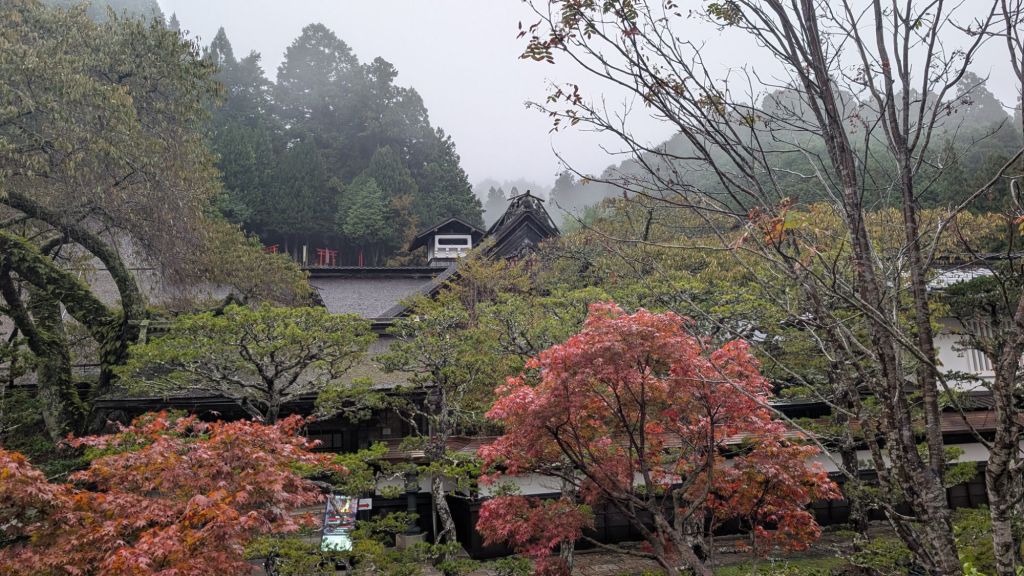
We had a slow start, and after breakfast, pulled our wet-weather clothes on and started to walk along the back-lanes into Koyasan, where we thought we would spend the morning exploring some of the sights.
We had come, as I’d seen a picture of the stunning Daimon Gate at the entrance to the town, and one of the Pagodas too, so thought it looked like a pretty little place to spend a night. I had no idea that we would spend the whole day here, walking nearly 15km around the town and its buildings.
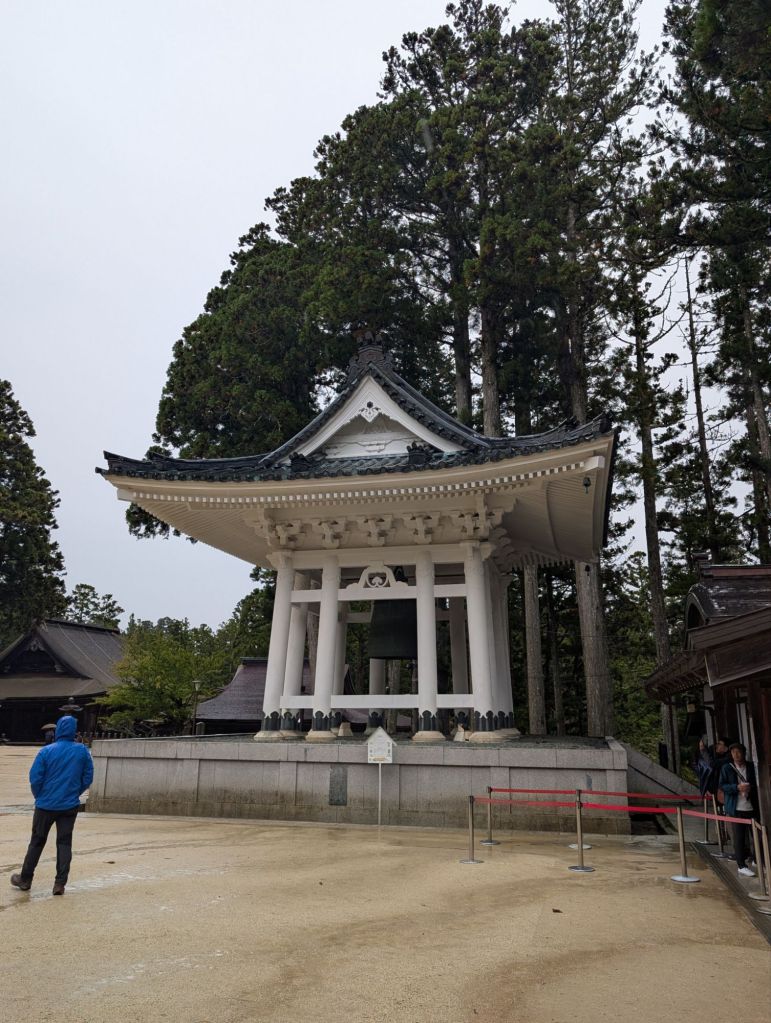
It isn’t just a pretty place, but is home to the Shingon Buddhists, having been founded, approximately 1200 years ago, by the great Buddhist monk, Kobo Daishi Kubai, who is in a state of eternal meditation, in a mausoleum at one end of the town. The history and spirituality of the town are evident from the moment you arrive.
We took the back-lanes from our parking spot, into the town, passing some of the 50+ Shukobo, which are Temple Lodgings, where visitors and Pilgims can stay, whilst they are in the town. They are exquisite buildings and with the trees starting to wear their autumn colours, it looked like a painting.
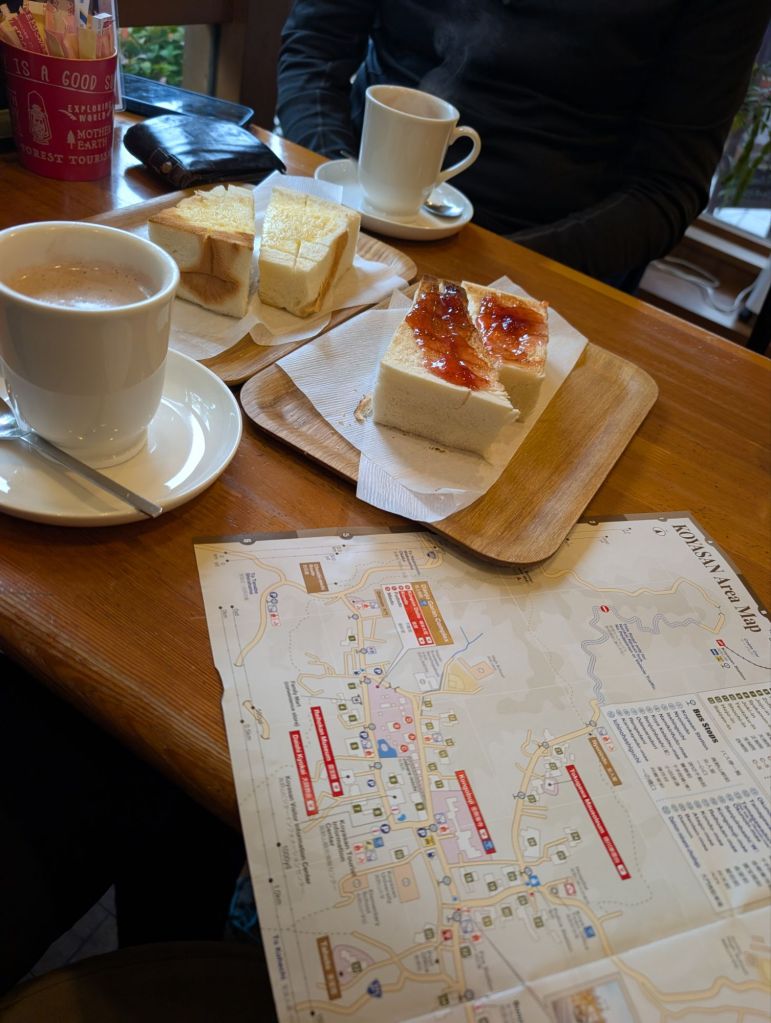
We popped into the information centre, picked up a map and then headed across the road into a coffee shop, where we could sit with a warm drink, and a second breakfast, whilst we planned our day. I’m sure most visitors have come with a plan in mind, but we had stumbled into the town without any idea of its importance, so wanted to find out more, and make the most of our time here.
The second breakfast was rather superb, with steaming mugs of hot chocolate and slices of toast, so thick that they made even the ‘doorsteps’ I cut at home, looked like thinly sliced bread. It was a delicious start to the day, and we managed to get a plan together.
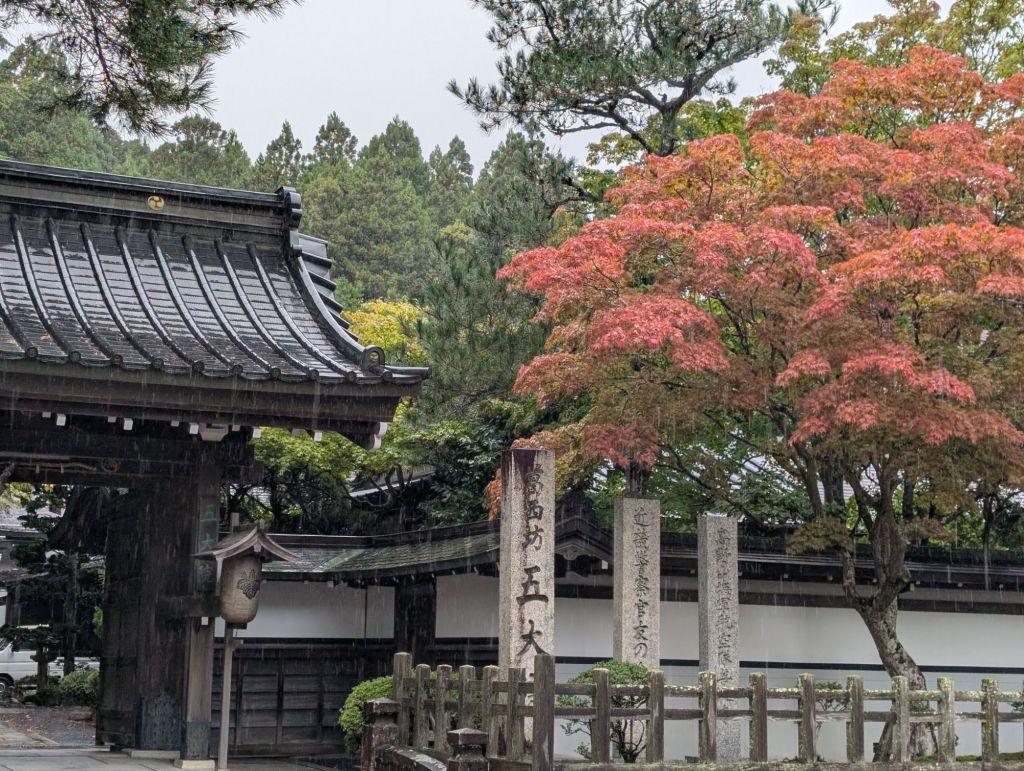
We would head to the Daimon Gate at the entrance to the town, work our way back in, head back to the van for lunch and then visit the Okunoin Cemetery and Kobo Daishi’s Mausoleum in the afternoon.
It proved to be the perfect day (apart from the weather).
We walked out to the Daimon Gate, where a digital display showed us that it was only 6.7 degrees, which after the last 4 weeks of warm, very humid weather, came as a bit of a shock.
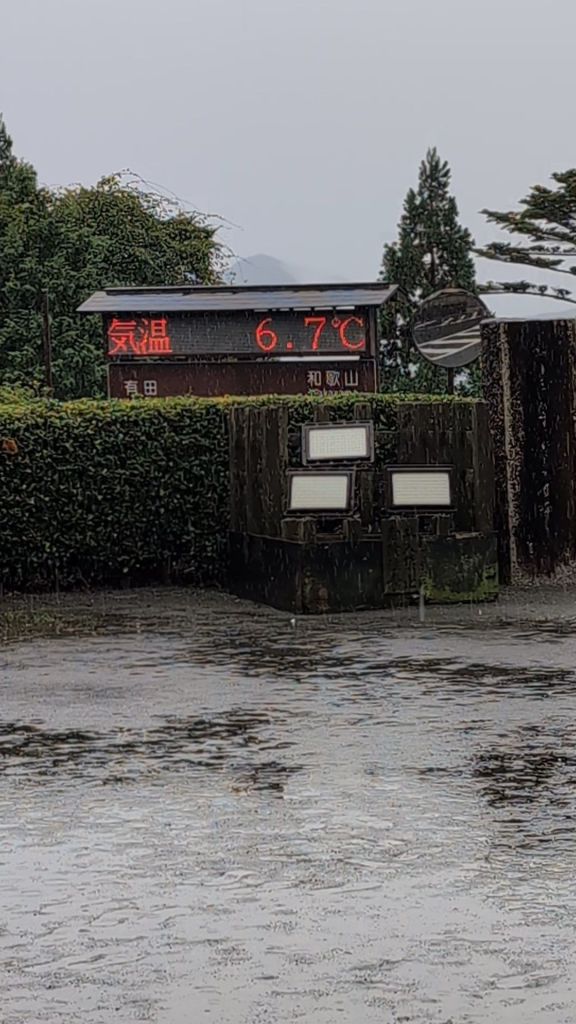
But no time to feel chilly, we had a town to explore.
The Daimon Gate is the main gate to the town and stands at 25m tall, with what must be amazing views (on better days). On either side of the gate are beautiful statues of protecting deities, watching over the town.
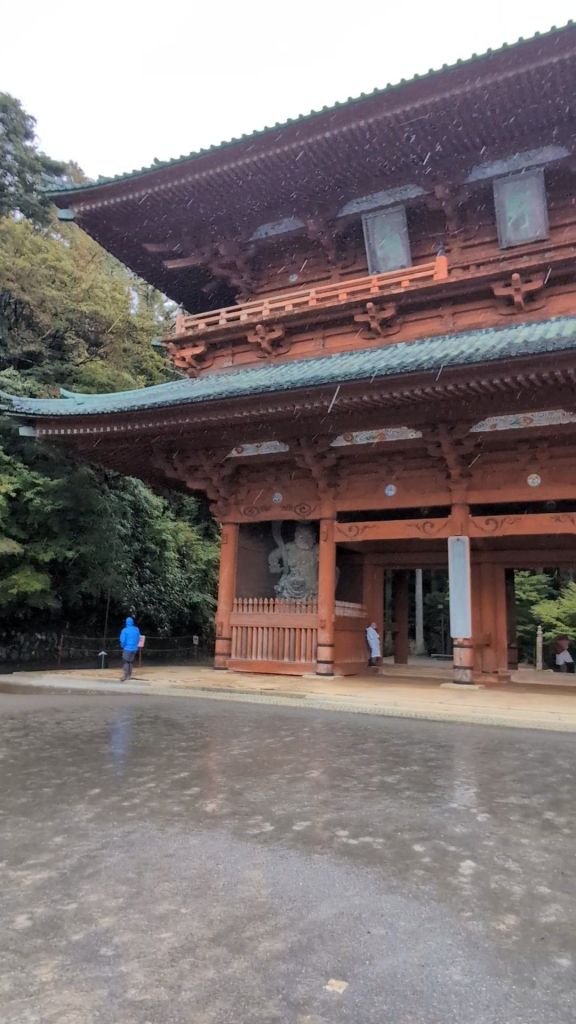
It was a great place to start our visit.
We then simply walked back through, stopping at all the sites that were marked on the map.
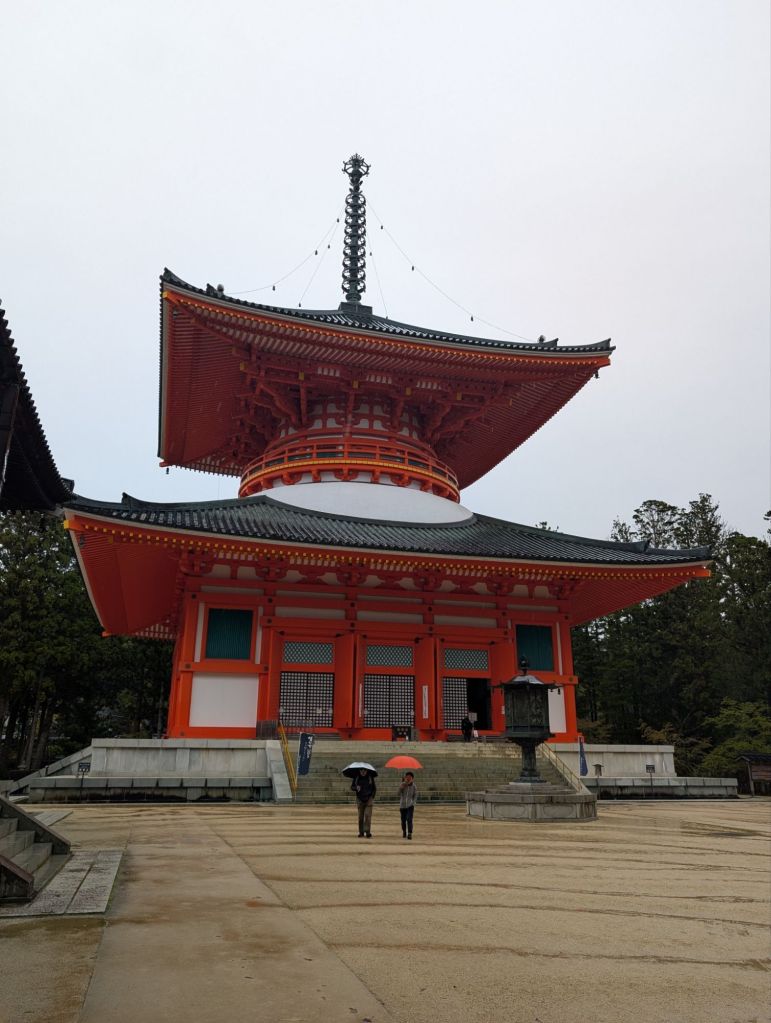
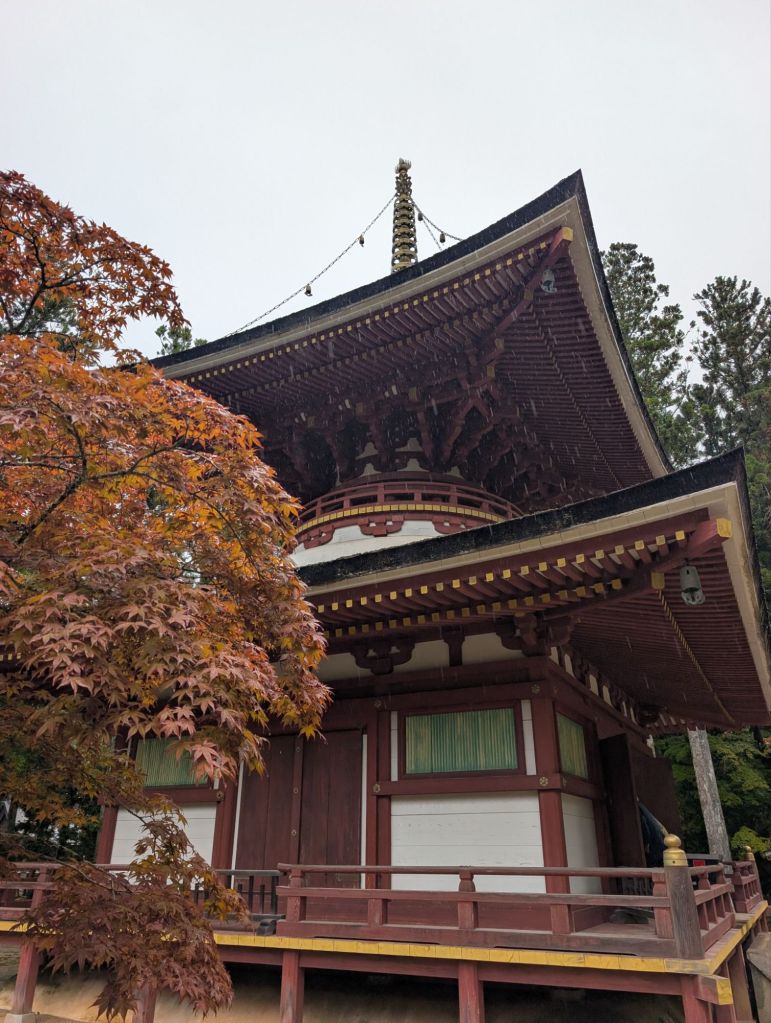
From the Konpon Daito (Great Pagoda), which was originally built over 70 years, starting in 816, but was rebuilt after a series of fires in 1937
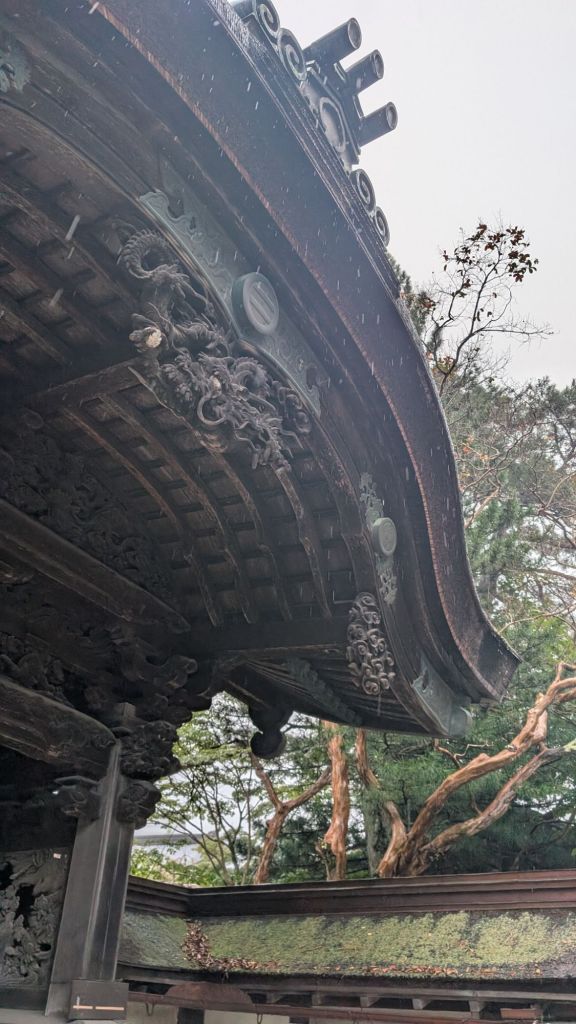
To the beautiful Portrait Hall, with its exquisite roof created from layer upon layer of cedar bark, held in place with bamboo nails.
We visited the Kongobuji, (Head Temple of Koyasan Shingon Buddhism), paying the 1000 yen (£5) entrance fee each, and spending a long time exploring this incredible building. Inside, the space is separated by beautiful hand-painted screens. They are representations of Kobo Daishi’s life, and also Buddhist beliefs, associated with nature.
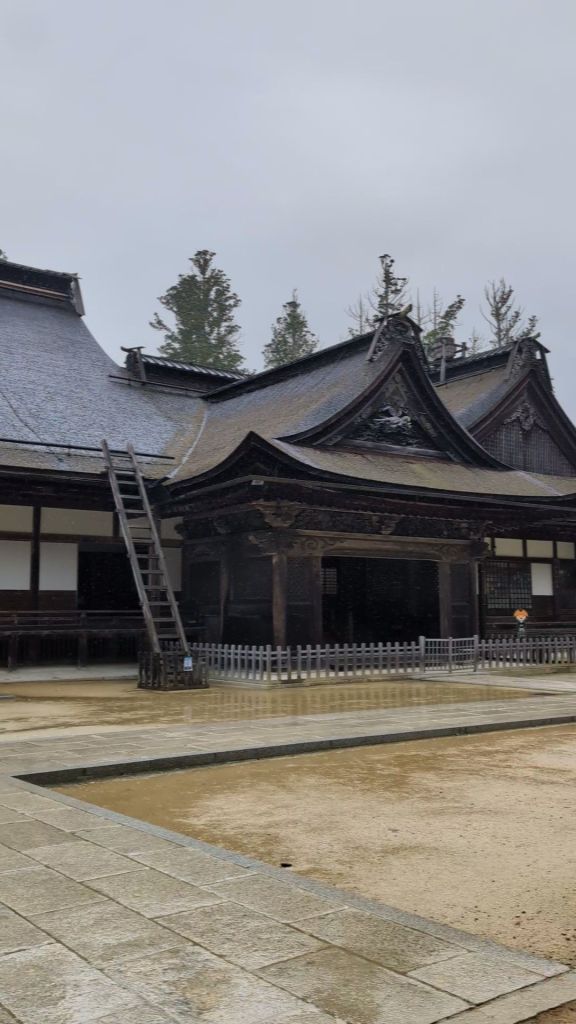
We couldn’t take photos of the individual screens, but they included fields of peonies, trees covered in cherry blossom and lakes filled with blue and yellow Lotus flowers. Each was wonderfully described, but my favourite explanation was of the room covered in orange and yellow Maple leaves, with a pair of Turtledoves nestled amongst them, which was described as
‘red and yellow autumn leaves, fallen from the maple trees growing here and there among the ancient, misty Japanese cedars, drift like pieces of brocade on the Tamagawa River inviting people to enter the perfect mandala world of Shingon Buddhism. Hearing the gentle mountain turtledove’s cry among the trees, the faithful visiting Koyasan recall the dear voices of their departed parents’
It was perfect.
We admired Japan’s largest rock garden, with its perfectly raked gravel, forming circles and patterns around the stones; the maples surrounding it, starting to shed their leaves too.
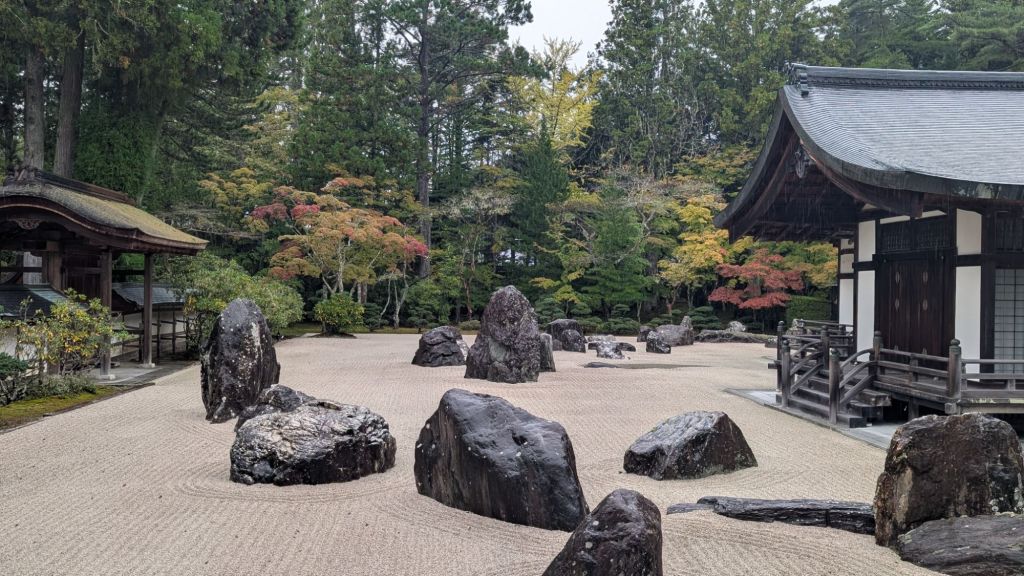
We spent a long time in the Temple just taking it all in, revisiting some of the screens, as they were so beautifully painted.
By the time we left (having spent nearly an hour in our socks), we were chilly and lunch beckoned, but as I couldn’t feel my fingers with the cold, we found a shop, bought gloves and a snood, which immediately warmed me up. It’s hard to believe that just 2 days ago we were wringing wet with the heat and humidity.

After a warm-up over lunch in the van
We walked back into town to visit the Okunoin Cemetery, and Kobo Daishi’s Mausoleum, which stands in a sacred space at the end of it.
The Cemetery is at the opposite end of the town to the Daimon Gate, and sits within a forest of cedar trees, that are between 200 and 600 years old. There are approximately 1300 old trees here, some over 50 metres tall.
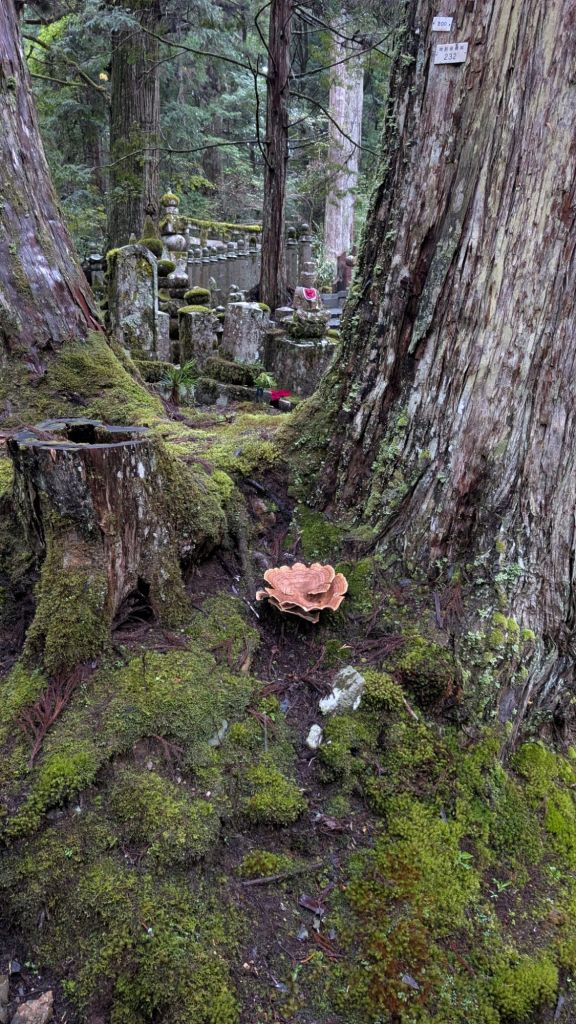
It is an amazingly atmospheric and tranquil place, with a path that runs through it, towards the Mausoleum.
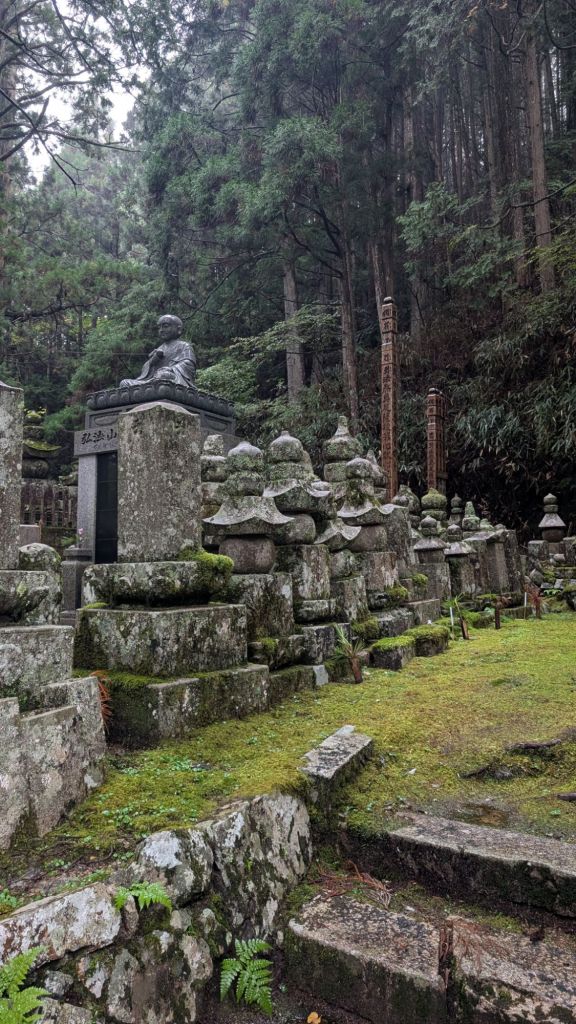
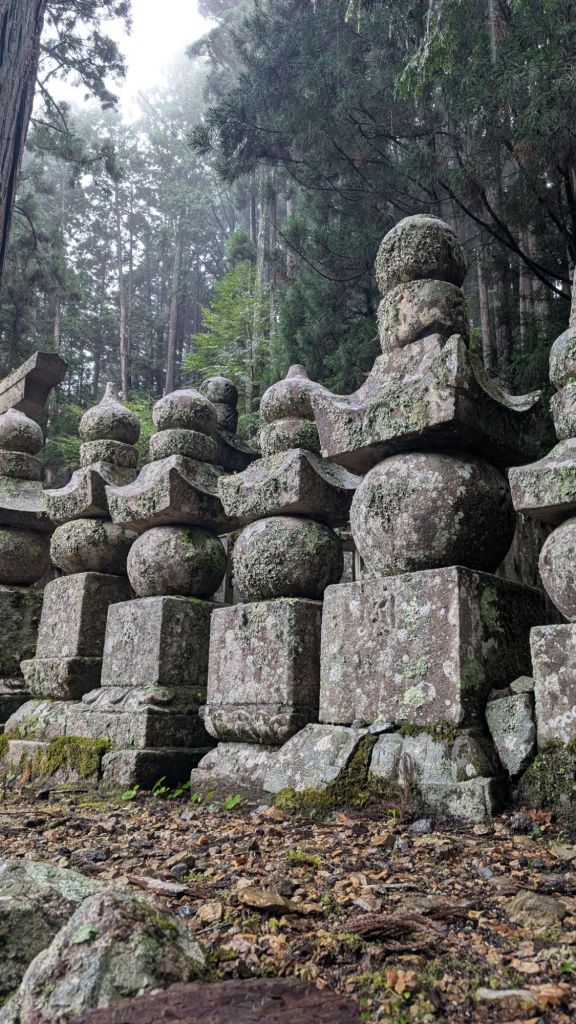
Amongst the cedar trees are over 200,000 gravestones, both ancient and modern, with the majority being covered in moss, almost seeming to grow from the forest floor itself.
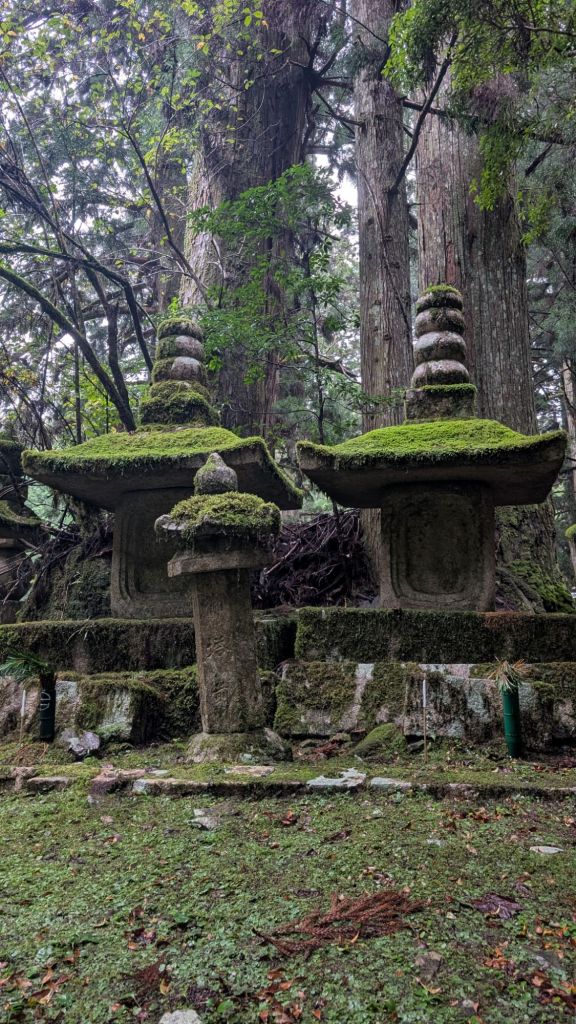
There are ancient Tori Gates..
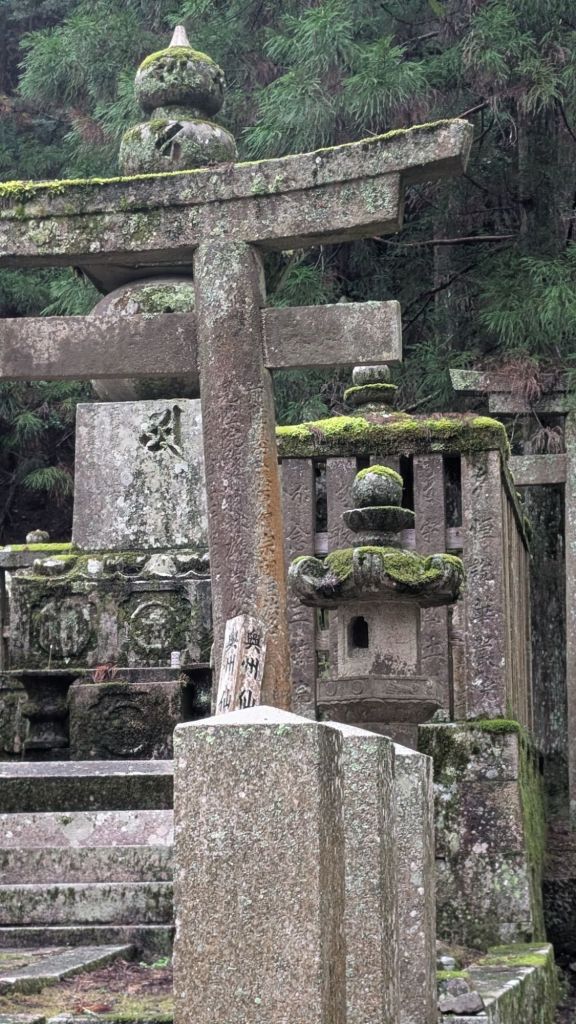
All sizes of Gorintous, which appears to be the name of the pagoda-shaped gravestones that represent the 5 elements (earth at the bottom, water, fire, wind and space at the top).
And plenty of Jizo statues, wearing red bibs and hats. Protectors of children, wearing a colour to expel demons, and to promote healing.
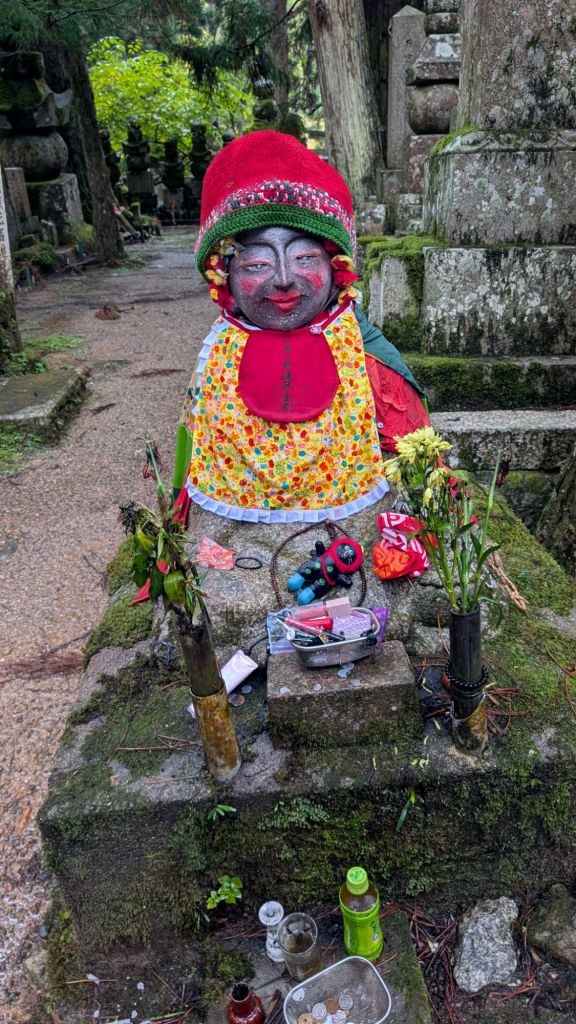
There was even one wearing make-up too, with offerings of beauty products left in a basket, in front of it.
It was a fascinating, calm and rather stunning place to explore.
The Mausoleum is at the end of the cemetery and it is made very clear when you walk into the sacred space surrounding it.
It is a stunning building, filled with the scent of incense and the sound of chanting from the monks. It felt a very serene and respectful space, amongst the nature that is so key to the faith.
You can Watch a video from today here
By the time we left, it was nearly 5pm, and the day had slipped away very easily, exploring this unexpected gem of a town.
We were soggy, very cold, but happy to have been able to spend some time here.

It is far more than just the pretty little town, I had imagined.
 Postcards from Provence and beyond
What a change in temperature and scenery! Really enjoying your updates.
LikeLiked by 1 person
Thanks, it was such a drastic change, but even in the rain it was an incredibly beautiful place to explore
LikeLike
Definitely a gem – what a wonderful day.
LikeLiked by 1 person
Truly wonderful
LikeLiked by 1 person