After yesterday’s heavy evening rain, we woke this morning to sunshine and cloud, with a promised nice day ahead.
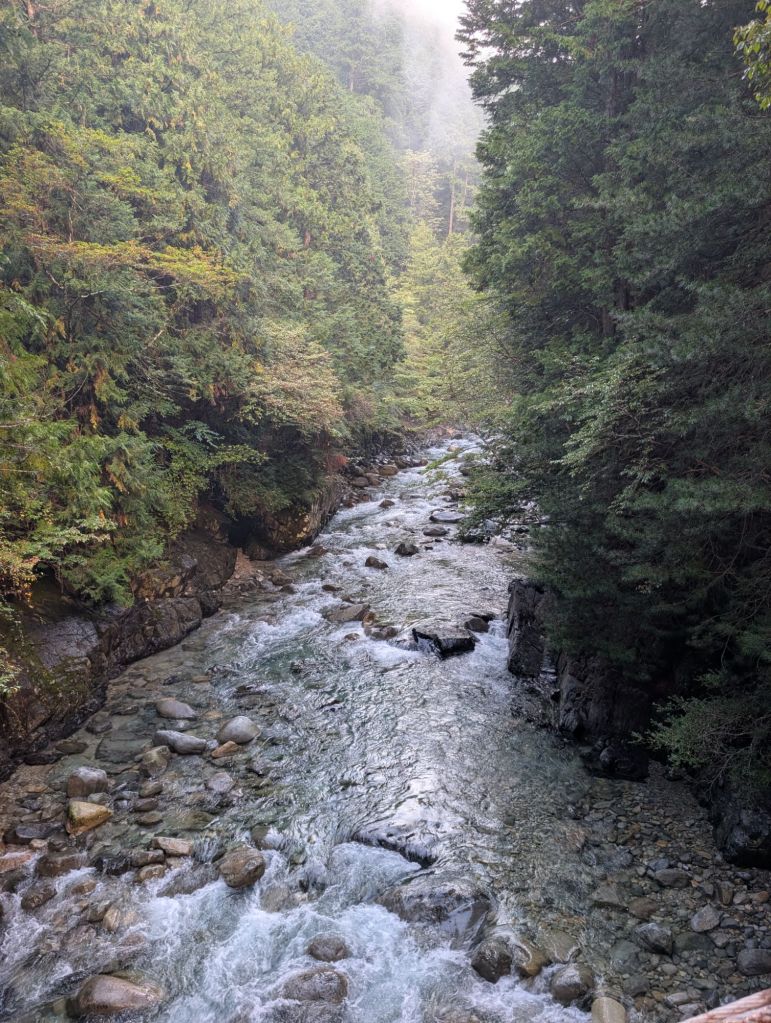
We’d obviously timed it well, as today we had decided to walk a stretch of the Nakasendo Trail, from Tsumago-Juku to Magome-Juku and back.
There is a real benefit from campervan life and that is enjoying very early nights (we were in bed by 8.30), and wonderfully early mornings (awake by 6), which suits us down to the ground.
So after breakfast, listening to the forest wake up around us, we set off to drive the short distance to Tsumago-Juku, another of the Edo Post Towns, along the Nakasendo Road, which linked Tokyo and Kyoto, in the Edo Period.
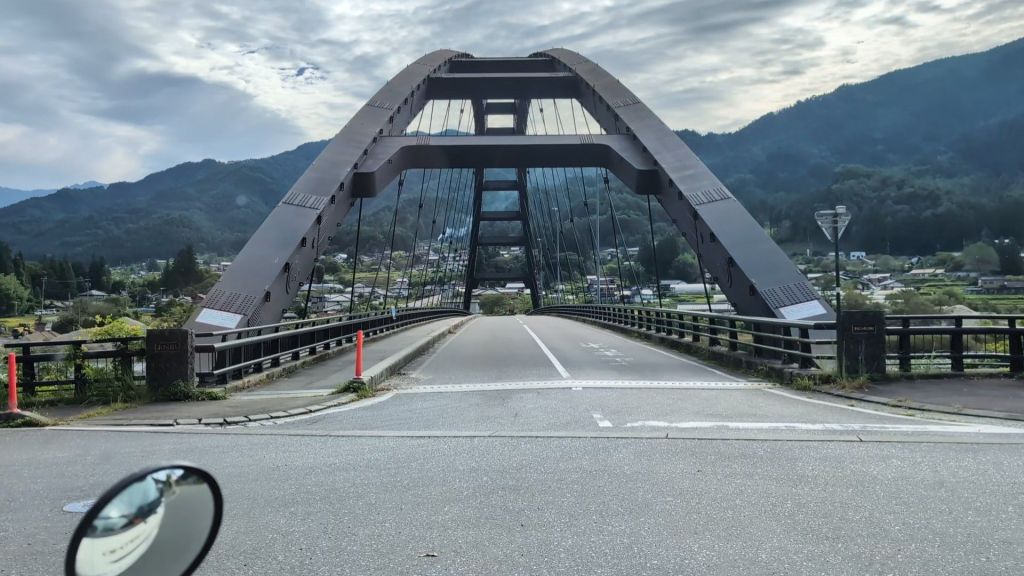
We had read different posts about this section of the trail and it sounded like the perfect way to pass the day, so we arrived in the car park, just after it had opened at 8.30, popped our drinks and snacks in a bag & set off to find the start of the trail.
Yesterday’s drive had introduced us to the Post Towns and we had explored Kiso-Hirasawa and Narai-Juku …. you can read about those here
They are wonderfully preserved towns that were staging posts for travellers along this critical route. Horses could have been changed here and travellers would have been able to be provided with what they needed for the next stage of their journey too.
We had been enchanted with the towns we had visited and were looking forward to following in the footsteps of people who would have taken the same journey, up to 400 years ago.
Tsumago-Juku proved to be almost more beautiful than the ones we had visited yesterday. It was peaceful, with small gardens in front of some of the houses and felt much less ‘polished’ than Narai-Juku. I know it was early in the morning and the majority of the tourists hadn’t arrived, but it felt intimate and lived-in too (helped by seeing children’s toys and bikes in gardens).
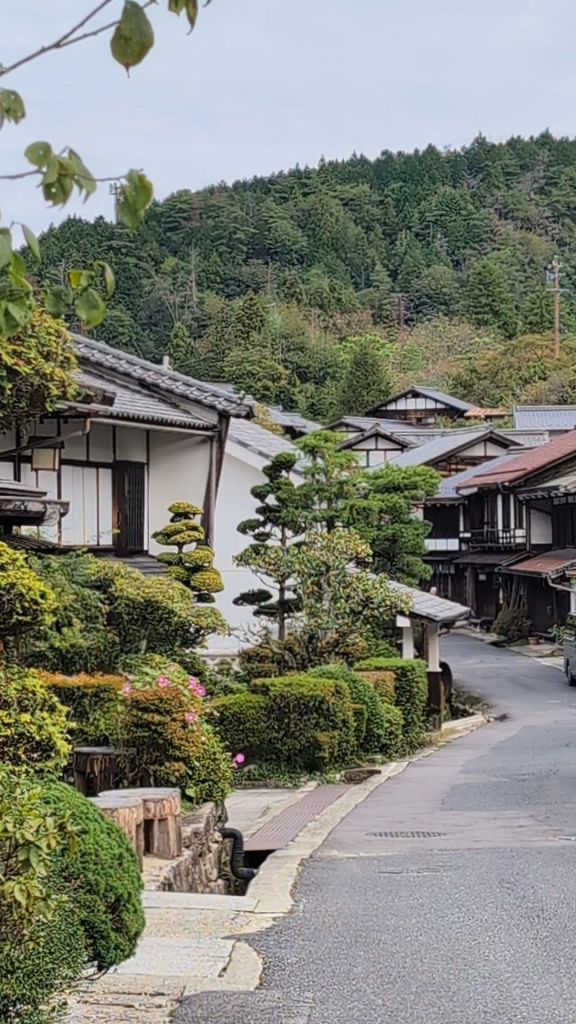
The houses there have been preserved, and there are examples of simple and very traditional 2 roomed houses that the normal residents would have lived in.
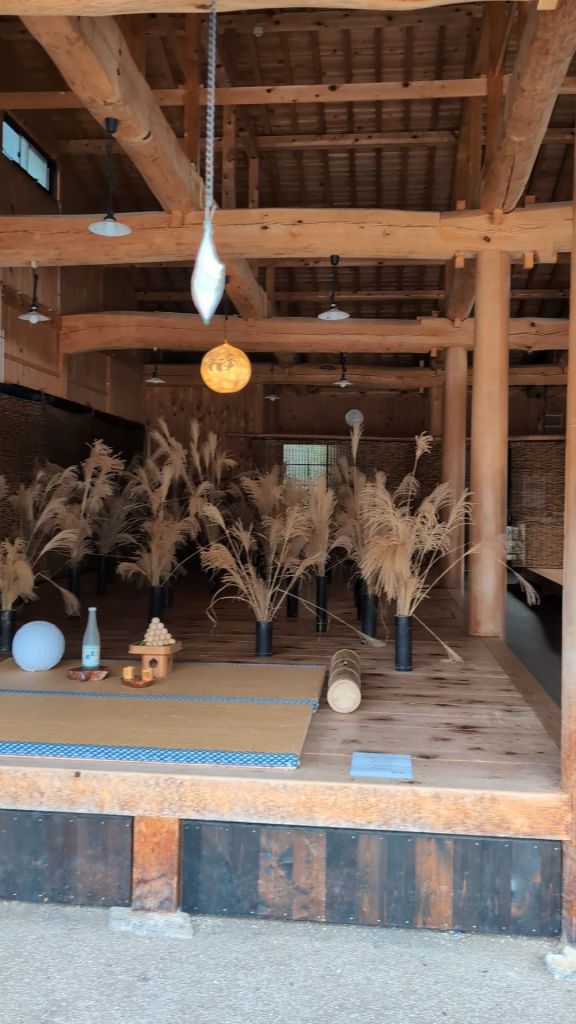
There is one of the old staging posts, with an explanation of what happened in the town, when travellers arrived and how their individual needs would be managed. There was evidently a very well-structured process and everyone had a role to play in securing what was needed for safe passage to the next town along the road.
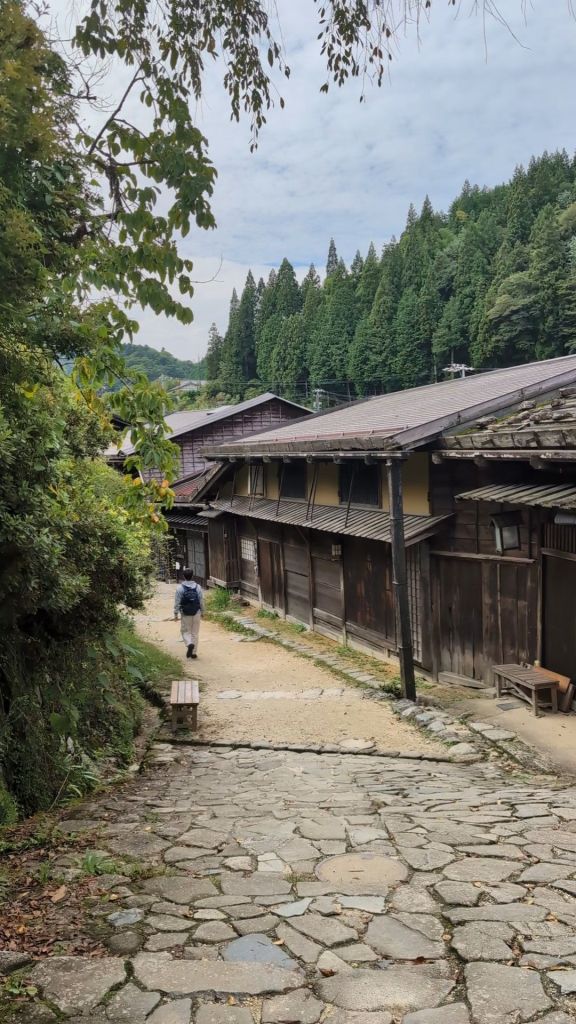
Before long though, we were heading out of the town, along the well-signposted trail, on our way to Magome-Juku, the next town on the route.
You can watch a Video from the walk here
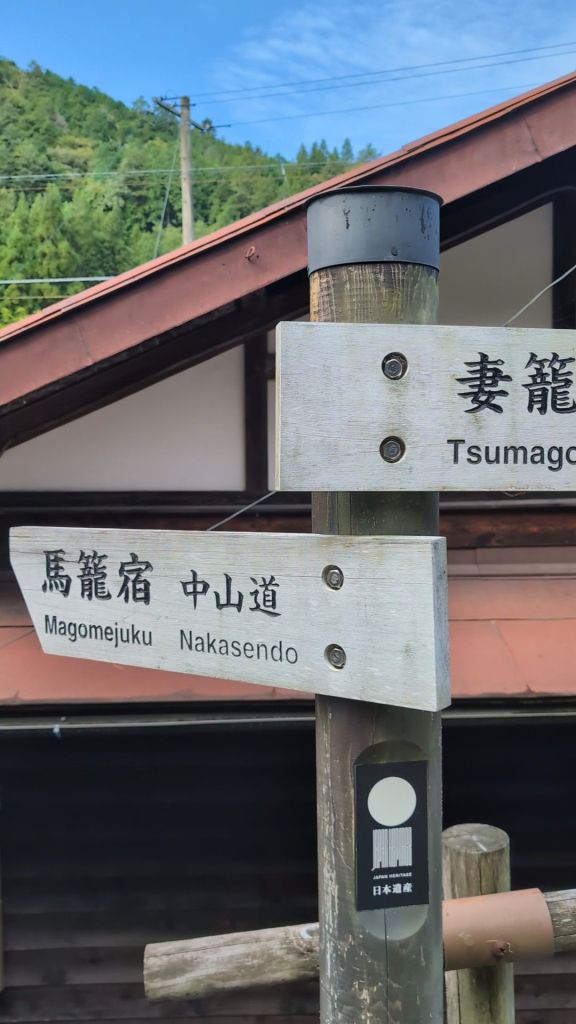
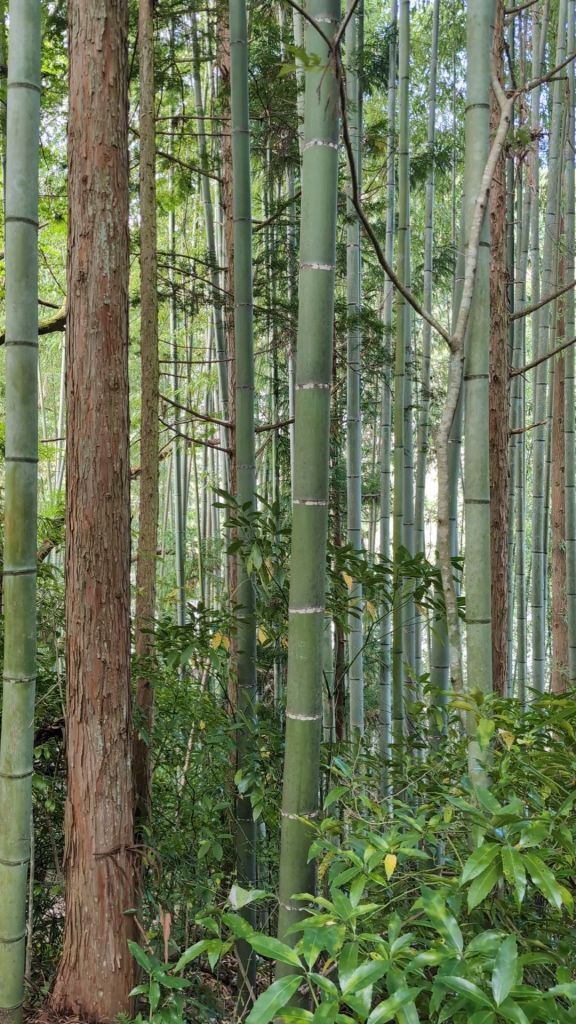
It proved to be a wonderful walk, which took us through forests of trees, mixed with Bamboo
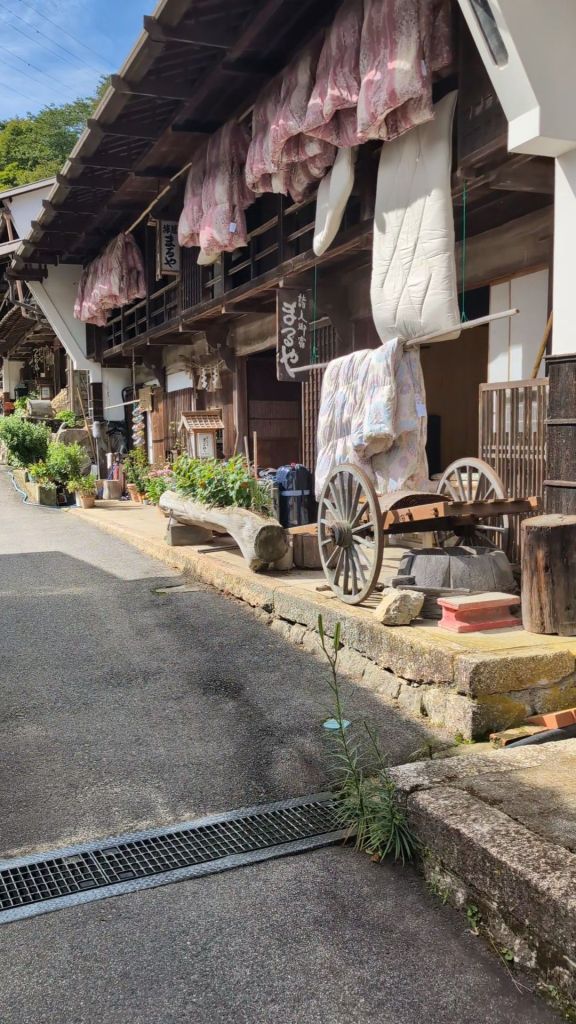
And through pretty hamlets, some with Ryokans (traditional Japanese Inns) that serve travellers along the route today
The route follows the river, and the sound of water is a constant as you walk, with some buildings having old water-wheels attached to them, fed by hollowed out wooden ducts from the streams.
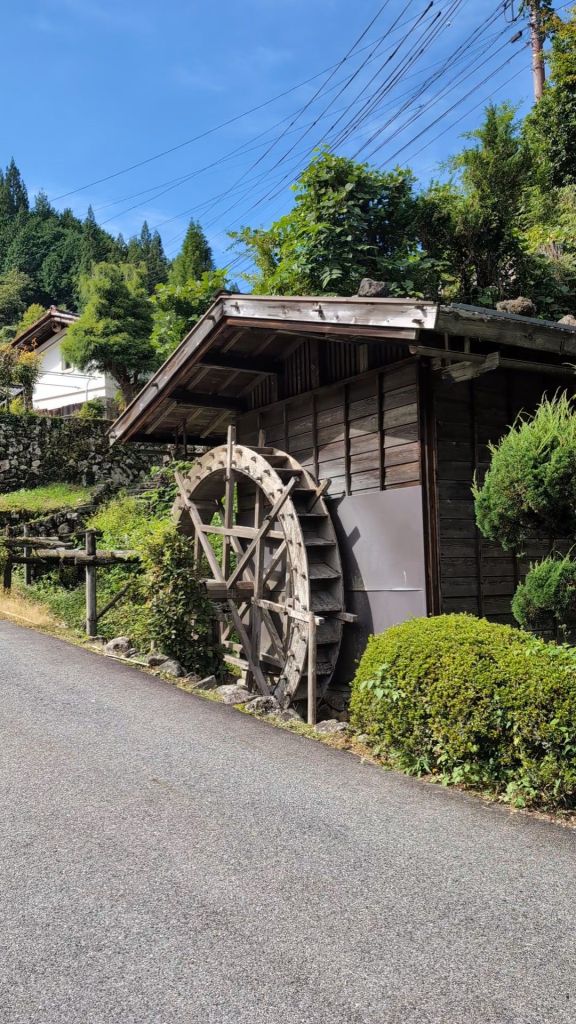
The route criss-crosses the modern road that now links the 2 towns, and after one crossing point, we found ourselves on a beautiful cobbled path, which snaked its way up the side of the hill, through the peaceful woodland.
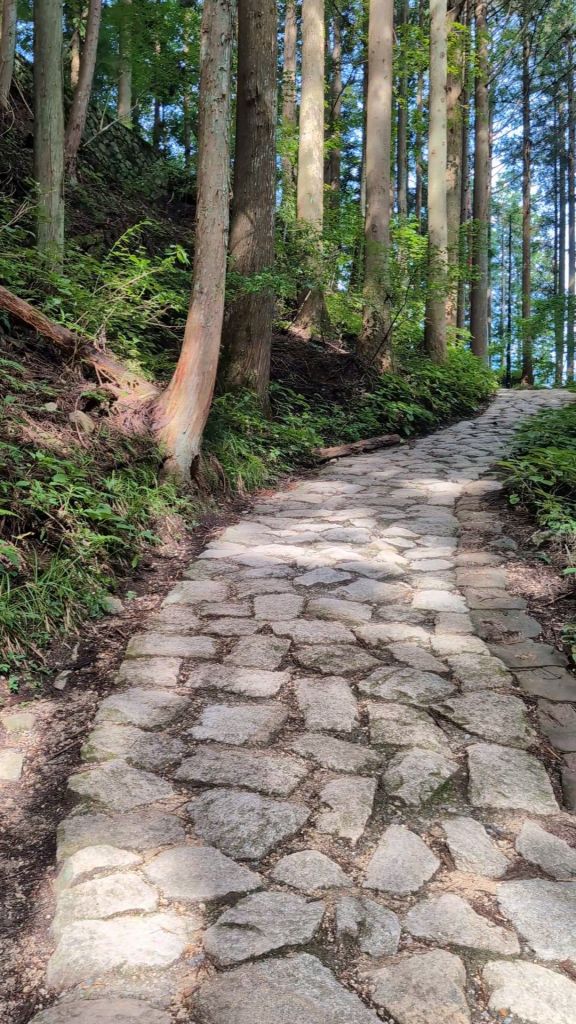
Half way up this path was a small shrine, Gyutou Kannon, which was placed there to pay tribute to the black cattle that were used to carry the heavy loads up these steep hills. This is the only shrine to cattle on the length of the Nakasendo Trail, as others recognise the horses that passed along it. Having walked up the hill, I had to feel for the cattle, as they really would have had a hard job, carrying loads up the steep banks.
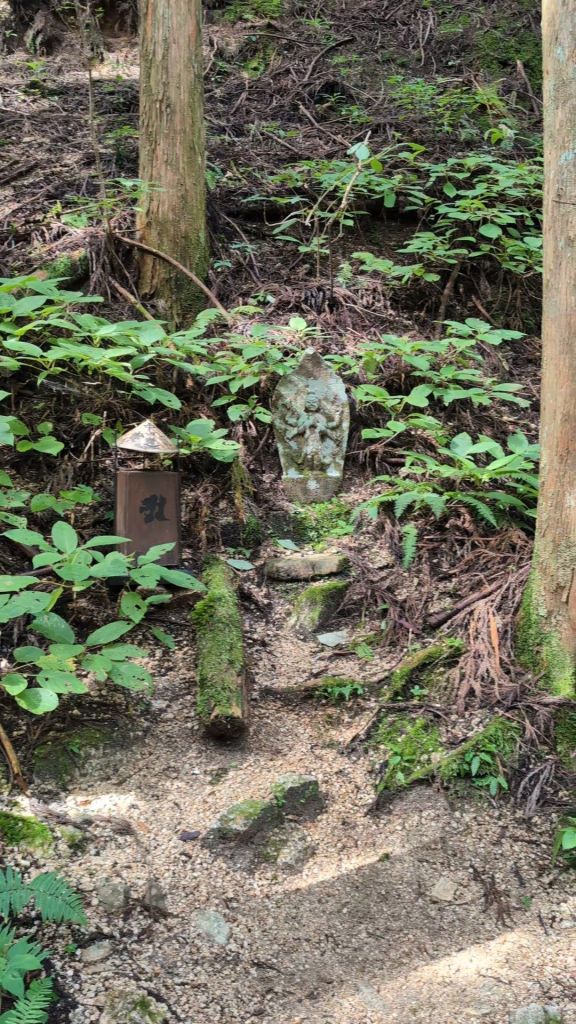
There are other shrines along the way too, and after passing through a section of Bamboo Forest,
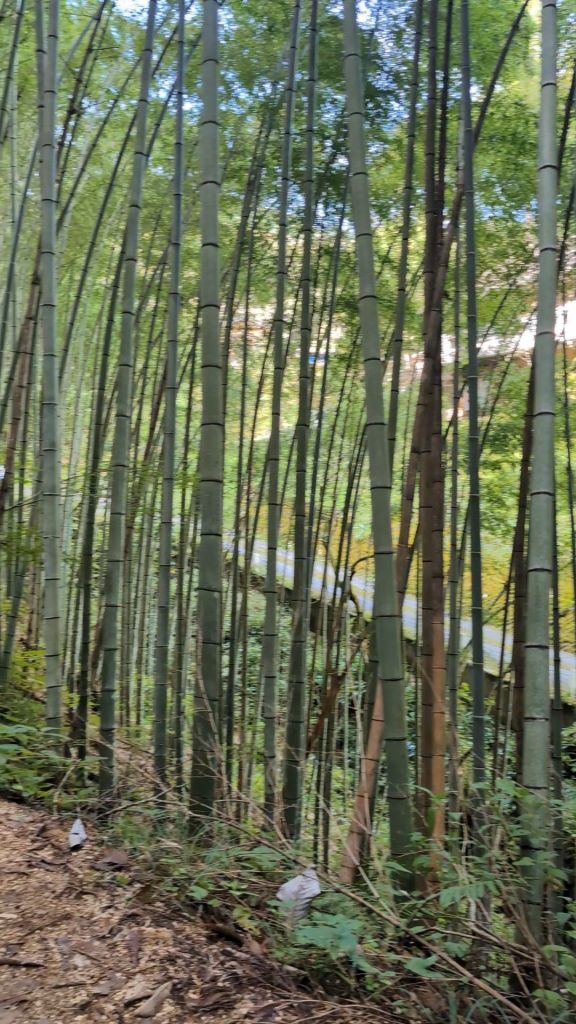
there was one to mark the death of Shichirozaemon, whose spirit is enshrined at the side of the path. Legend says that he was killed there by bandits, on 4th March 1580. But it appears that the truth is that he and his party were attacked by local Lords at Magome Pass and he died from his injuries. But his shrine is now a peaceful spot, and it’s hard to imagine the violence that took place here.
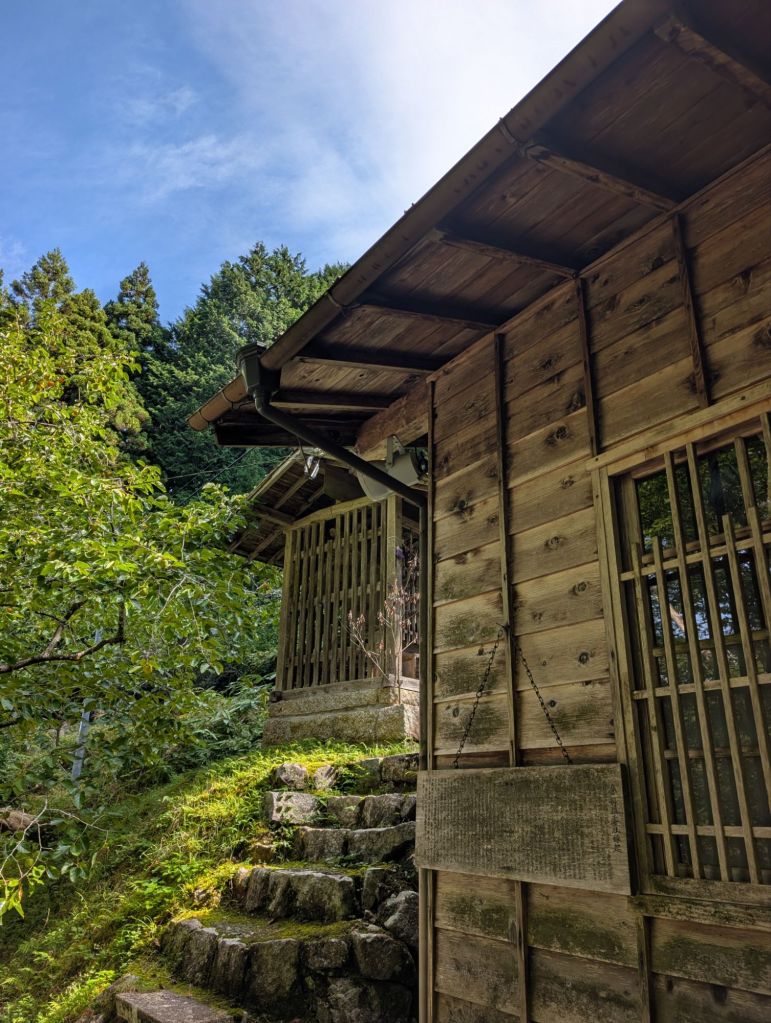
Soon after, we passed 2 waterfalls the Odaki & Medaki falls, the sound of the water ripping through the peace of the forest.
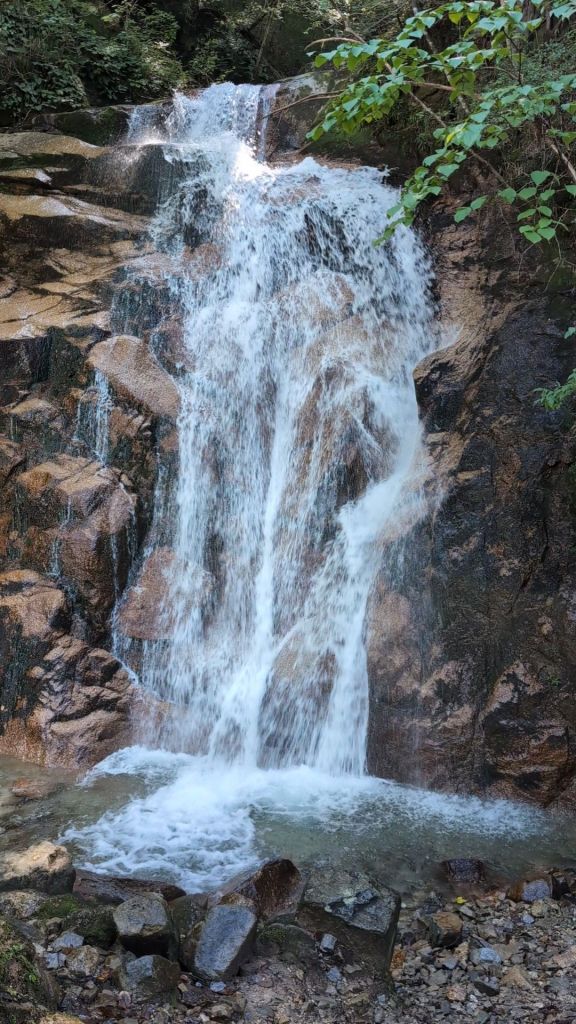
It was very beautiful indeed.
The whole route is well-marked and very well-serviced too, with regular path side toilets (which are immaculate, as we have come to expect), and also water taps and in one place a free tea-room, where you can sit inside with a cup of tea to break the walk.
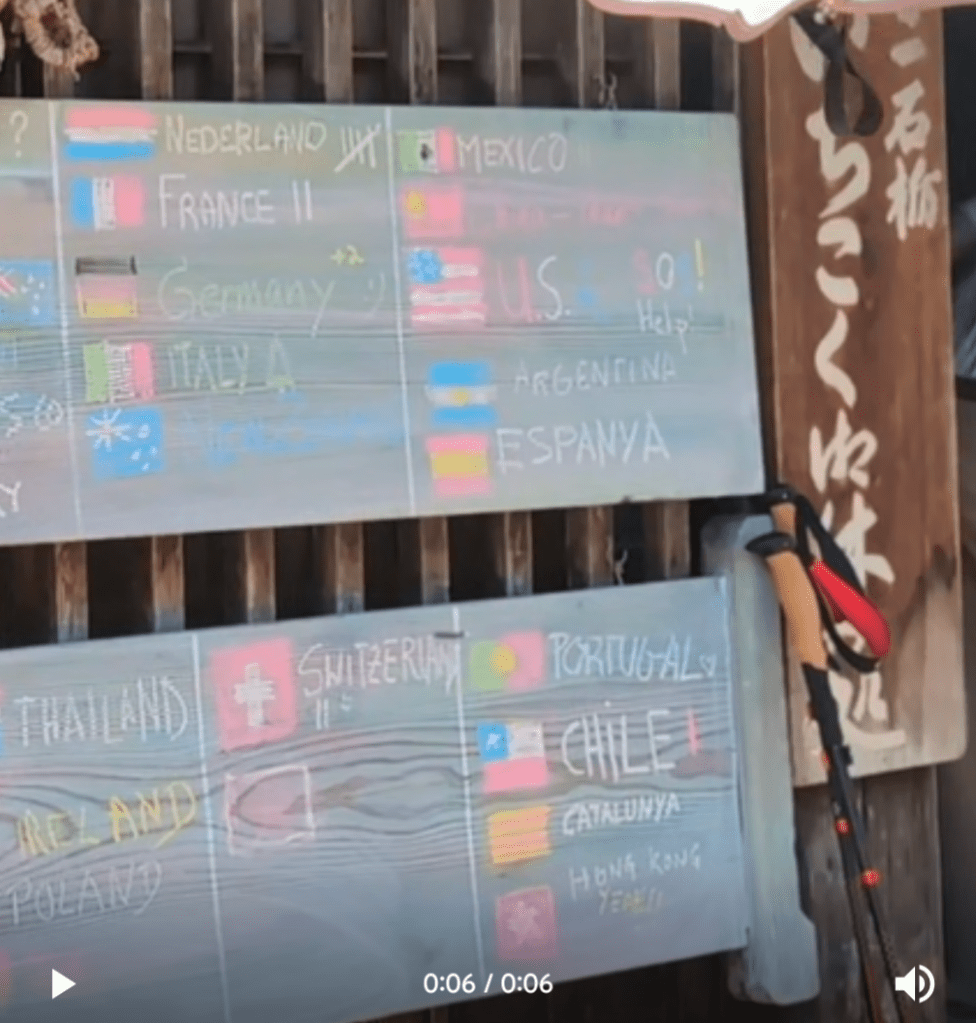
The path is incredibly well-used and by mid-morning was busy with walkers heading in both directions, the sound of bear-bells jangling from rucksacks, adding a tuneful note to the insect chatter. There were people of all nationalities hiking, and outside the free tea-room was a chalk-board allowing people to add where they had travelled from today. It was amazing to see the countries represented in just a few hours
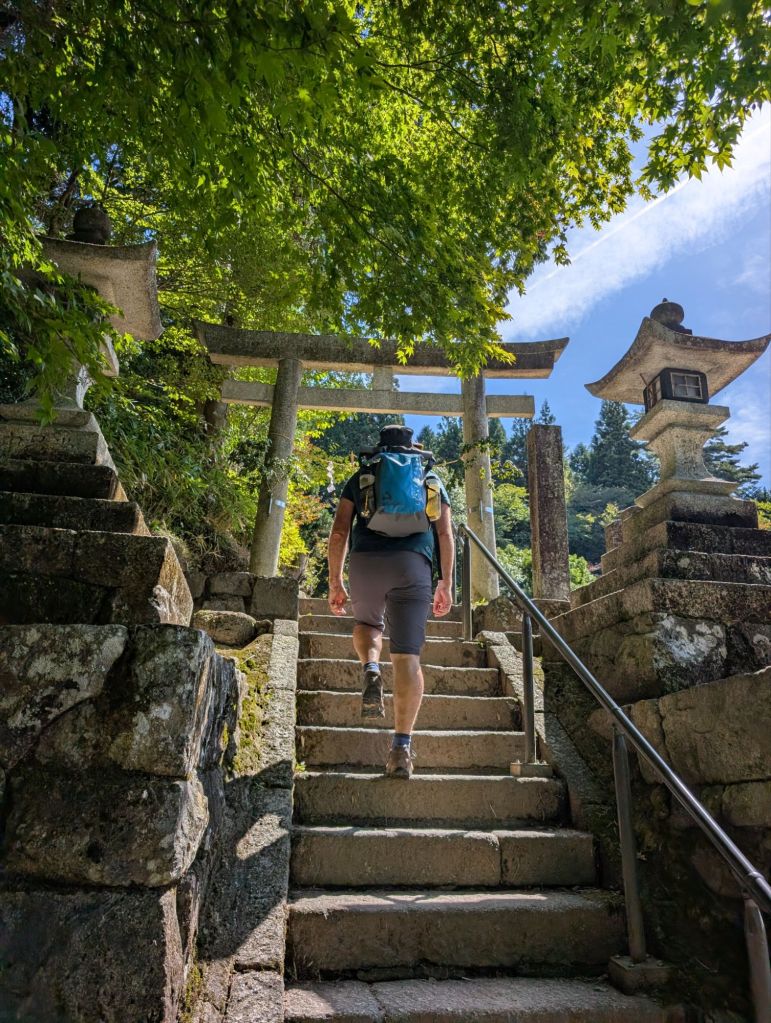
The path is relatively easy walking too, although this is far from a flat hike, as it passes over the Magome Pass at 772m. Once over that, we started to drop towards Magome-Juku, stopping at a tranquil shrine set to one side of the path, surrounded by trees, where we sat for a while, before dropping into the town.
The town itself was probably my favourite of all the ones we had visited. Yes, it was very ‘grockly’ and very clearly a tourist hotspot, which came as a bit of a shock after the peace of the Izu Peninsula and the forests that we’ve stayed in over the last few nights. But it was easy to see why.
The town’s main street runs down the hill, and the houses are interspersed with little gardens
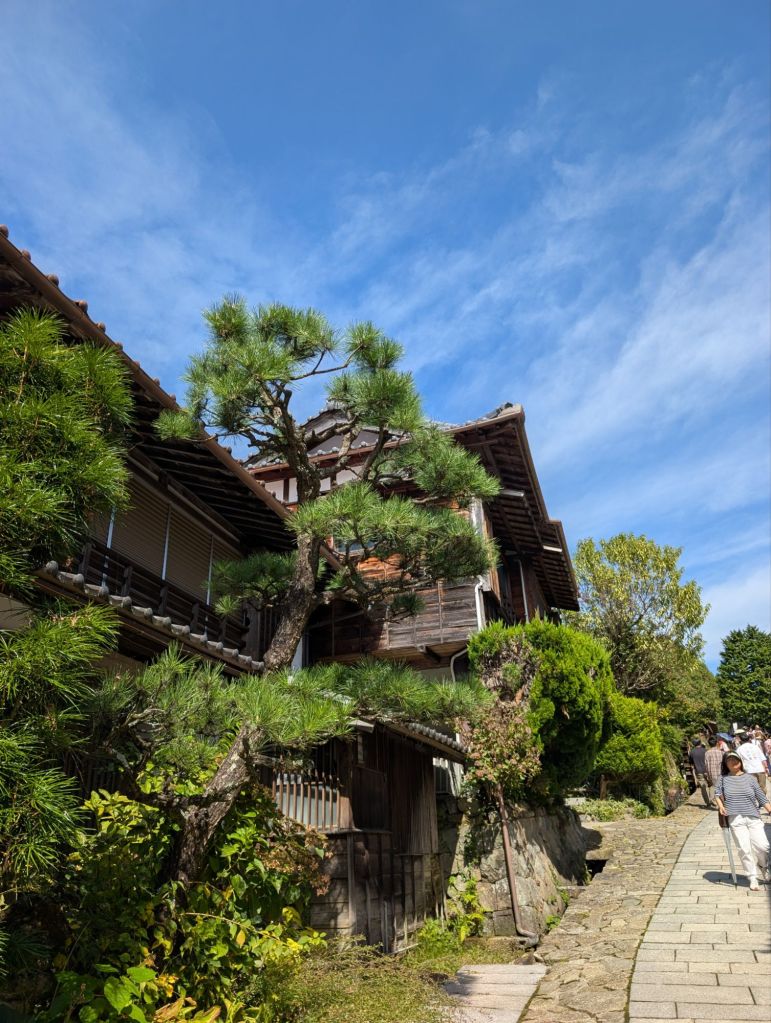
Running either side of the street are two deep water ducts, bringing the calming sound of running water, and feeding occasional waterwheels, that were turning gently, as we passed by.
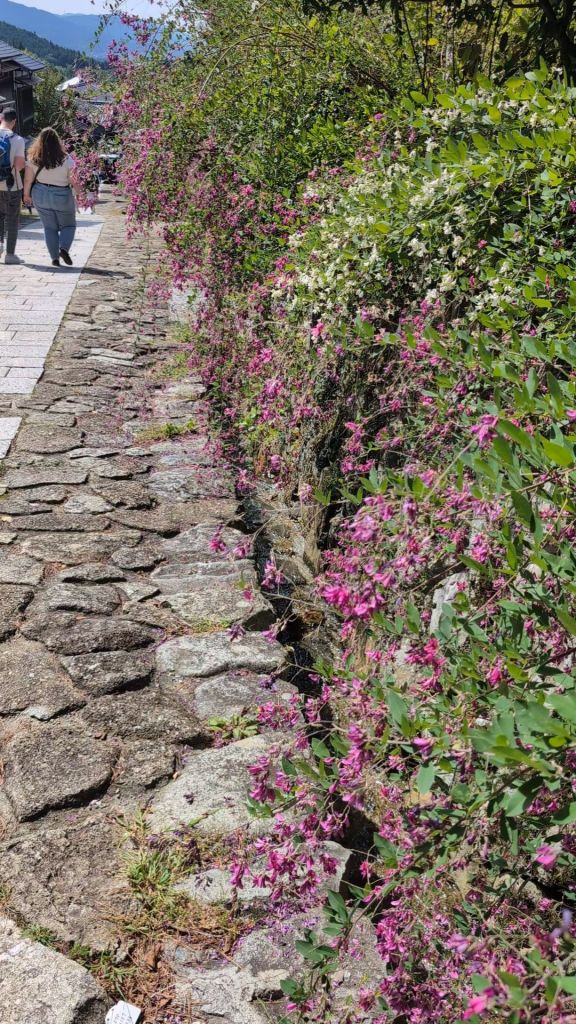
The houses and other buildings were exquisitely beautiful, and we are amazed that they have been preserved after so many years of being open to the elements, when they are only a simple wood construction.
Despite its busy-ness, we enjoyed just wandering down the street, admiring the houses and watching the water-wheels turn. Even happier, when we found a great coffee-shop near the bottom of the street, and enjoyed a coffee, watching the world pass by.

Eventually, we turned back up the hill to head back over the pass and into Tsumago, enjoying the walk just as much on the way back, as we did on the way out.
All in all, we walked 16.5km, and it passed in a flash. You can see the route Here
But what we needed next was a bath, so we set a route for a nearby Onsen, and an hour later emerged fragrant and relaxed, having scrubbed away the efforts of the day.
It turned out that the Onsen was near Magome-Juku, so we found a free park-up on the edge of the town and are spending the night here, deciding which route we will take tomorrow.
We ambled into town again, as the sun was setting and had the beautiful place almost to ourselves. A far cry from earlier. You can see a video of our evening walk Here
So tomorrow, we’re heading on again, and as things stand, we’ve decided to take a route north west towards Lake Biwa , avoiding Kyoto and Osaka, and aiming to find some more quieter areas, as we wingle our way round towards Shikoku.

Who knows where we’ll be spending tomorrow night.
 Postcards from Provence and beyond
Sounds absolutely delightful
LikeLiked by 1 person
It was so delightful
LikeLiked by 1 person