We had the perfect night’s sleep at the head of the Ojiragawa Canyon, lulled to sleep by the chatter of the night insects and only woken once by the sound of banging on metal. Apparently monkeys sometimes come into the parking area, so we both put it down to night-time monkey antics and slept until the light started to creep around the blinds.
With the light, came the sound of gentle rain on the roof of the van, which quickly became heavy rain, as we ate our porridge . Yes, we are still sticking to our porridge for breakfast, although with delicious Japanese honey, instead of lavender honey from home.
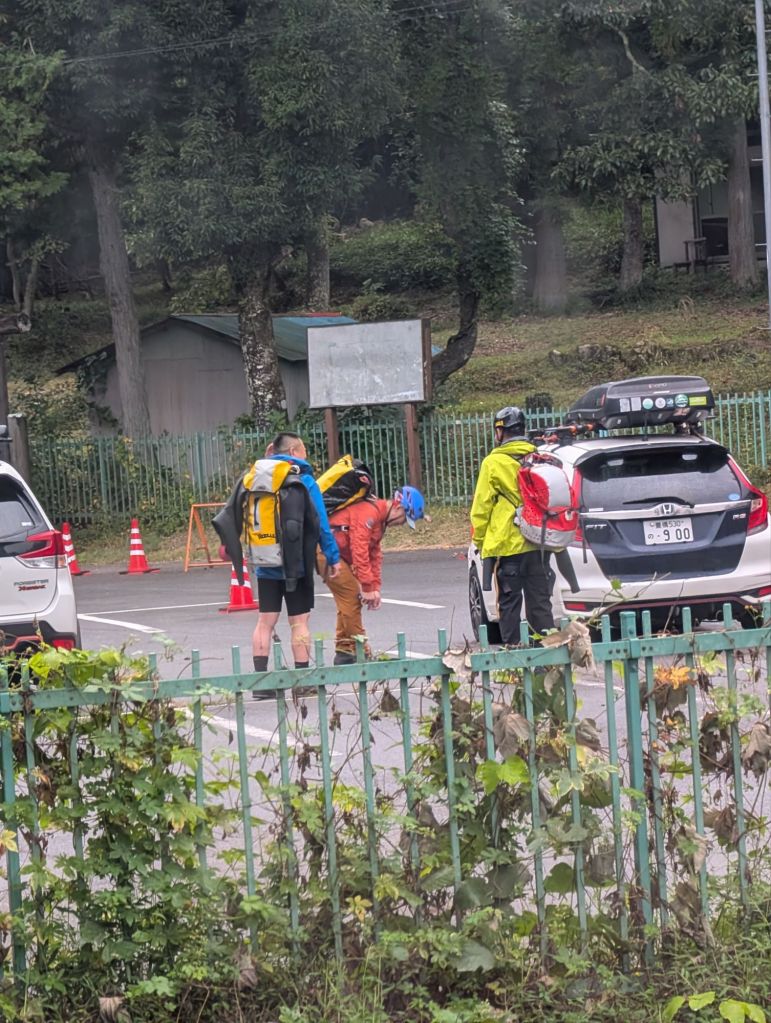
We watched as hikers arrived, parking their cars and headed off on the trails, fully equipped with climbing shoes swinging from backpacks and their bear bells adding a musical note to the drumming of the rain.
We spent the time looking at the map and deciding where to go today, knowing that we want to head across towards Shikoku, where we want to spend a good amount of time over the coming weeks. Having headed north west yesterday, it was time to start making our way further across towards either the ferry or bridge to get onto the island.
In preparation for this holiday, we had watched hours of video on YouTube, seeking out places that looked perfect for us. Not the places to visit around Tokyo and Kyoto, but other quieter places, where we can stay in beautiful surroundings, find lovely walks and cycle too.
One walk that we had highlighted was a section of the Nakasendo Trail, between the Edo Post villages of Tsumago and Magome. It was well within striking distance, and would take us in the right direction too, so we set a route for there.
Before we left the night’s parking spot, we saw that the little shop / cafe had opened, so popped over to see what was for sale. We really wanted to buy a ‘bear bell’, as we are walking in areas where there are bears, and the bells, hanging from the rucksack tinkle as you walk, and are used to alert them to your presence.
The shop, which was run by a very welcoming couple was filled with local produce, from sweet black grapes, and other pink Koshu grapes too, to honey and dried ‘wood-ear’ mushrooms, as well as rice and wine. We asked if they had ‘bear bells’ and of course, they had a selection for us to choose from, which we popped in our bag, along with wine, honey and grapes.
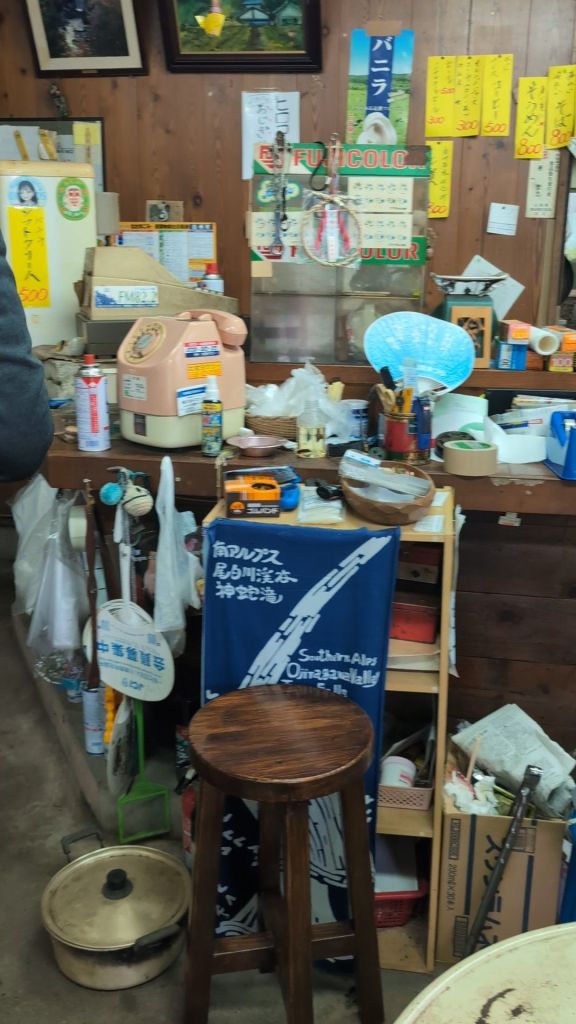
As we left, the lady stopped us and handed us another bag of the pink Koshu grapes, telling us that they were a gift. It was so kind, and we thanked her, before we started to head off. It seemed strange that so many grapes were on sale, as we were in the southern Japanese Alps, which we didn’t imagine would be prime growing area for grapes, but they were delicious.

When we left the parking, the mountains around us looked like a scene from ‘The Land That Time Forgot’. The summits were shrouded with grey cloud, which was being caught by the trees lower down the slopes too. It was etheral and beautiful, although I did wonder about what views the hikers that we had seen heading off, would get on their walk.
We set off, making our way along quiet roads towards the Expressway, as this would take us past Lake Suwa, to the town of Shiojiri, where we could start heading down towards the area we’d chosen for tonight’s stop, near Tsumago.
We may not like using the major roads, but we are very aware that we have the largest campervan that is available to rent in Japan, so don’t want to risk taking it on roads that are too narrow, steep or winding, as we worry about getting stuck, as some of the roads that we’ve walked along would have been impassable for the van. So we’re being sensible and following routes that we are happy with.
As we started driving into Shiojiri, we began to understand where the grapes had come from. Either side of the road, between houses, shopping centres and fuel stations were vineyards; the bunches of grapes heavy and ready to be picked, a lot protected by little white ‘caps’ placed on top of each bunch, which must be incredibly labour intensive.

We started passing wine producers too, with small domaines, at the side of the road, clearly this is a big wine producing area, and we will be trying a bottle of white, with supper later.
The road then headed into the Kiso Valley, following the route of the old Post Towns. These towns date back approximately 400 years, to the Edo Period, when they were on the Kiso Road, one of the key protected routes between Tokyo and Kyoto.
Many of the villages have been preserved and we decided to stop in a couple on our way through to Tsumago, where we intended to park for the night, before walking the section of the Nakasendo trail tomorrow,
The road follows the Kiso river, which runs through the steep sided valley, with the towns and villages every few kilometres, along the valley floor.
The first one we stopped at was Kiso-Hirasawa, which is renowned for its artisans creating lacquer-ware. We wandered into the village, and were taken by the beauty of the old houses, with their wooden-slatted shutters and traditional style.
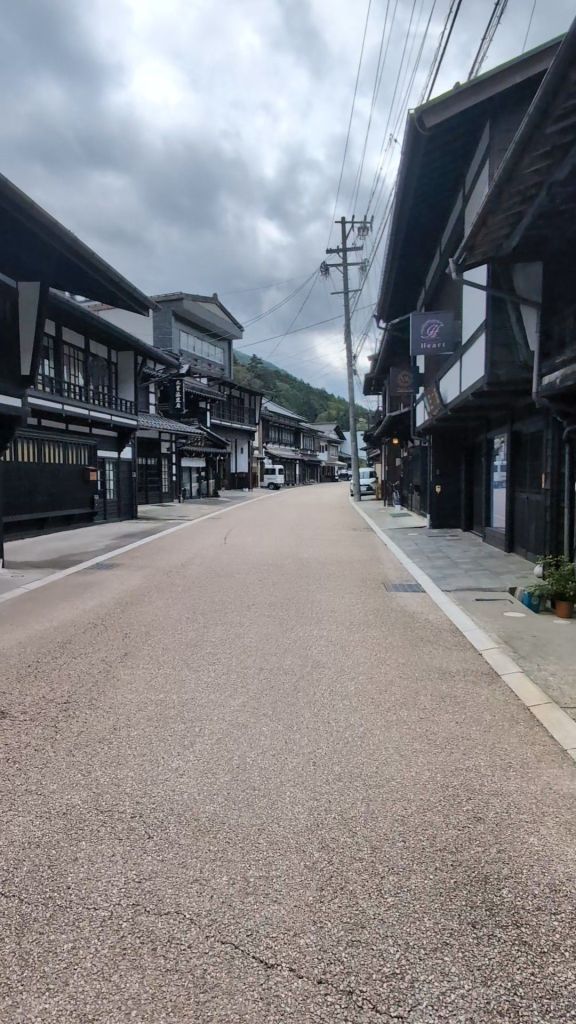
As we walked in, the village loudspeakers started playing the 1200h music, which seems to be a feature of Japan, and something we’re getting used to now. Almost all the shops were closed, but we nosed through the windows at the beautiful work that was on display. From chopsticks and bowls to glasses and tableware too, all with jewel-like colours glowing with warmth. I did think the little cups designed to look like Mount Fuji were rather cute too.

There are still about 100 of the tradtional warehouses surviving, and we noticed that one had walls made of what looked like a lattice of twisted rope that was supporting a mud wall, similar to traditional wattle and daub, but with rope, rather than wooden laths. We later read that this was the traditional way of building the warehouses, to keep the temperature and humidity right for the lacquer-work to be produced.
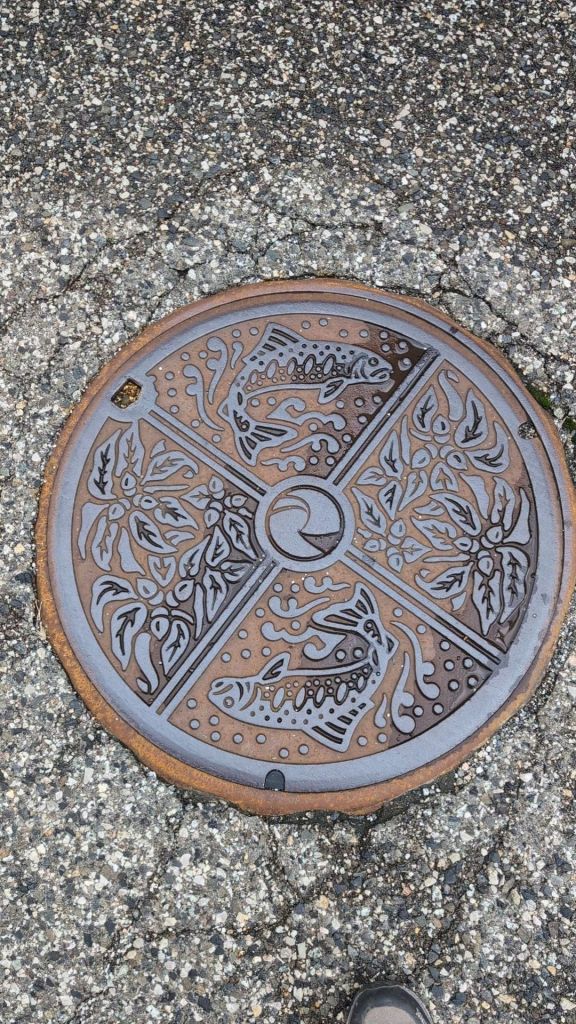
it was a fascinating place, and we ambled around the streets just noticing the little details that are so specific to Japan, from the glazed roof-tiles to the rather wonderful manhole covers too
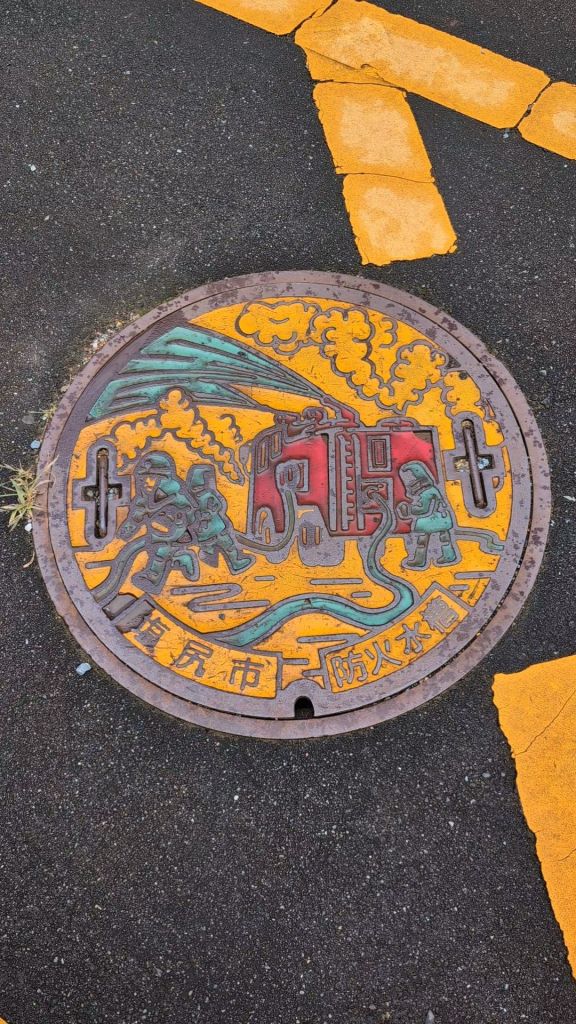
Who imagined that something so functional could be quite so pretty.
Then we popped into the village toilets, which were like none that we have ever come across before. The walls were lacquered wood, and they were absolutely immaculate and cared for too. You can see a little video from our amble aroud the village (and the toilets) Here
Heading on again, we made our way a few kilometres down the road to Narai-juku, which we had read is perhaps the best preserved of the Post Towns, along the route.
It was stunning.

The old street and houses have been preserved and maintained & it is a wonderful example of how these towns would have looked at their height
The old houses line the main street, with deep over-hanging roofs that we heard a guide say had been designed like that to provide travellers with some protection from the weather.
They are exquisitely built and give you an incredible sense of being in traditional Japan, which was lovely after driving through modern townscapes, with signs and hoardings in every direction.
It is easy to see why this is such a tourist hot-spot, although at 3pm on a slightly soggy Wednesday afternoon in October, it felt as if we were almost on our own there, with just a handful of other visitors, enjoying the sights.
We visited the Kami-Toiya Shiryokan, a 400 year-old house that was owned by the Tezuka family. They were in charge of managing the staff and horses in the town, in accordance with Government Policy, and it was a very important residence.

The house was designated an important heritage site in 2007, and has been beautifully preserved, allowing us to enjoy it today.
It is beautiful, with huge beams and a stunning central fireplace, with delicate walls and simple fittings
And pieces of art on the wall

And in the screens that are placed around the house.

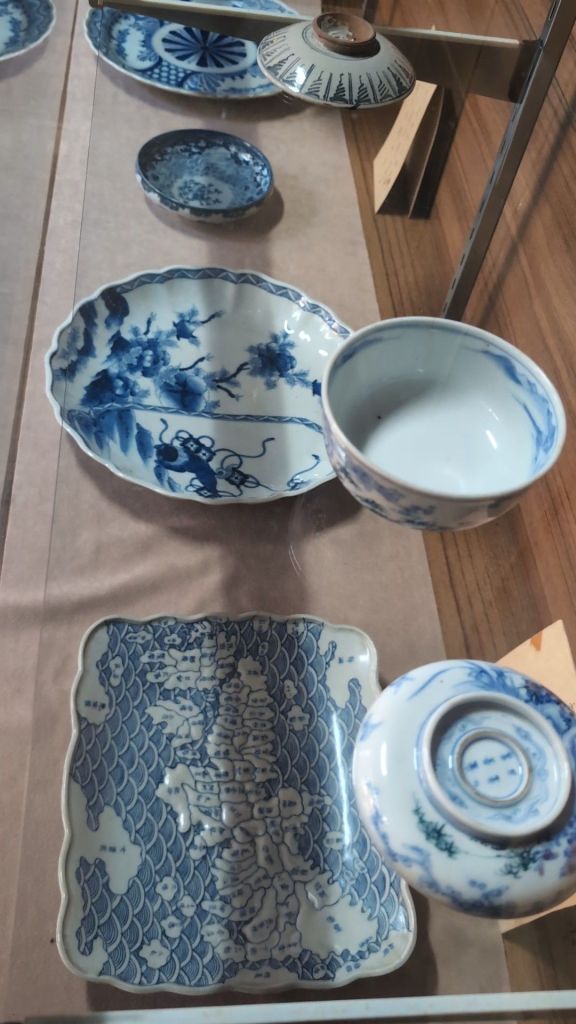
There are also lovely examples of pottery too.
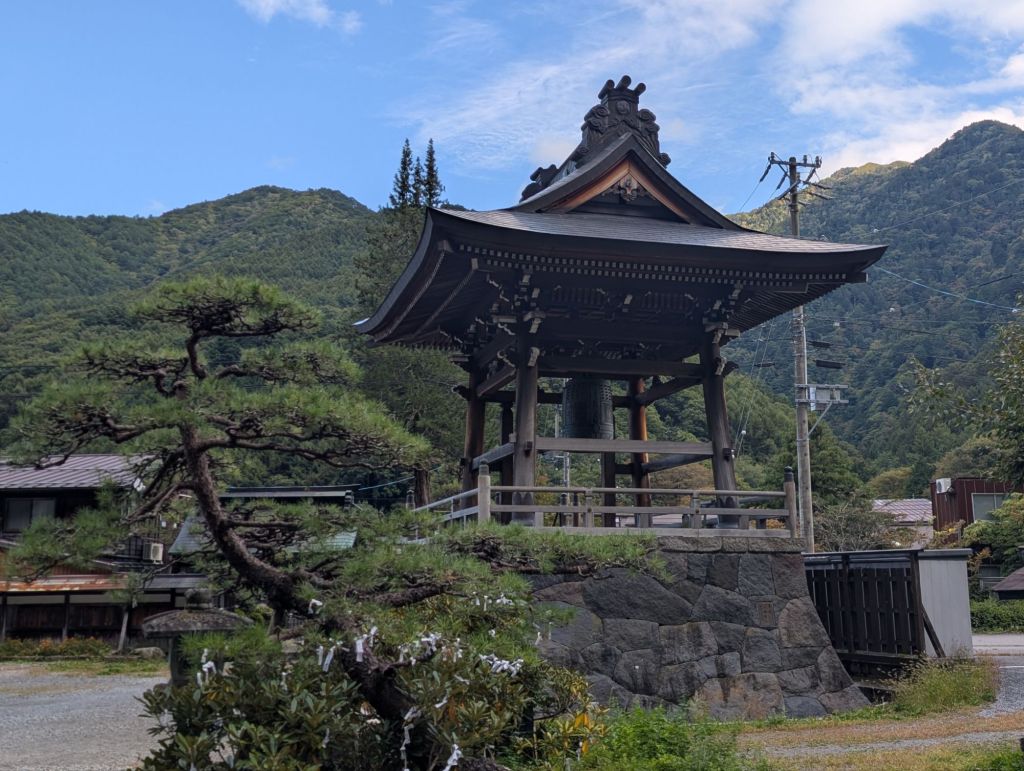
At the end of the town there is the Gyokuryu-zan Chosen ji-temple, which was built over 150 years ago, and is dedicated to Buddha.
It’s a beautiful spot, with a tranquil garden and a stunning pagoda, housing a large bell.
Inside though, it is incredibly decorative, with a spectacular painting of a dragon across the ceiling, above the entrance. The Dragon (a symbol of the water god) is 20 metres long and is beautifully executed.
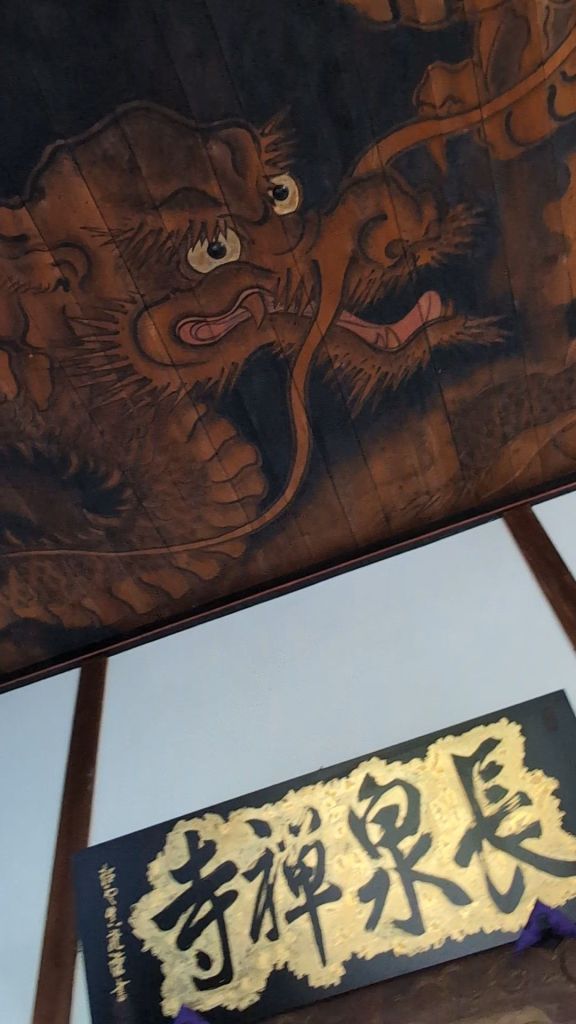
It was called the ‘Roaring Dragon’, as when someone clapped their hands the sound reverberated around the building. Unfortunately structual work (we imagine to secure the building against earthquakes) has removed this acoustic device, but it is still a beautiful piece of art.
By the time we dragged ourselves away from the sights, the rain had started, and by the time we got back to the van, we were verging on being soaked to the skin, so we headed on again towards Tsumago, in the pouring rain.
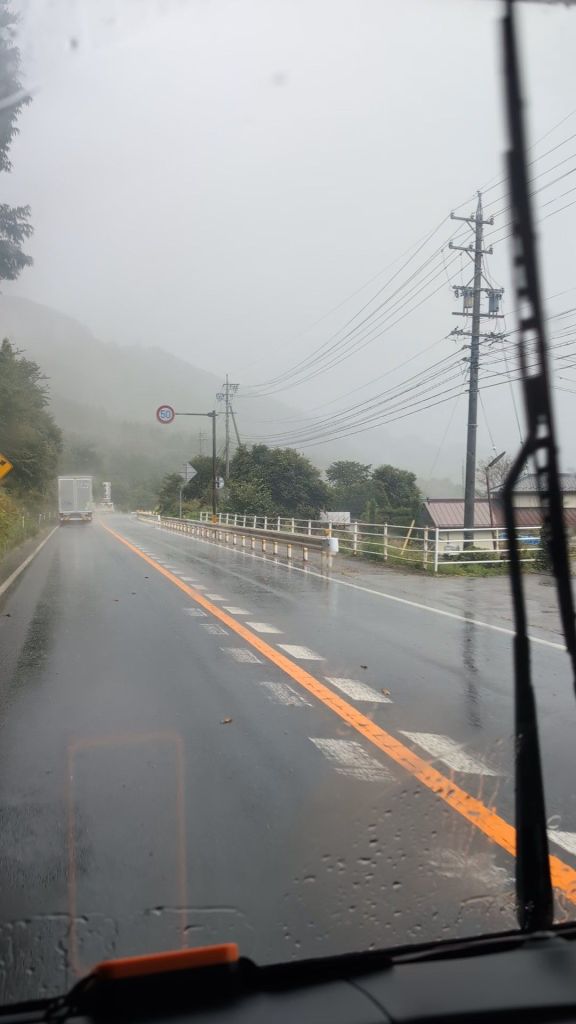
The joy of having the campervan though, is having the flexibility to change or minds, and as we drove, I spotted a different camp-spot for the night, next to a river in the Atera Valley, just a few kilometres from where we want to walk tomorrow.
So we turned off, and headed up the road that followed the river running down the steep gulley and found ourselves at a totally empty parking spot, with the only sound being the water rushing over the rocks, a few metres from the van.
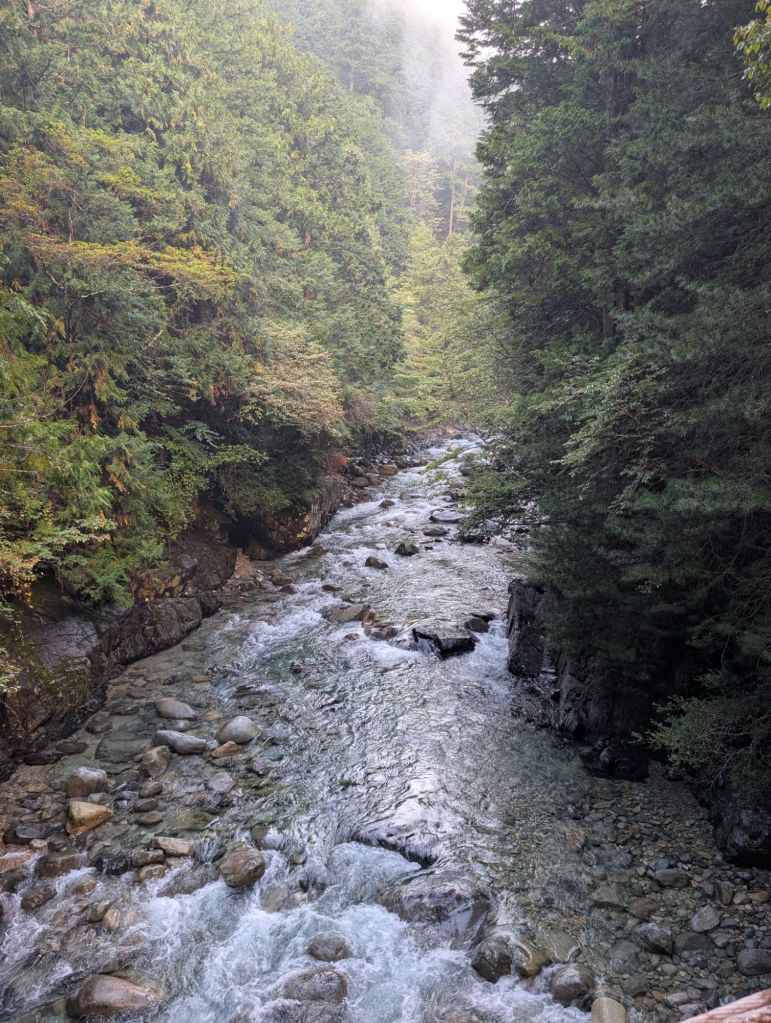
It was perfect, and we arrived just in time for a quick walk along the nature-trail, before the night started to close in.
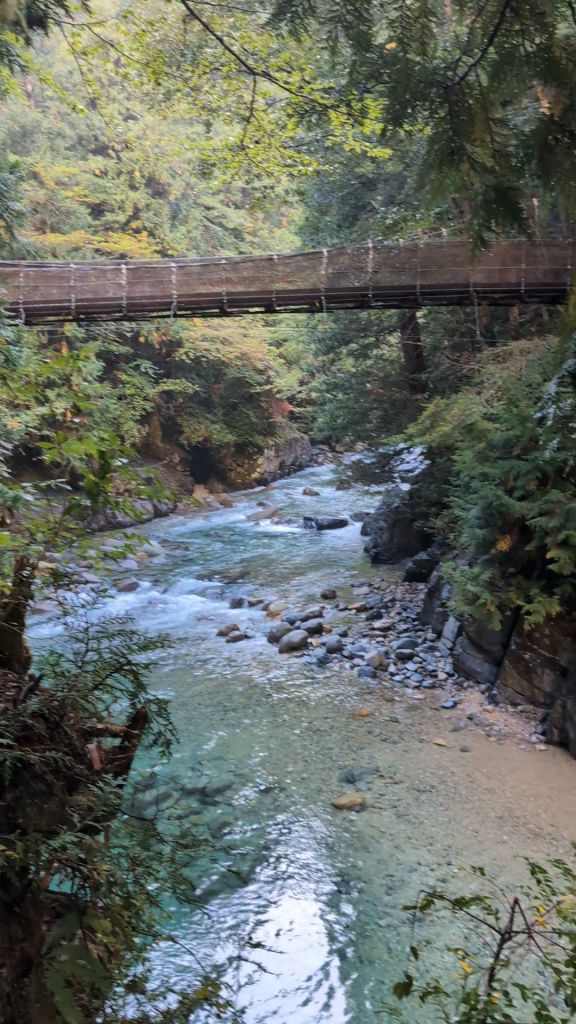
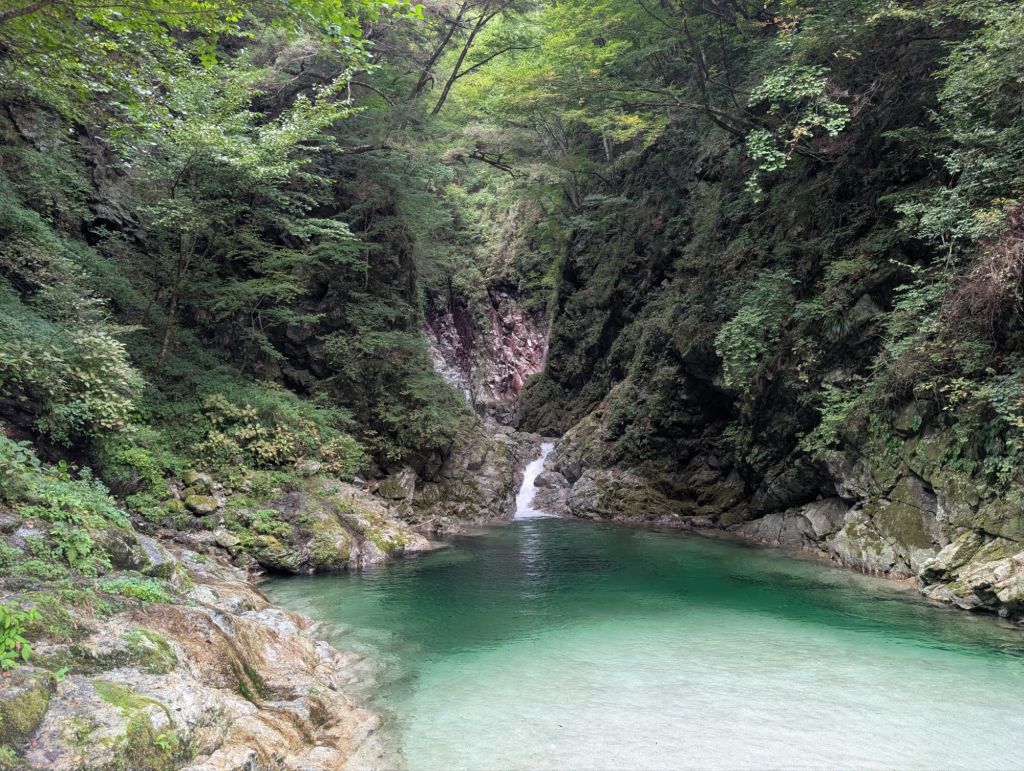
As we set off, across the suspension bridge, there was a bell next to the path, with a direction to ring it, to make the bears aware that you are there. We did as it requested, and walked out to a nearby waterfall, where the water fell off the rocks into the river below.
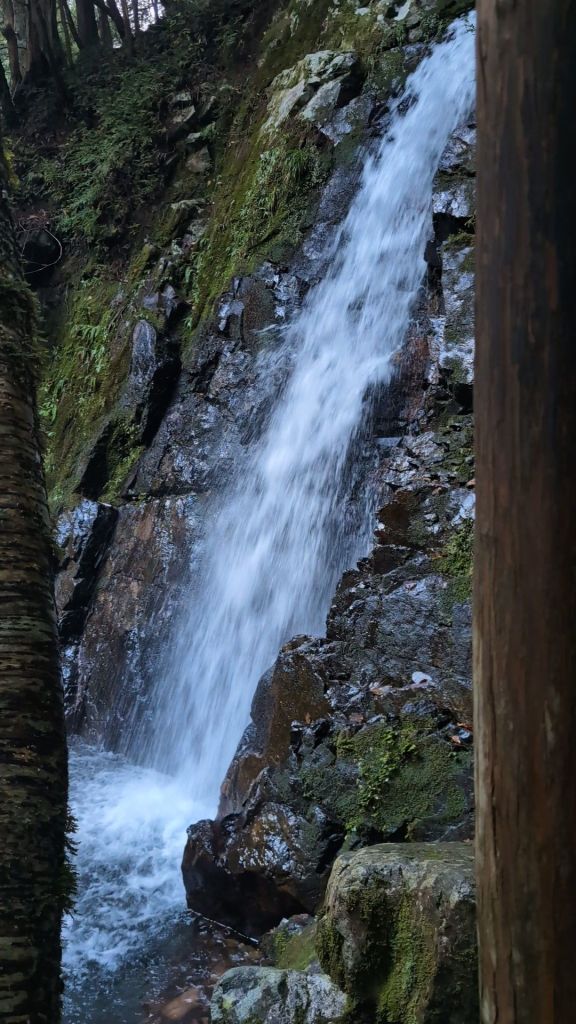
Another beautiful, tranquil and calm spot to stay for the night, and we’re looking forward to our walk tomorrow.
 Postcards from Provence and beyond
I so want a bear bell!
LikeLiked by 1 person
We wouldn’t walk without one now … There are so many warnings around , and it tinkles so nicely
LikeLiked by 1 person
The woodblock print artist Eisen made an illustration of the road near Magome almost 200 years ago, part of the series “The Sixty-nine Stations of the Kisokaido”
https://en.wikipedia.org/wiki/The_Sixty-nine_Stations_of_the_Kiso_Kaid%C5%8D#/media/File:Kisokaido43_Magome.jpg
LikeLiked by 1 person
Oh, isn’t that beautiful… Thanks for telling me about it
LikeLike