Where on earth do I start with today?
After yesterday’s stress, we had a quiet evening watching the sea, followed by a peaceful night’s sleep, only being disturbed by the wind rattling the windows of the van, as it picked up in the early hours.
The morning dawned cloudy, but warm and over breakfast, we decided to take a slow drive up the coast road to the top of the peninsula, where we would park for the night (hopefully with a view of Mount Fuji).

It’s funny, but our plans are already starting to change. We have been here for 5 days now and are already bowled over by Japan. We’ve started to slow down and get used to doing van-life, our way. We aren’t great drivers and don’t want to drive for endless hours every day, in the hopes of seeing everything, as by doing that, we’ve already realised that we would see nothing at all.
As you will know from our cycling adventures, our trips are more about experiencing the country on a deeper level than simply driving, seeing and going again. So if we don’t get to see everywhere we had researched, it’s OK. Perhaps it will just mean we can plan to come again?
With that in mind, we set a route to a parking spot we’d been targeting, just a short 68km hop from where we’d been staying. That way, we could take it slowly, stop if we wanted to and fit in finding a laundry and also an onsen, as even after yesterday’s stressful moment, we still need to wash!
So, after breakfast, we packed everything away and headed out of the little harbour that had been home for the last couple of nights, and started following the road that would take us along the coast.
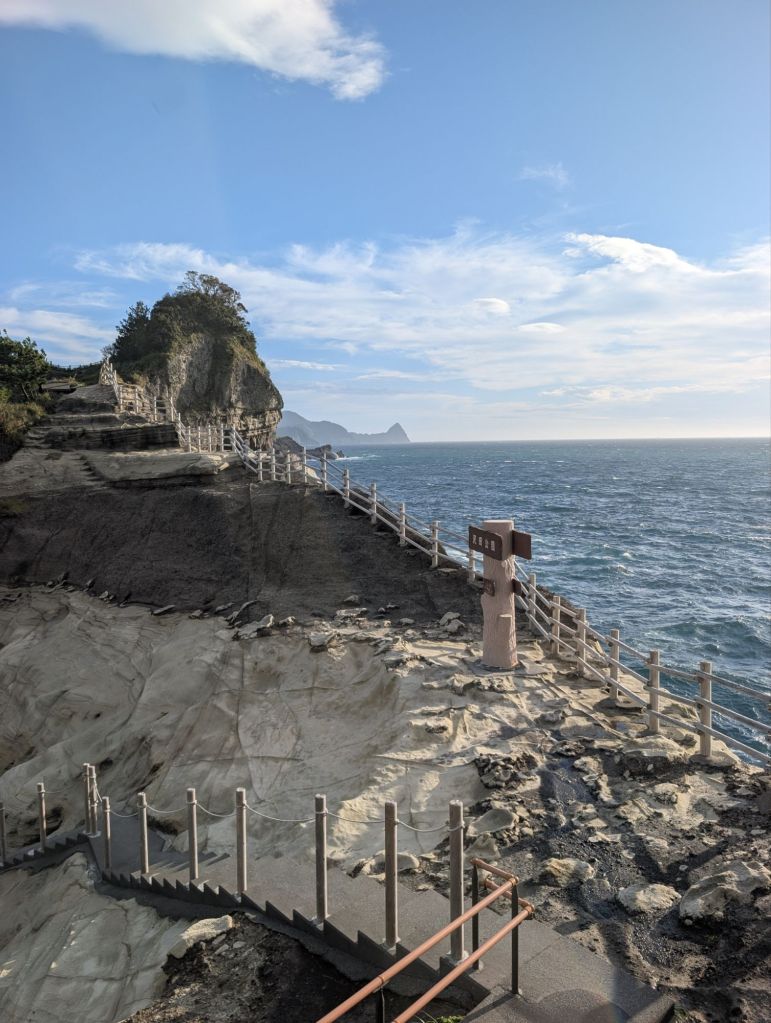
Almost immediately, we realised that this was going to be a beautiful day’s drive, as we started along a road that hugged the steep cliffs, with views of this dramatic coast.
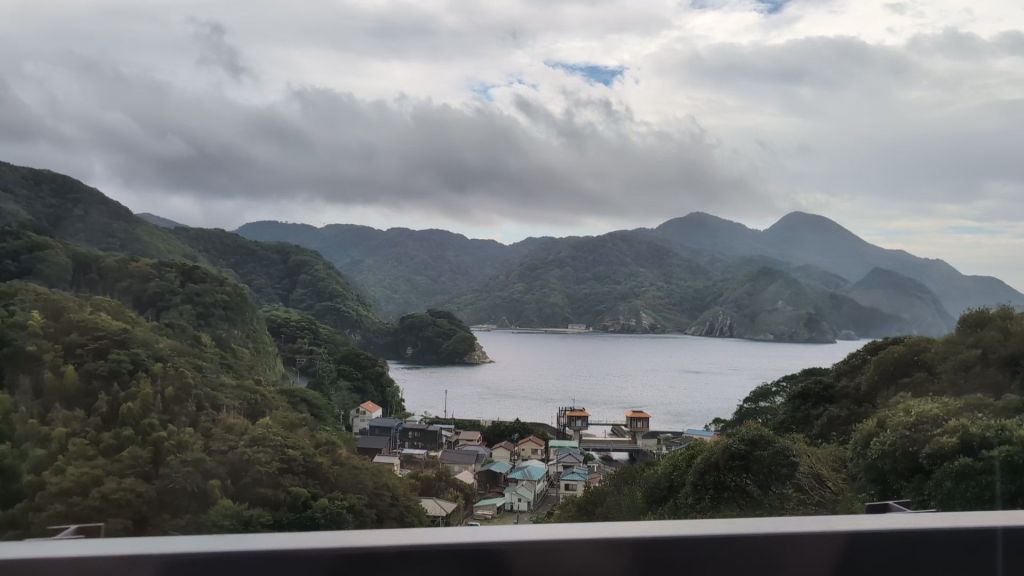
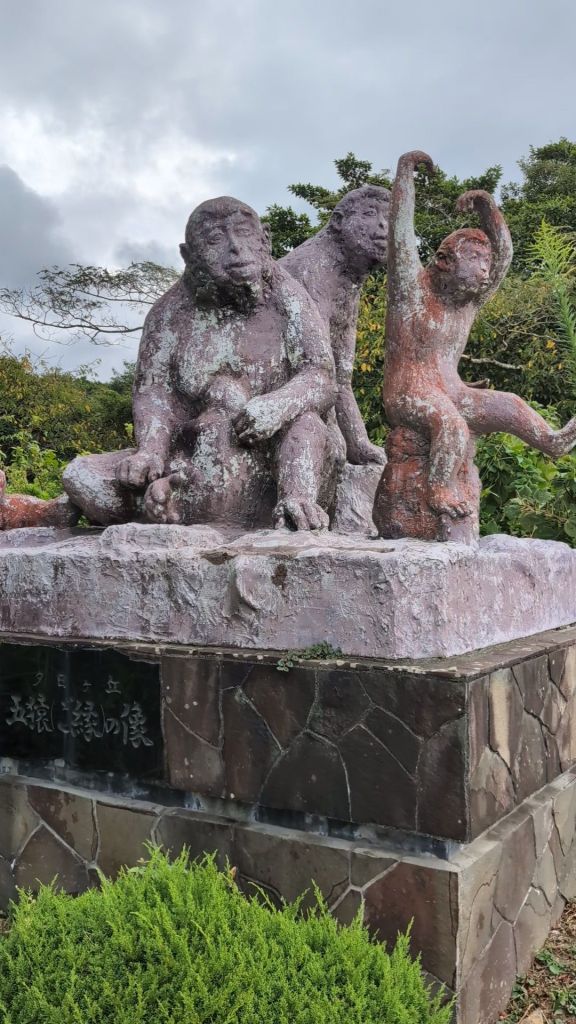
We stopped at a viewpoint, where there was a statue of 5 monkeys, and a lovely view towards (what we realised) was Monkey Bay, where there is a colony of Japanese Macaques, which is in part a zoo, where you can feed them too.
It was tempting to stop, but we decided against it and carried on, noticing a sign for the viewing platform for the Ishibu Rice Terraces. Intrigued, we turned off and parked at the small parking area, climbing the steps to take a look.
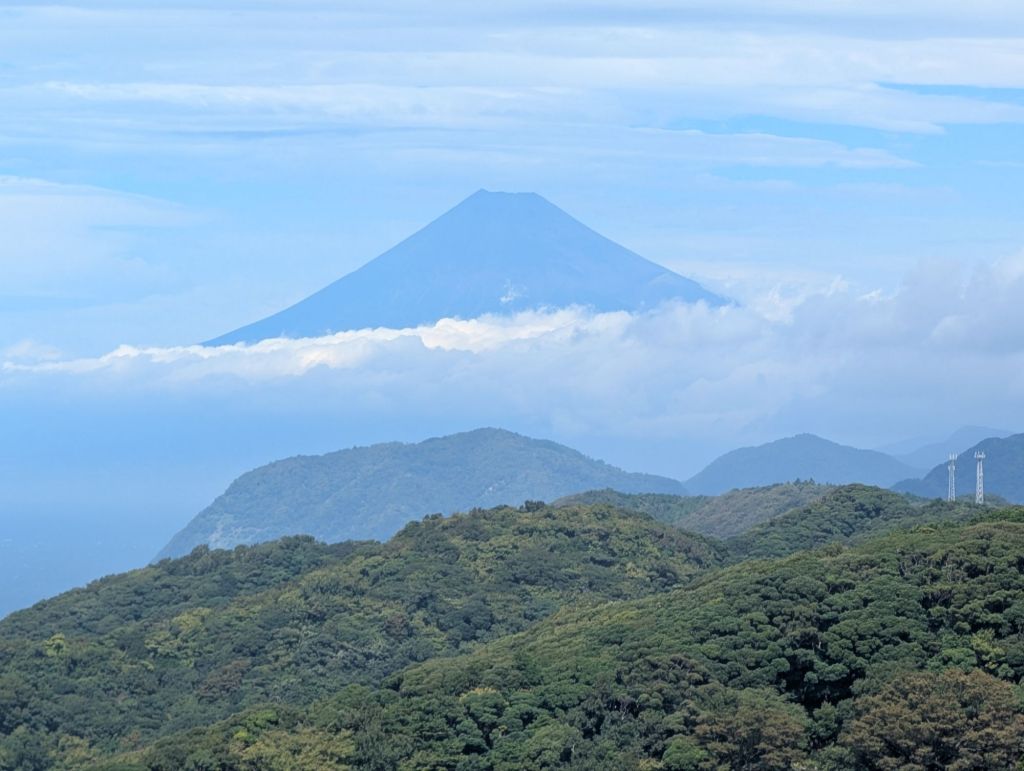
The view was towards the sea, down a steep, narrow valley, with a small fishing village at the bottom. The valley was filled with terraced paddy fields, that flowed down the hillside; a quilt of different greens, and rising above it all was the Mount Fuji, seemingly floating above the clouds that flowed, like a river in front of it.
We watched the view for a while, before taking a walk down the steep, narrow lane that led to the terraces.
There are actually 370 terraces here, all supported with big stone walls, which is apparently unusual for this part of Japan. The area covers a total of 4.2 hectares and drops over 130m down the valley.
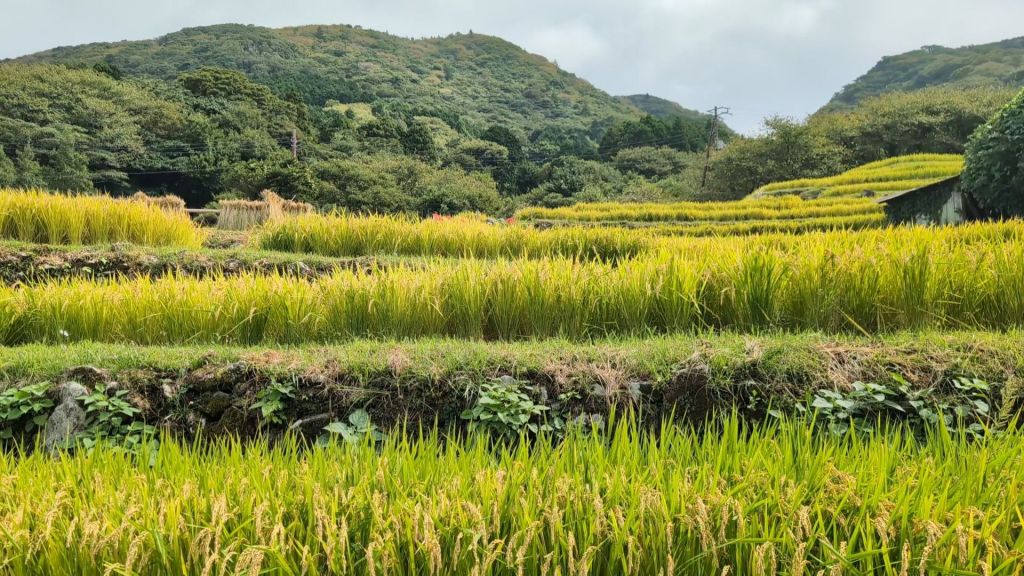
It was lovely to walk down the old cobbled path that runs between the fields, getting close to the plants, which seemed to be heavy with rice. It’s something we’d never seen before, so was nice to see what it actually looks like, before it arrives on our plates.

It was incredibly lush, with a network of paths and waterducts that kept it all wet, and as we walked down, we watched people hard at work harvesting and placing the cut stems to dry on racks.

Half way down, we found a sign that explains the importance of the fields for the environment, and cultural identity of the area, but also that individuals can buy their own part of a field and get involved in the growing and harvesting process. For 35,000 Yen (£175) you could buy your own little plot and take the rice from it too, which sounded rather perfect in so many ways.
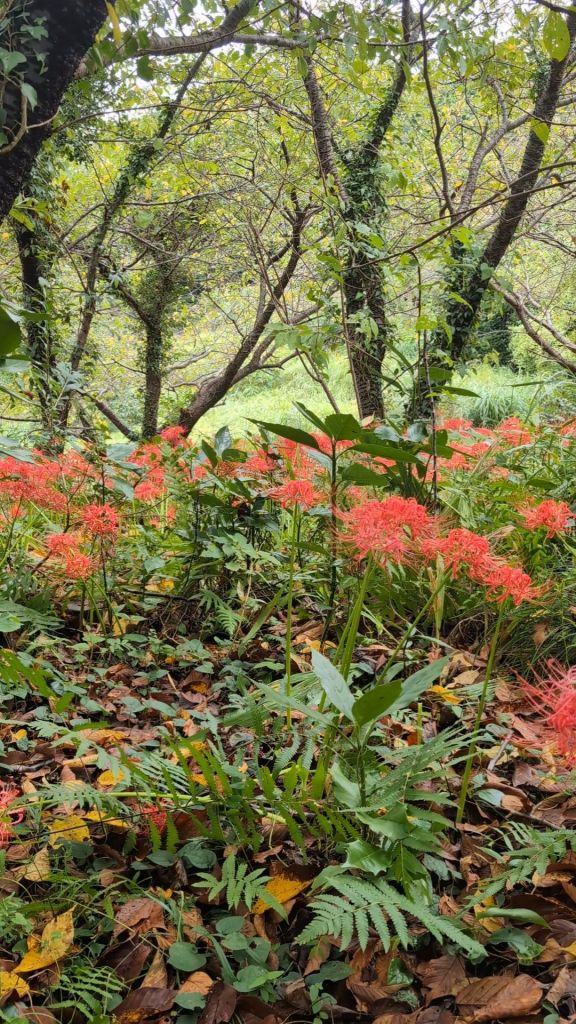
It is a wonderful, community owned initiative, designed to secure this incredible site for generations to come. And what a site to be preserved, with its little thatched barns and the carpets of bright red spider lilies adding even more colour to this special place.
By the time we walked back up, Mount Fuji had lost its cap of cloud and looked amazing, so we stood for a while longer, just admiring the sight, listening to the birdsong and watching the huge black butterlies (the size of bats) flit around the lilies. We were slowing down, and it felt good.
Just before turning off, we had noticed a sign for a village we would pass through, declaring it as one of the most beautiful villages in Japan. We’d already planned to stop there for a laundrette, but now we would be taking a walk too.
The drive to get there was incredible, along a road that clung to the edge of the land, snaking its way along the coast, with views opening up of the sea and little fishing villages too. We both said that it was like driving the Corniche near Monaco, and then found that this bit of coast is considered to be Izu’s Cote D’Azur. It’s easy to see why.

We dropped the washing in the machine, and whilst it was washing, we went to fill the van with fuel. Just a little thing, but it was the first time for us in Japan, so another new experience.
Put it this way, it’s very different to pulling into a garage in France or the UK, popping the payment card into the machine, filling up and leaving. Here, as we pulled onto the forecourt, a man beckoned us forwards to a pump, indicating when we should stop.
He took the keys, and started to fill the tank, whilst he and another employee washed the windscreen and windows, & wiped the wing mirrors too. Once it was filled, we handed him the cash, and he went inside, returning moments later with our change. As we drove off, he bowed and we returned the gesture. I think I will struggle with the self-service approach when we get back.
We sat in the van, eating lunch, whilst we waited for the washing to finish, and then set off to explore the village, Matsuzaki.
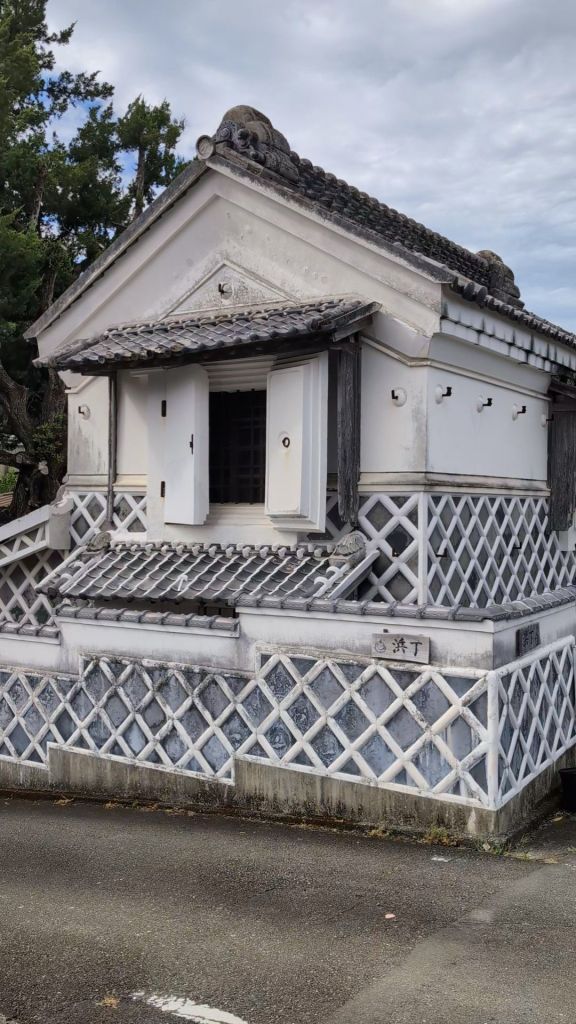
It was easy to see why it is included in the most beautiful villages in Japan, with unique lattice-work houses
Pretty bridges

And a lovely shore-front, where we sat watching the sea
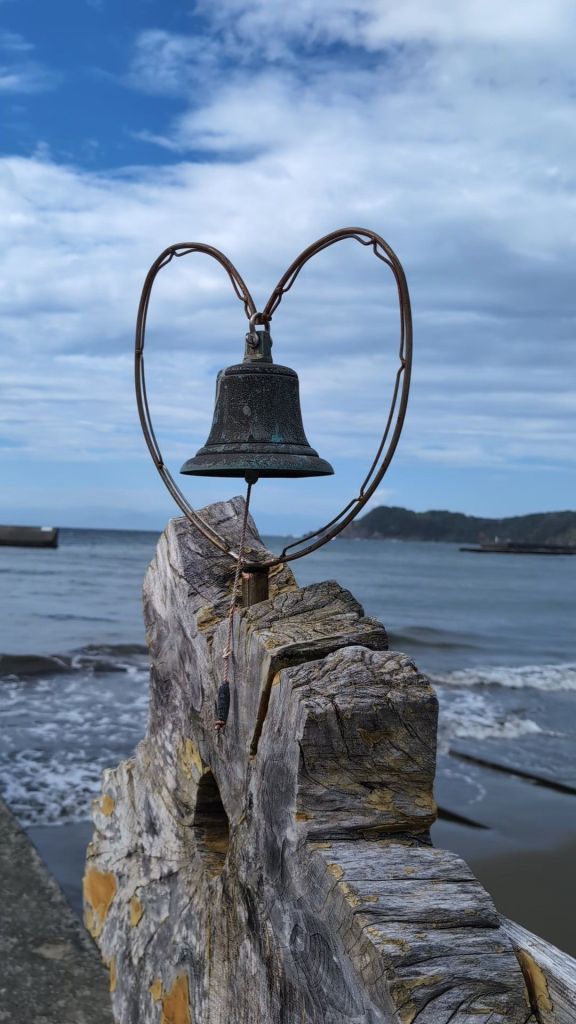
Before climbing the steep steps to the shrine that is set on a large rock, to one side of the beach.

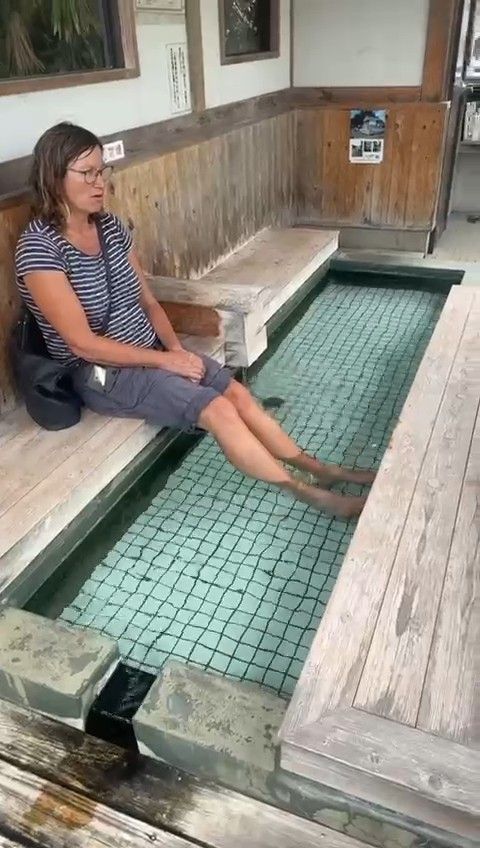
There were also footbaths around the town, and after our walk, we sat at one, with out feet in the incredibly hot water. It was so hot that it was hard to keep them in for any length of time, but slowly we acclimatised to it and sat chatting about our plans, as our feet were gently cooked.
Then it was on again, with another brief stop at a supermarket to buy some more gas for the little stove, and then off to an onsen we’d found.
You can imagine that after yesterday’s experience, we were a little nervous, but as I say, we do need to wash, so pottered to Sawada Park open air bath, a tiny facility set on a cliff overlooking the sea.
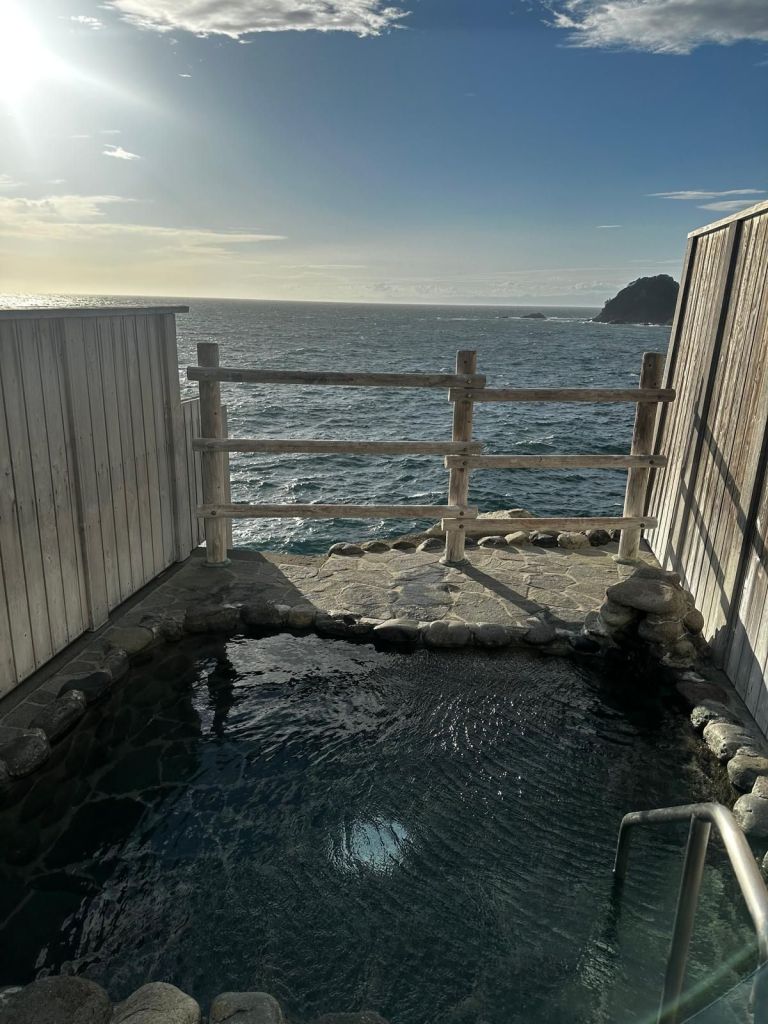
This isn’t a big space, with just 2 small baths (one men, one women) and without the detailed showering ritual space that we have found in the other 2 that we have used. Here, we paid the 600 yen (£3) each fee at a little hut in the car park and climbed the steps to the little wooden changing rooms.
The shower was outside, just next to the bath, and we had to take our own shampoo & bodywash, but it was such a jaw-dropping location that it didn’t matter.
The stone bath was the perfect temperature, and had the most astounding view out to sea. We were the only ones there and enjoyed 40 minutes of relaxation in what turned out to be our own private baths, watching the sun sink in the sky, as the sound of the waves just below soothed our senses.
I could also chat to Andy, who was just on the other side of the solid screen, so I could check he was OK. Happily, he was and we can now move on after yesterday’s worrying moment.
We had enjoyed it so much, that we didn’t get back in the van until nearly 5 and it was still a bit of a drive to where we had chosen for the night, so ridiculously on a day of only 68km, we were ending it nearly in the dark.
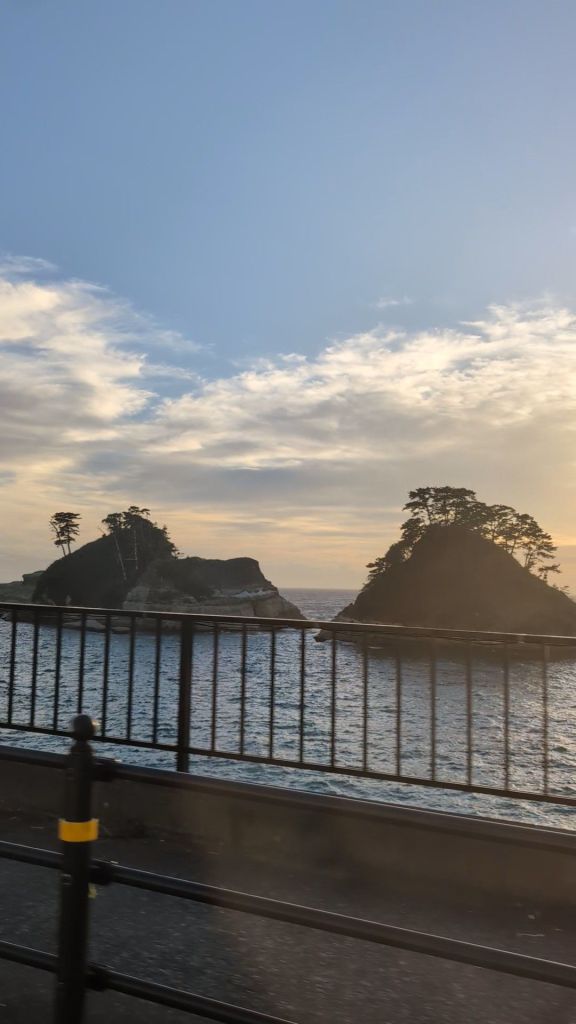
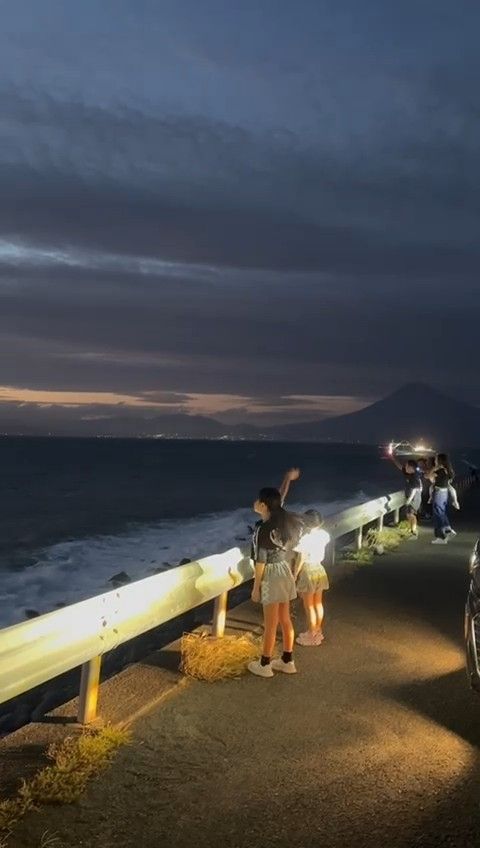
But, as we turned into the parking spot, we knew it had been a good choice. We pulled up into a vast parking area, with a glorious view across the sea to the mountains, silhouetted by the firey orange sunset, and around to Mount Fuji towering above the ocean and everything else too.
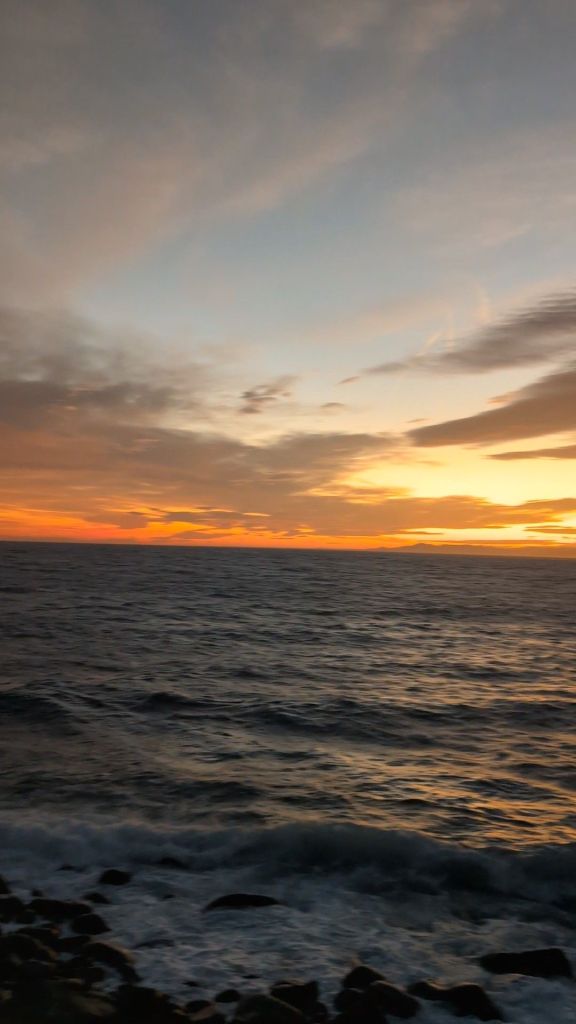
As we pulled up, a few cars did too, with women and children rushing to the barrier by the sea wall, waving lights at the fleet of fishing boats that was just heading out to sea in front of us.

We realised that these were the families of the men on the boats, and we watched as lights were waved back from the boats, as they passed by.
It was an emotional sight, and one that felt timeless too. It’s a scene that has taken place for centuries, and that heartfelt goodbye was just so touching, we just stood and watched as the lights faded away and the boats disappeared out of sight, hoping they come home safely again.
So here we are, how can we have already been here 5 days? It really doesn’t seem possible.
Our plans are changing and shifting like sand, but one thing is certain, we don’t want to rush about. If we don’t see everything (and we already know we won’t), it will give us the opportunity to come back.
We will just keep pootling, walking and hopefully cycling too, enjoying every moment in this beautiful and welcoming country.
 Postcards from Provence and beyond
Wise move!
LikeLiked by 1 person