Sometimes a french lesson just hits the spot, and the latest ‘atelier’, organised by Marina, our lovely and very patient teacher and friend was about as good as a lesson can get

We were introduced to Marina, who runs the french language school Ecole Franci Discendum, based in nearby Viens, by a neighbour, just after moving to our little house. We wanted a local teacher, and someone who would help us not only learn the language, but would also help us understand french culture and enable us to settle more quickly into our new home. And thanks to our neighbour’s suggestion, we found the perfect person.
Marina is a gentle, calm and incredibly patient teacher, who has helped us develop our language skills (from very different starting points), and has helped us get under the skin of the area too.
For her, language is much more than just learning the grammar (although she makes sure this is always a core part of our learning), but also putting the learning into practice in different ways, embedded in the culture of Provence and France. All of which have helped us understand and enjoy the area on a very different level.
Our learning journey with Marina

She has built a wonderful network of local artisans, producers and knowledgeable guides, working with them to deliver lessons in new, enjoyable and very different ways . Over time, we have had french listening comprehension workshops on guided tours of local villages… Behind the beauty of Menerbes

We’ve spent a gentle, fascinating and wonderfully scented afternoon with a local artisan, who grows plants and herbs, creating her own infusions and tisanes
A perfectly scented way to spend an afternoon
And we’ve had cookery lessons, focusing on the language of food, whilst creating traditional local dishes.
Most recently, we have been taken behind the scenes of a local artisan boulangerie, where we learned about the traditions and differences in bread making, whilst we got to grips with making our own loaves to take away for lunch.
It really was the most incredibly satisfying morning, working with a passionate young boulanger, who introduced us to the different stages involved in creating this core staple of french life.

As with all Marina’s workshops, we’d had pre-work to do, to ensure that we had a basic knowledge of the critical terms that we may encounter during the class. And very soon, we were deep into putting the learning into practice, as we were taken through each stage of the bread-making process.
We learned about the difference between raising agents and especially the ‘levain’, which is nurtured and fed, sometimes continuing through generations of bakers.
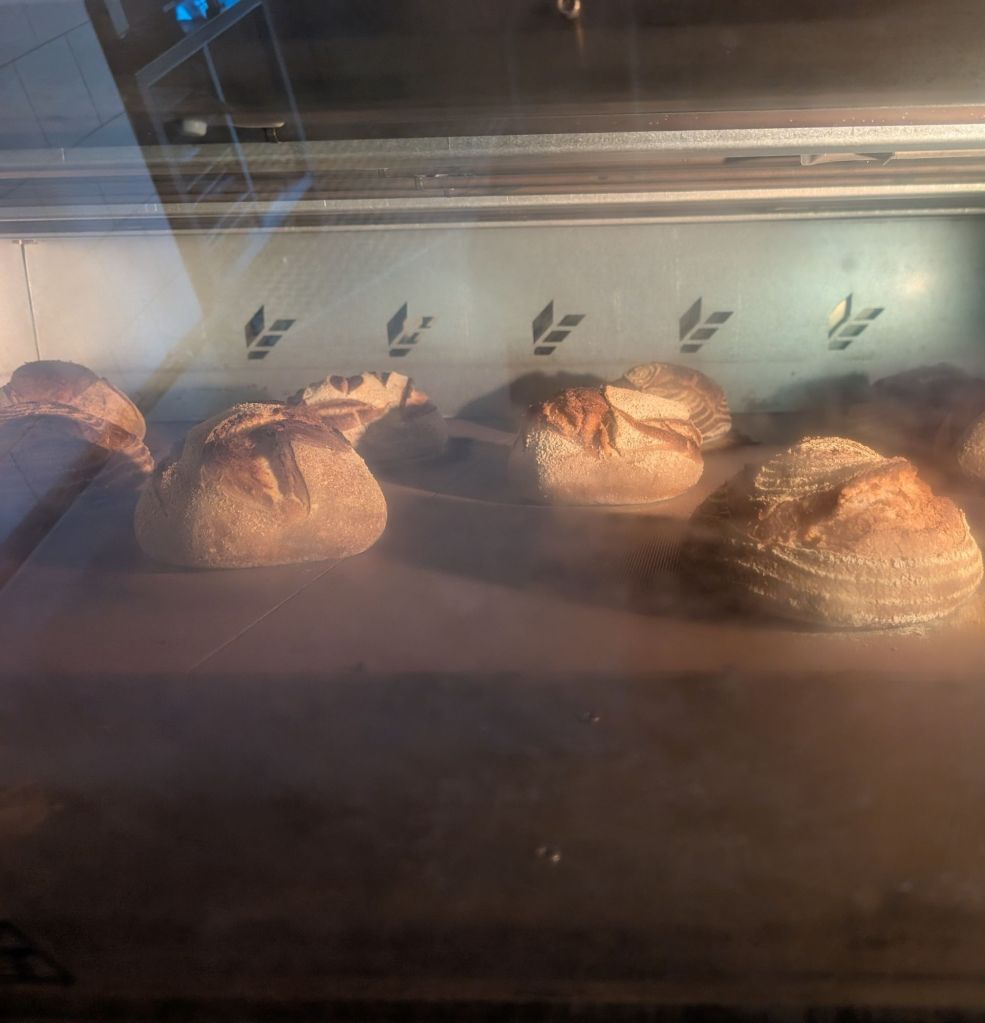
We formed our boules, adding our own ‘grignes’ moments before they were popped in the oven. These are the deep scores in the surface of the loaf, the trademark signature of the boulanger, which allow the bread to rise properly as it cooks.
And yes, we got to use the oven. These vast industrial ovens are incredible pieces of technology, with precision temperatures, different cooking zones and the moving carpet that is used to transfer the dough into the oven, and pull the cooked loaves out again.

If I’m honest, I’ve always been fascinated by this process, ever since I was a child and used to go to collect our bread from Mr Nagington, the baker who had his huge old black ovens, and shop at the end of our road. I can’t ever remember a loaf arriving home intact, as I couldn’t help but pull little nuggets of warm, crispy crust from the end, nibbling on them during the short walk home. In fact, it’s still rare that a baguette arrives home in one piece, even now.
It got under my skin, and I still love to watch the boulangers moving bread in and out of the wood-fired ovens that are used in some of the local boulangeries. You even have to step aside at the tiny one in Villars, to allow enough space for the paddle to be pulled from the oven, with it’s precious, golden-brown load.
So, I found having the opportunity to use one, ridiculously exciting and marvelled at the ease in which we could move the loaves around.
As our boules cooked (and I kept being distracted by the sight of them swelling and turning a glorious golden-brown), we started on the process of preparing the dough for our baguettes.
As you can imagine, there are very precise rules and traditions for making this loaf, which is such a symbol of France, and we were taken through every stage of the process
From weighing..

First forming
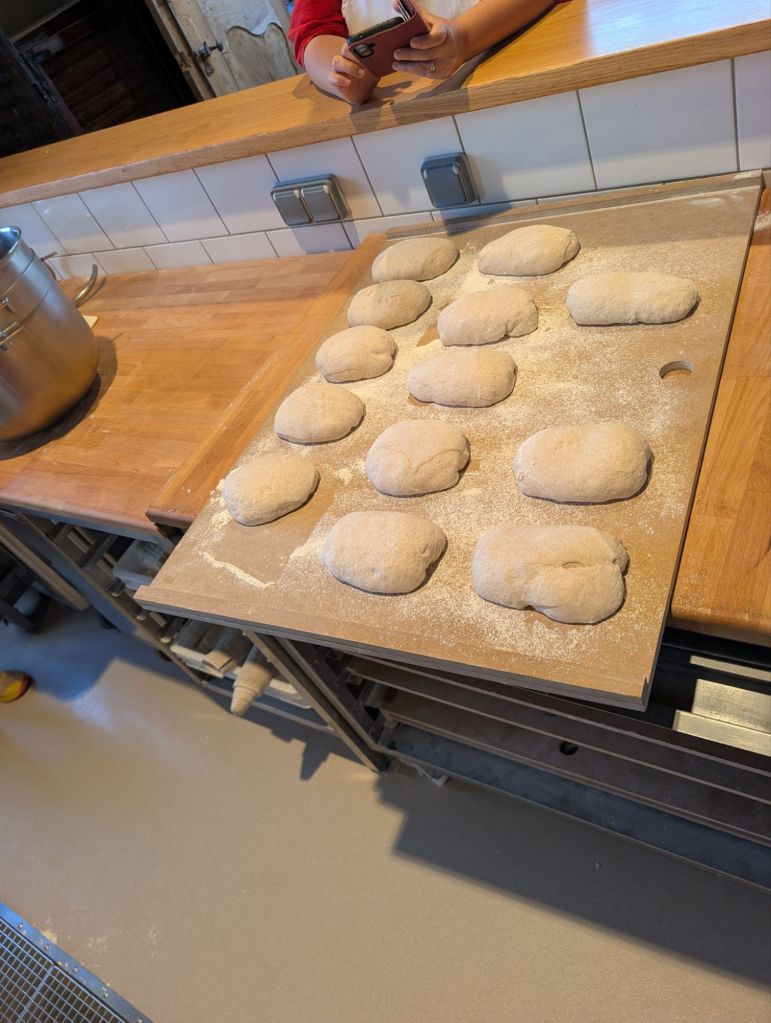
And how to create the correct shape

Before they were left to second-prove, scored and popped in the oven.

By now, the smell was making all our mouths water, but we had a chance to chat to the young boulanger about her job, her training and what had motivated her to follow this career

By this time, we had forgotten it was a french lesson and we’re simply enjoying the experience, fascinated by what we had done and what we were learning too.
By the time the timer sounded, and we pulled the batch of baguettes out of the oven to place them in racks to cool, we had learned so much.

Of course, we had used what we had learned from the pre-work and our previous lessons with Marina, using the grammar that she has taught us and building our confidence through the conversations that we had with the boulanger.
But, it was so much more than that. We left with a much better understanding of the french culture and traditions that surround the simple, daily baguette.
You can Watch a short video of our morning here
We had met and had a unique opportunity to chat with a young woman, who is passionate about her job and maintaining the important traditions, associated with her craft, going forward.
And we had created and cooked our own loaves, which were fresh from the oven, almost burning our hands as we carried them home.

Needless to say, mine didn’t make it home intact, but I’m not sure that many others would have done either.
We have been so lucky having Marina as our teacher and I look forward to some more workshops in the future ..
Cheese-making sounds particularly good
 Postcards from Provence and beyond