As a child I was brought up knowing a lot of the folklore around weather patterns. We always had a barometer at the bottom of our stairs and I would tap it as I passed, to see if the ‘glass’ had gone up or down, watching the elaborate needles moving around the dial, with the changing atmospheric pressures.
I used to hunt out fir-cones, checking if they were open or closed, and when the cows were lying down in the fields, I would announce with the assuredness of a fully trained meteorologist, that it was going to rain. I would bring a bit of seaweed back from holiday and hang it up to see if it was wet or dry, as that seemed to indicate changing weather too.
Little phrases were always rolled out by my parents and their friends, which became part of my everyday language, including .
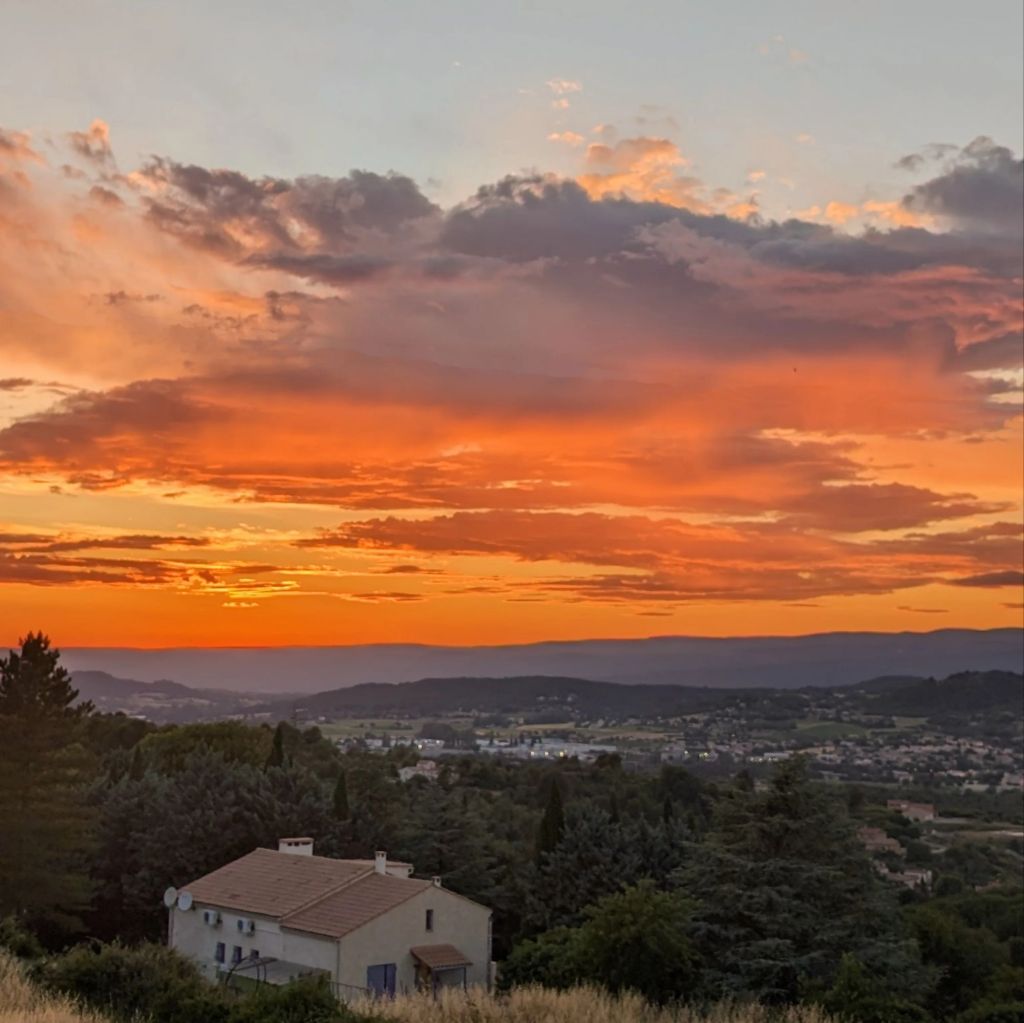
‘Red sky at night, shepherd’s delight, red sky in the morning, shepherd’s warning’ ..
If the Ash before the Oak, then the earth will get a soak and if the Oak before the Ash then the earth will get a splash..
And, of course, one that always fascinated me ‘ Don’t cast your clout ’til May is out’
These sayings seemed to be part and parcel of my childhood and, more often than not seemed to have more than a grain of truth behind them.
The last one always fascinated me though. It offered what appeared to be dire warning that any efforts to put away winter clothes (your clout), until the end of May, would end in regret. I always had in my mind that this was a reference to the month of May, but I now understand it refers instead to the appearance of the swathes of pink and white Hawthorn (May tree) blossom that fill the hedgerows in late spring.
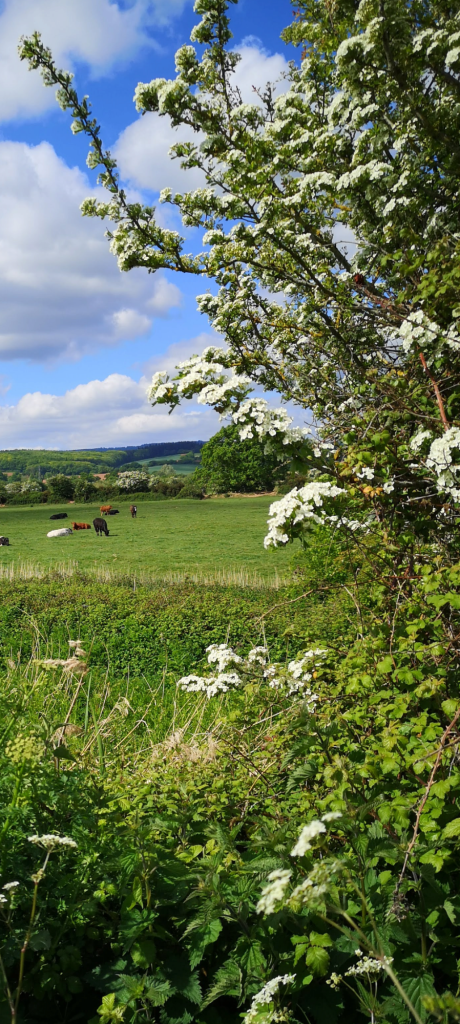
This makes a lot more sense, and now I’m older I easily recognise the difference between the creamy colored froth of the Blackthorn blossom, which appears in late March and the brighter delicate flowers of the Hawthorn.
Thanks to our lovely old neighbour, I know that when the Blackthorn (Sloe bushes ) and other wild plums flower, we are often plunged into a ‘plum winter’. The delicate flowers often bring with them an icy and cold spell, with chilly winds that send us scrambling for warmer coats and socks, after early spring sunshine has lulled us into a false sense of security, encouraging us to cast them aside.
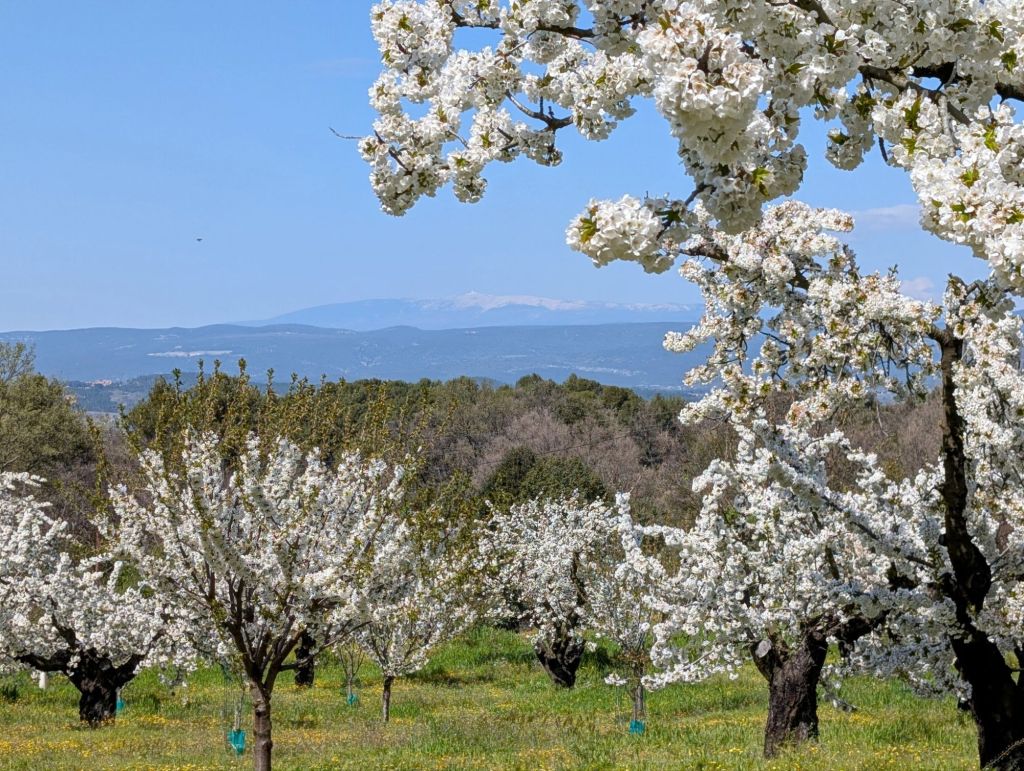
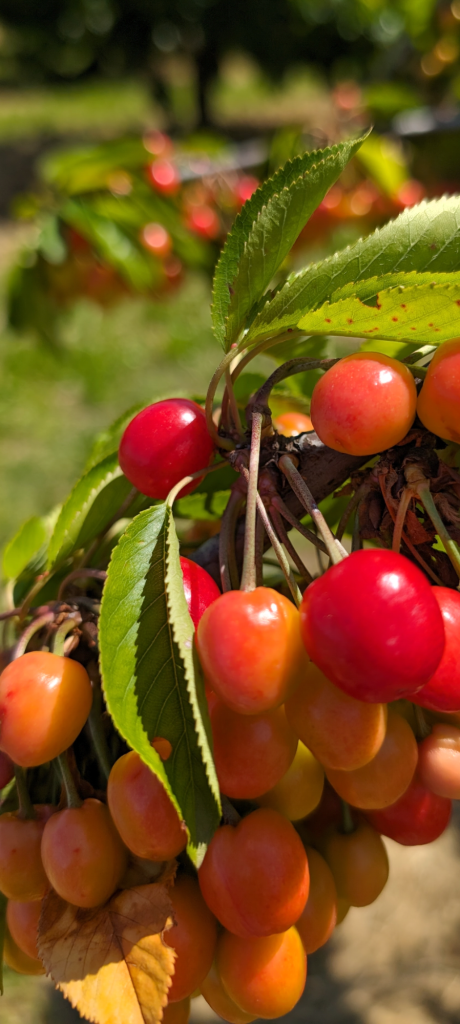
Back in the UK it was more of an annoyance than a big problem, but here in France these late cold spells can wreak havoc on the local crops. Over recent years, we’ve been devastated to see cherry orchards that have been filled with drifts of scented white blossoms, turn brown overnight after severe frosts, which have decimated the crop.
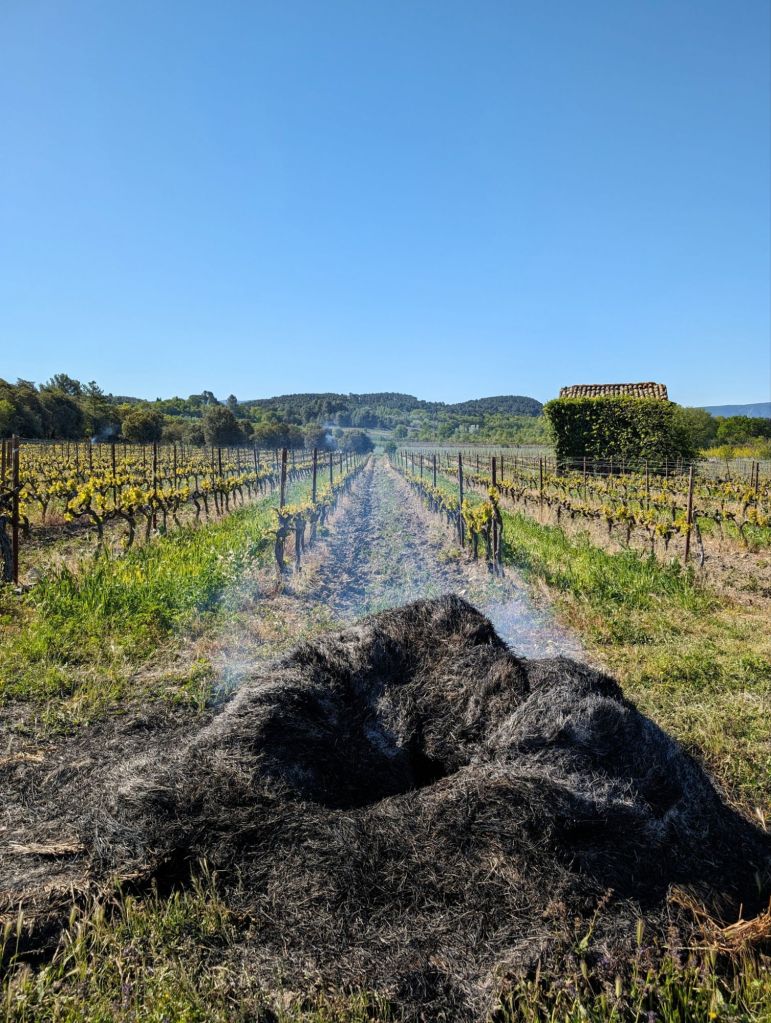
Last year, hectares of vines were devastated too, when freezing overnight temperatures killed the fresh, tender tips of the new growth, causing so much damage that the vines had to be written off for the year.
We have watched as the farmers and producers have done what they can to reduce the risk, lighting fires under the trees in an effort to warm the air, doing everything they can to protect the delicate new growth and blossom. Last spring, we were cycling past bales of straw left to smoulder at the end of rows of vines, hoping that the smoke and heat would be enough to save the new growth. It’s a constant battle.
Then there is the threat of hail, with the heavy balls of ice bruising and shredding tender fruit, especially the cherries, which are just filling out and starting to ripen when these storms hit. In fact, the fruit can be so badly damaged that it is rendered useless, destroying the crop and the livelihood of the producer for that season. These can also be incredibly localised events, with one orchard suffering extensive damage, but others nearby being left almost untouched.
But here (apart from the well-established countryside lore) there are other factors at play. I am sure that there are the folktales surrounding these capricious weather patterns, but religion also plays it’s part with the ‘frost and hail Saints’.
Every day of the year has a nominated Saint. As I write this it’s April 7th, which is dedicated to Saint Jean-Baptiste de la Salle, who set up schools for poor boys. However, some Saints are not just linked with their good works, but are also known for their links to the higher chance of late frosts. So who are they?
The first group are recognised as the Saints of frosts, hail and bud-burning, where the temperature can drop sharply overnight, freeze-burning the buds, resulting in damage to the new growth beyond hope of recovery. These unwelcome Saints are:
Saint Georges 23rd April
Saint Marc 25th April
Saint Eutrope 30th April
Saint Croix 3rd May
Then there is the more welcome Saint Jean Porte Latin, who is said to close the door on the icy weather on 6th May.
However, there are still 3 more Saints, with particularly icy fingers and they still bring the chance for night-time frosts and hail later in May
Saint Mamet 11th May
Saint Pancrace 12th May
Saint Servais 13th May
It is said that it only then that you can finally cast your clout, and plant outside with confidence.
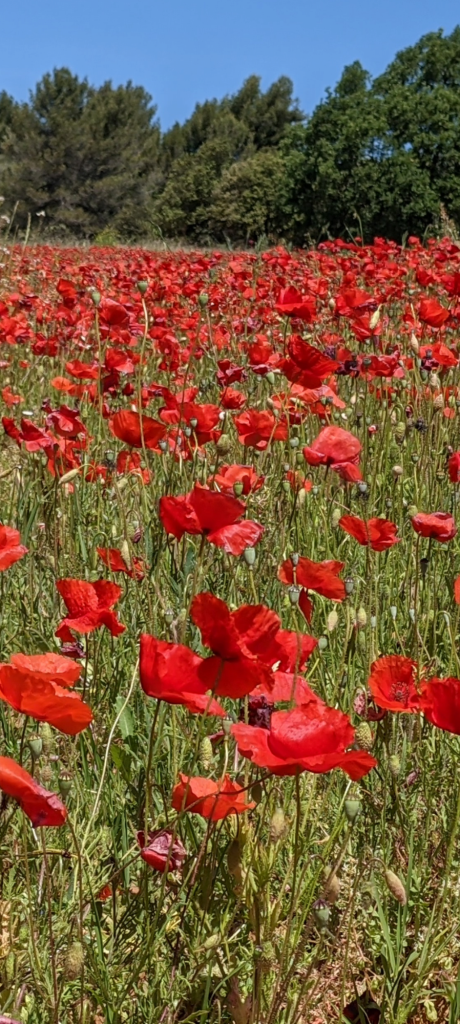
Like so much of the weather-lore, this dates back to the Middle Ages and is a recognised part of the agricultural year, and local farmers really can’t relax until these Saints have had their moment.
Since living in Provence, we’ve seen a number of these devastating weather events and I am certain that with the ongoing climate change we will see the weather shift more and more towards the extremes. But this is not new.
People still talk of the extreme frost in 1956, when on one February day, the temperature rose to 21 degrees. The olive trees responded with the sap starting to rise, after the chill of the winter. Then overnight, the temperatures plummeted to -17 degrees freezing the trees, some splitting open with the expanding, frozen sap. It is said that you could hear the ancient trees screaming as they split, and it devasted the industry.
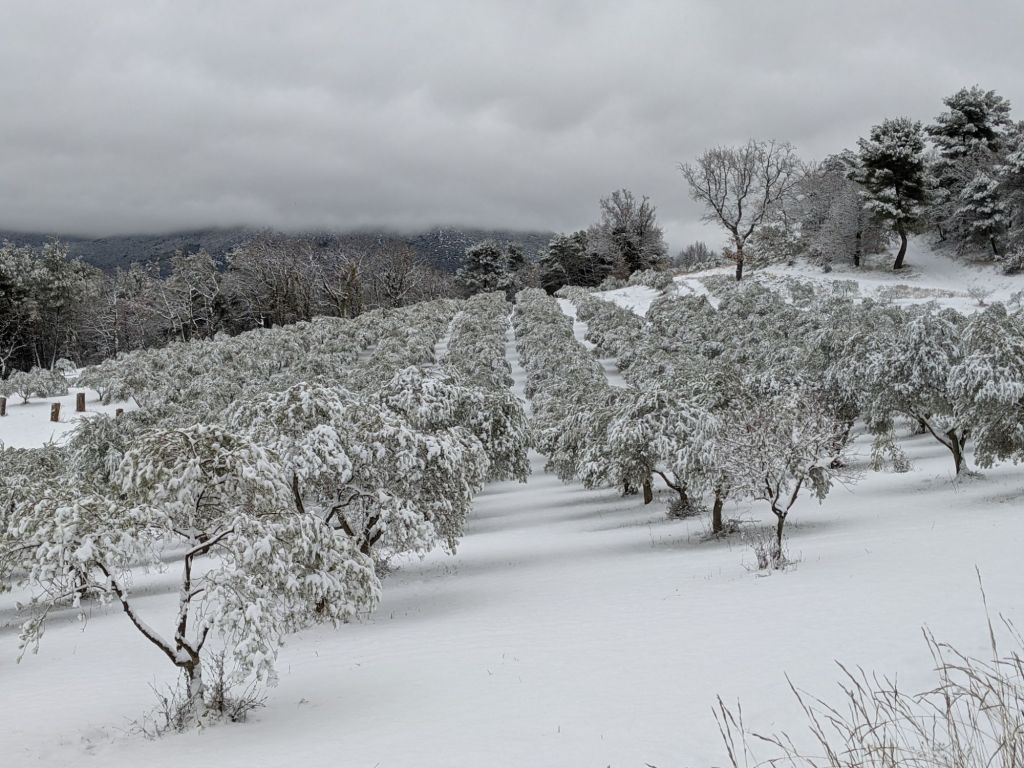
In Viens, just up the hill from us, the olive mill closed overnight and is still as it was left at the time. A memorial to the devastating effect of the weather, in an area that is known for its sunshine and warmth.
For the last 2 days, we’ve been out on the bikes in full summer kit, sitting on walls and watching lizards scuttle away as we pass. Today though, we’re outside with fleeces on, under grey skies, feeling chilly again.
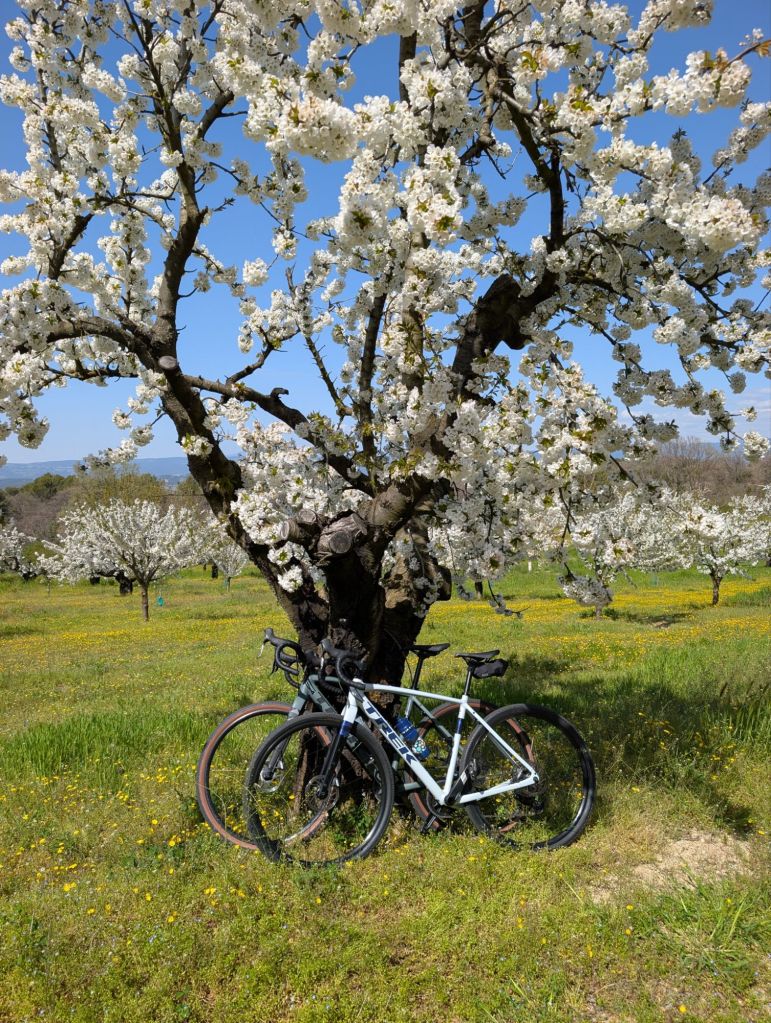
In a couple of weeks time, we’ll know if the Saints will be dragging their icy fingers across the valley again and then finally, perhaps we’ll be able to put the warm clothes away until next autumn.
Roll on summer

 Postcards from Provence and beyond