Four years ago, we set off from the UK to drive Fifi, our delightfully old, very characterful 2CV, home to Provence. It ended up being rather a memorable journey when her clutch collapsed at Brantome and we had to leave her in a garage there for 2 weeks, whilst we waited for her to be repaired.
As a result, we changed our route and on the way between Brive & Aurillac, we drove past the rather pretty village of Collonges La Rouge. I remember seeing the dark red buildings and the fairytale turrets, wishing we could stop. Unfortunately, having just got underway again with Fifi, our anxieties were so high that we hardly dared to breathe, let alone pull in somewhere, but I vowed to return one day to take a look around.
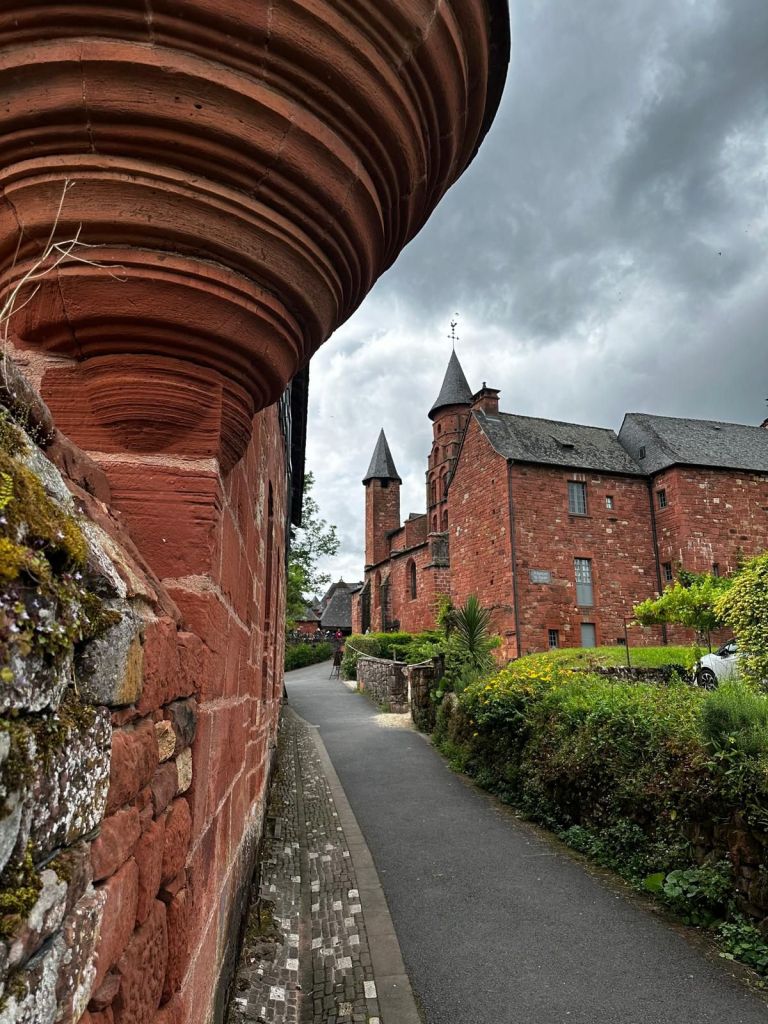
The years have flown by, and finally, four years later, we managed to build a few nights there, into this little trip down memory lane. I’m delighted to say that it was worth the wait.
We arrived early, taking a bike ride up into the hills beyond the village, before picking up the keys for the holiday home that we had booked for our stay. It was a stunning ride through rolling hills, peaceful villages and ancient hamlets that at times, simply brought us to a standstill. We are houseoholics (if there is such a word) and were taken aback by the sheer beauty of the ancient stone houses and barns, with incredible character and tangible history. We simply hadn’t imagined the area would be so pretty.
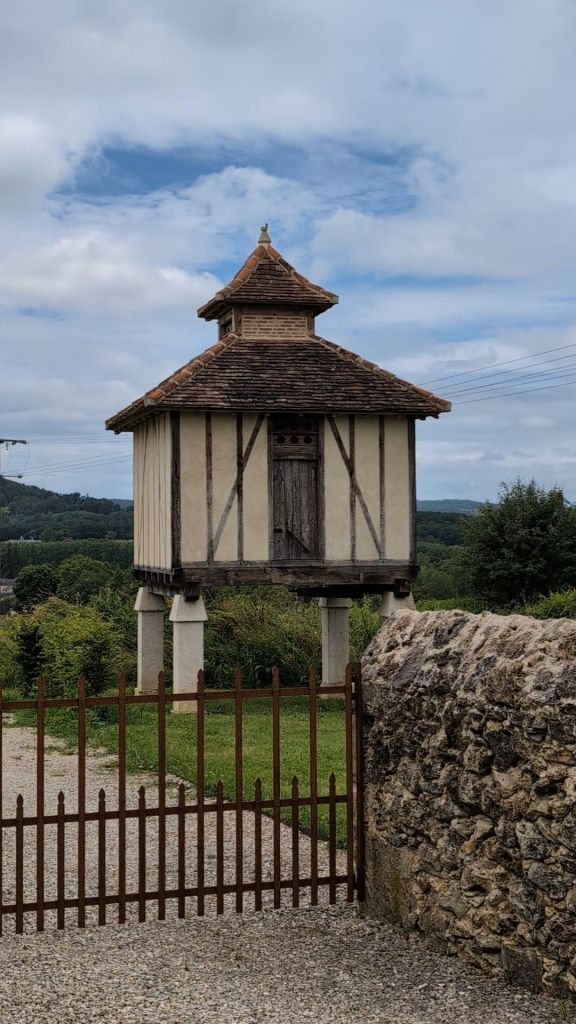
Arriving back in Collonges La Rouge, we stopped at one of the shops to collect our keys and started to take a proper look at the village that would be our home for the next 2 nights.
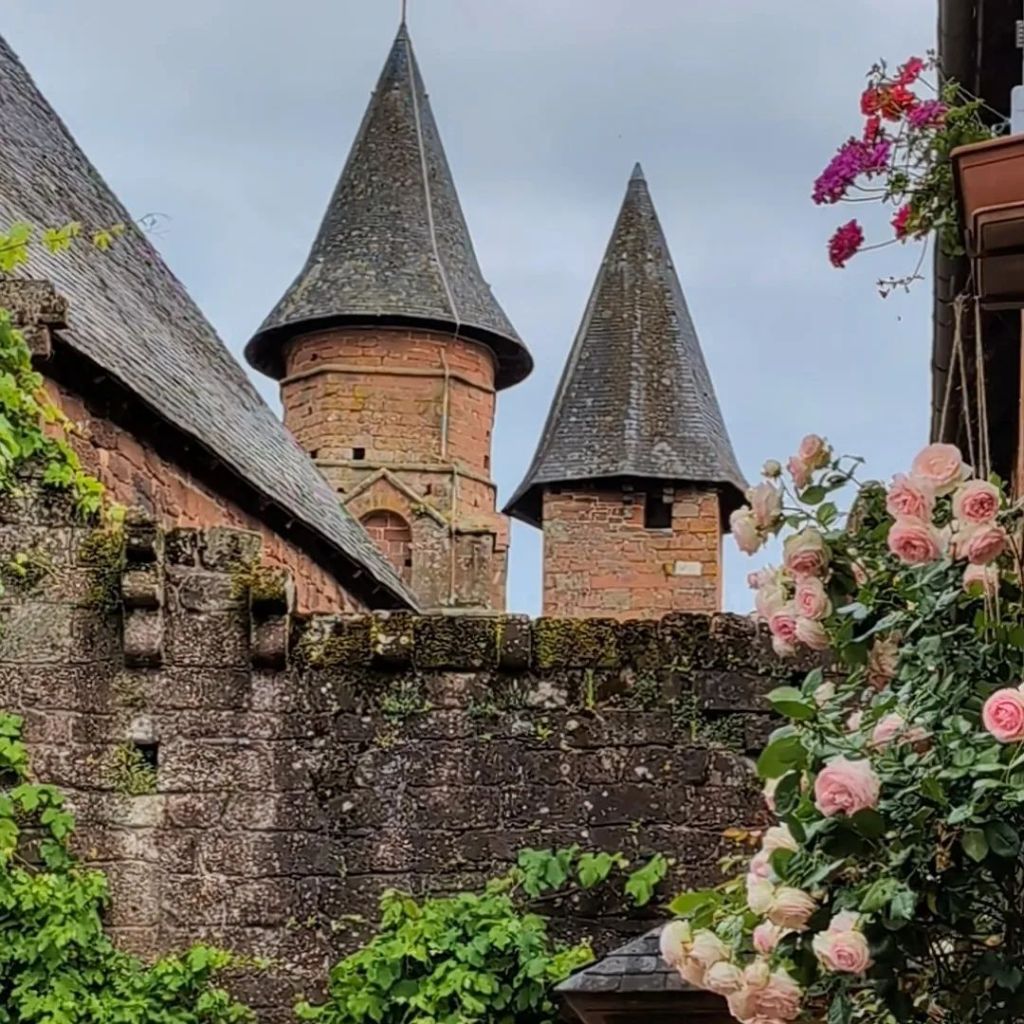
The village is another of ‘Les Plus Beaux Villages de France’ and it is easy to see why. Built of a dark red, local sandstone, the houses glow with warmth and with ancient stone roofed towers, the whole place appears to have stepped straight from the pages of a fairytale book.
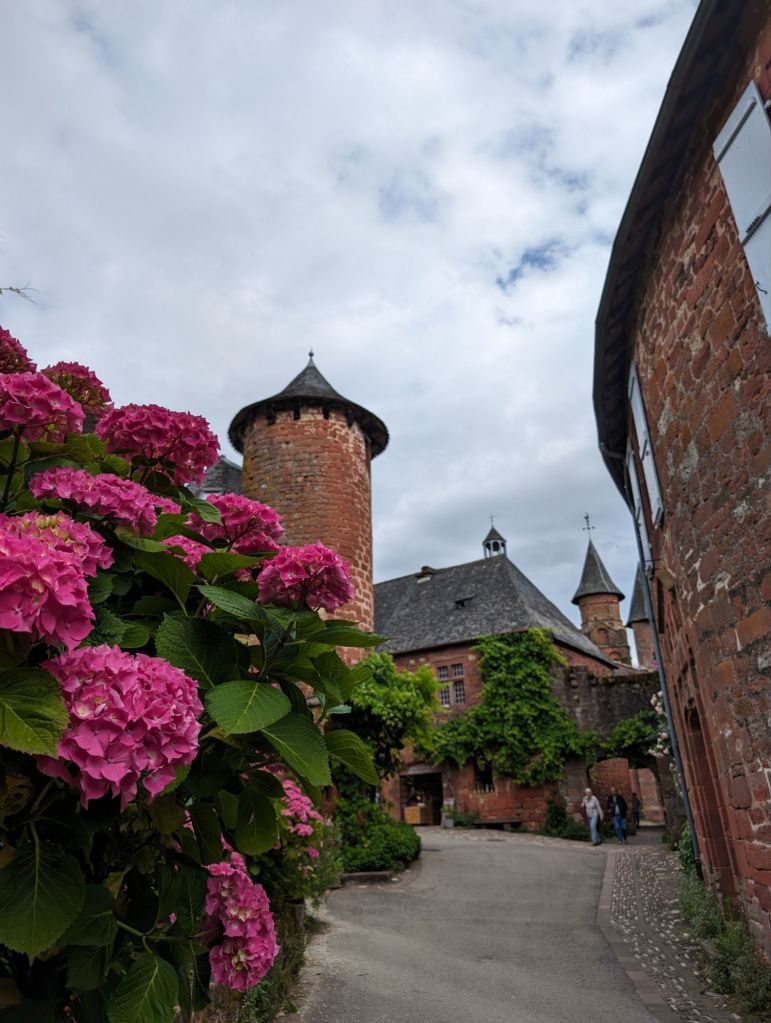
The narrow, cobbled streets lead you past beautiful properties, with a magnificent chateau at the rear of the town and an incredible church in the centre, opposite an old market hall and village bread oven that was still in use until 1968. Like Saint Jean de Cole, it is filled with colour and scent, with buildings covered with roses, and the streets edged with flowers too.
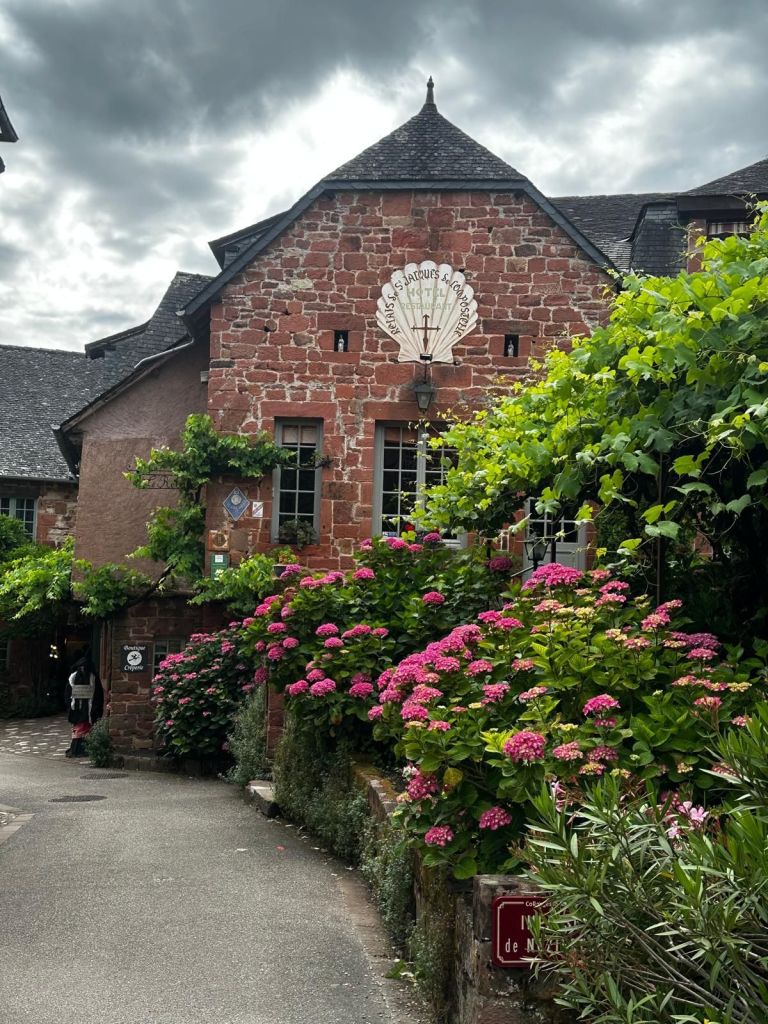
This is an ancient town, built up around a priory that was founded there in the 8th century, and situated on the pilgrim trail to Compostella. It gained an even higher profile, when nearby Rocamadour became a pilgrimage site in the mid 12th century, following an incorruptible body being found there.
It is clear to see that this was a wealthy town, which must have profited well from the passage of pilgrims, wanting to find lodgings and eat there too. When, in the early 14th century the town was granted its own rights by the local Viscount, it expanded again, with faubourgs (small suburbs outside the town gates) being created to house the growing population.

Its success took a turn when the original priory was destroyed during the French Revolution, Although the town regained some of its prosperity at the start of the 19th century, it was short-lived and the population decreased to the point that the village simply became seen as a quarry, with some of the old buildings being robbed of their stone for new projects.
Like so many unique and wonderful places, that could have been the end of its story, but in the early 20th century, the villagers formed an association ‘Les Amis de Collonges’. This forward-thinking group took it upon themselves to restore the village, and to safeguard its architectural, historic and environmental assets for future generations to come.

In 1927, they undertook their first major project, restoring the Chapelle des Penitents Noirs, and their important work lives on, securing this stunning place for us to enjoy today. They were certainly ahead of their time and that attitude seems to have rubbed off on the following generations too.
As we go around France, we always take note of the villages that are signposted as being one of ‘Les Plus Beaux Villages de France’. They always live up to their title and understandably are a favourite with visitors wanting to see the most beautiful little villages in any area that they visit. Around us, in Provence, we have Gordes, Roussillon, Lourmarin, Menerbes Ansouis and Venasque, and have visited a few others whilst we’ve been on this trip, including Saint Jean de Cole
What I hadn’t realised, is that this entire structure, now such an integral part of French culture, was started by the Mayor of Collonges La Rouge in 1982. Evidently, the die had been cast by the founder members of ‘Amis de Collonges La Rouge’ and this Mayor, Charles Ceyrac took it a step further.

Whilst in a bookshop in Paris, he came across a Readers Digest book containing a selection of what were felt to be the most beautiful villages in France, and rather than just look at it, he picked it up and it sparked an idea. He took it upon himself to write to the mayors of all the villages mentioned, to ask them if they would be interested in forming an association to bring the villages into the limelight and to use it as a way of building their local economies. Sixty-six mayors responded and in early March 1982, the association was formed, and has grown to become the instantly recognisable group that it is today. Find out more about the villages here
Collonges La Rouge is one of the jewels in the crown, in fact with its colour, it would probably be best described as the ruby.

We spent 2 nights here, and found ourselves enchanted with the village, helped in no little part by the house we were staying in. Set on the main street, it was a medieval building, with a wonderful spiral stone staircase running up a tower, to access all the rooms. The stairs had been worn smooth, with the footsteps of residents, and visitors having left their mark over hundreds of years.

The rooms wouldn’t have looked out of place in a castle, with high, beamed ceilings and vast fireplaces, one so grand that Andy could comfortably stand in it.

It was so full of history that I wouldn’t have been surprised to have bumped into the ghost of a 14th century lady on the stairs, or to have heard the echoes of chatter from pilgrims who passed through and took refuge on their long walk. But happily, we didn’t, and the house was a peaceful haven, even during the day when the streets and shops were busy with visitors to this lovely village.
The most delightful aspect though was the little roof terrace, at the top of the spiral staircase, where we spent our evenings simply watching the swifts screaming around the rooftops and dashing in and out of cracks in the church tower.
The aerial acrobatics were taking place around heavy and unique, stone-tiled roofs that were covered in moss and lichen (a sign that they hadn’t been touched for years)

And chimneys, all finished with stone slabs, topped with a ‘witch’s hat’ stone, or a decorative finial. We couldn’t find any written reason for this design feature, settling on the fact that they were probably there to prevent birds from nesting (but we’re not sure).
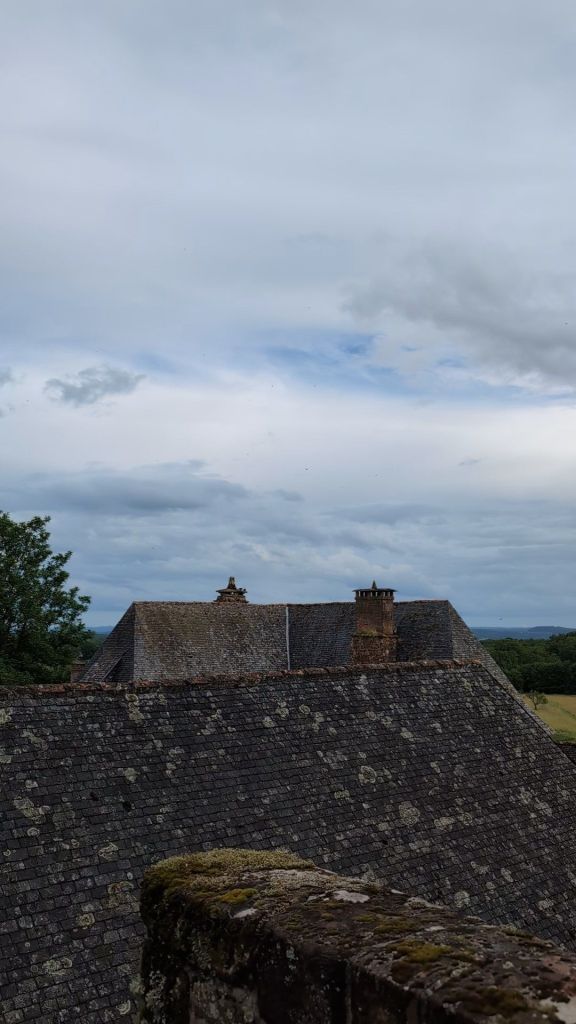
The village may be busier during the day, but in the evenings it has a sense that time has stood still, and we wandered the empty streets taking in the little details that we sometimes miss…

The Rapunzel towers and church roof looking stunning against the setting sun…

And the scent of honeysuckle hanging in the air, when we stopped to admire the view.

The village is a truly beautiful place to visit, and I would recommend staying there (if only for a night), just to enjoy exploring once everyone has left. It is thanks to the foresight of the Mayor that not only this, but so many other beautiful villages in France are recognised for their cultural and historical value.

I have a feeling that we will be back again…
 Postcards from Provence and beyond
It’s charming
LikeLiked by 1 person
It really is 😄
LikeLiked by 1 person
Love reading your travelogues!
And I was so interested to read about the origin of “Les Beaux Villages”. We had that book, as well as some spin-offs (I can’t remember what they were exactly, as we did give them away a couple years ago when we realized we absolutely had to clear some things out).
Enjoy the rest of your trip.
Maria & Gord
(Saskatoon, SK, Canada and Cabrieres d’aigues, France)
LikeLiked by 1 person
Thanks, that’s so kind of you … I was fascinated to find out the history of the Plus Beaux Villages too … They seem to be such a key aspect of France and such a positive legacy for the mayor too
Home tomorrow, but we’ve had a wonderful time away .. thanks again
LikeLike
We loved Collonges la Rouge and that whole area.
Enjoy! Carolyne Kauser-Abbott Perfectly Provence https://perfectlyprovence.co/ https://linktr.ee/perfectlyprovence
Explore – Taste – Stay – Inspire

>
LikeLiked by 1 person
It really is quite a special place and a beautiful area too
LikeLike