Last night was wet, very wet and we woke to the sound of rain drumming on the roof of the van, before 6 this morning.
It may have been soggy, but we still planned to do the walk we had found that would take us along a short section of the Kumano Kodo Pilgimage Trail, between Hongu and the nearby village of Yunomine Onsen.
So after breakfast, we pulled on our walking shoes and our rain-jackets, which looked rather fetching with walking shorts, and we set off.
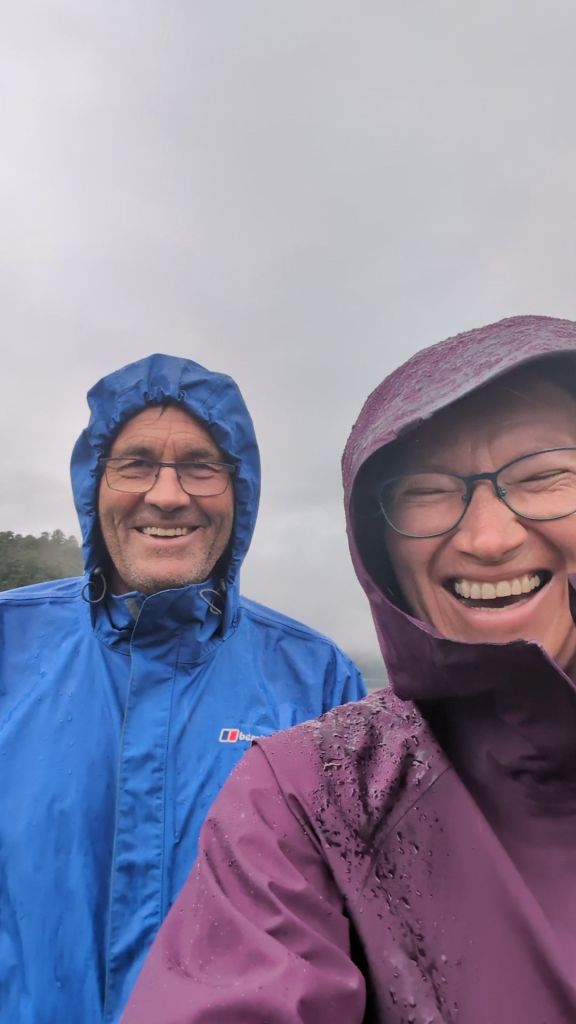
It was still early, and we were walking by just after 8, so had the path to ourselves, which was really very lovely.
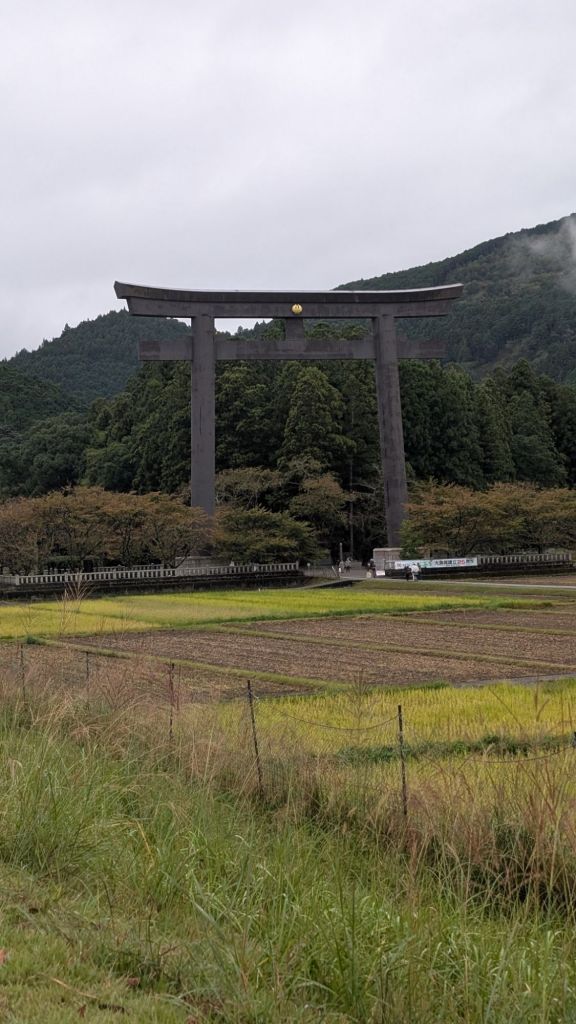
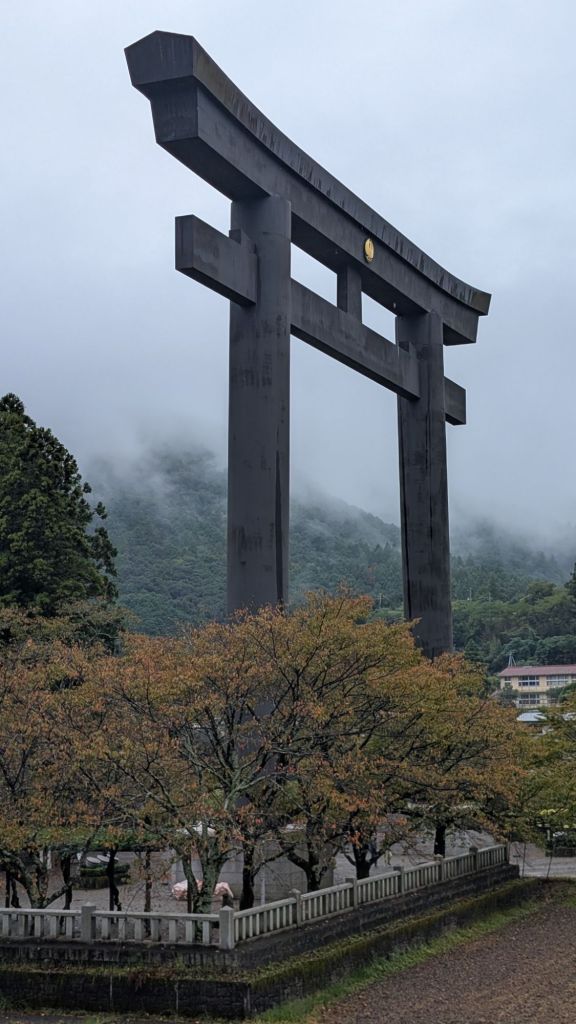
We walked out, through the rice fields, following the path under Otorii, the 34m high Tori Gate, which marks the site of Oyunohara Sanctuary, where the Hongu Taisha Shrine had been sited, until a devastating flood in 1889.
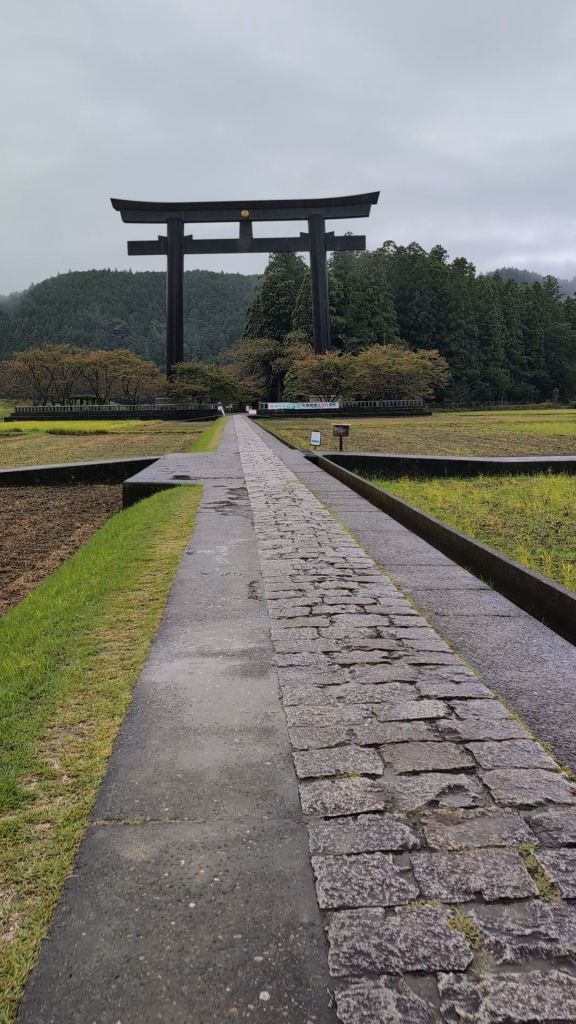
It is still a very calm and tranquil spot, surrounded by cedar trees, with the moss-covered stone walls still marking the original Shrine’s location.
We walked through and crossed the river, before picking up the signs for the Kumono Kodo Trail, where it left Hongu and started to climb quickly, away from the town.
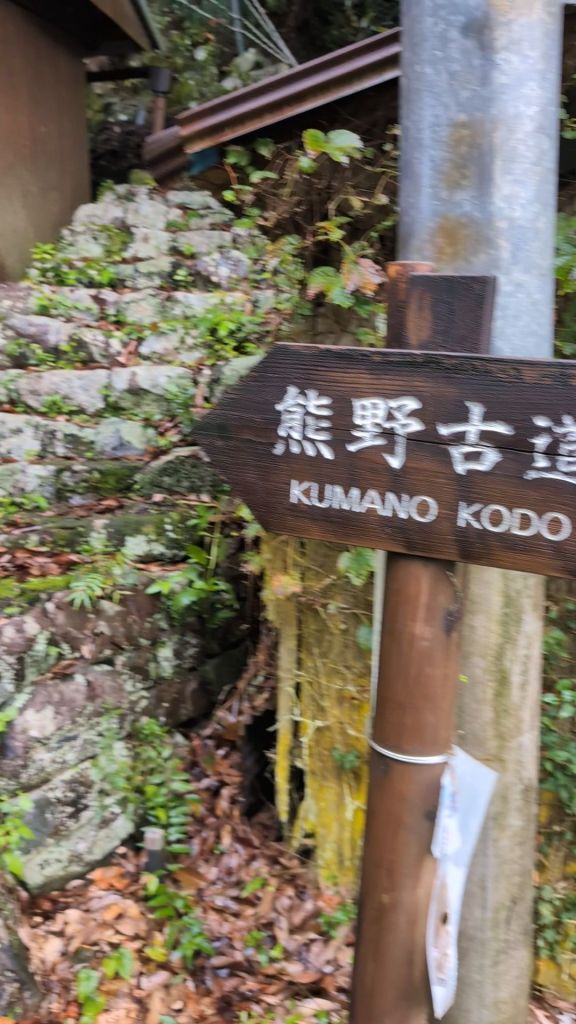
The Kumano Kodo is a series of ancient trails that criss-cross the Kii Peninsula and have been used by pilgrims for over a thousand years.
The mountainous trails have been used to enable people to visit and worship at the Three grand Shrines, Hongu Taisha, Hayatama Taisha and Nachi Taisha (which we are aiming to walk to tomorrow). They have been used over the centuries by aristocrats, samurai and the general public, and are now popular hiking trails for visitors too.
As soon as we left Hongu, we had a real sense that we were stepping in ancient footprints, as the peace of the forest enveloped us. It felt as if we had slipped through a curtain, and back in time, as we started walking up the ancient stone steps, and further into the woodland
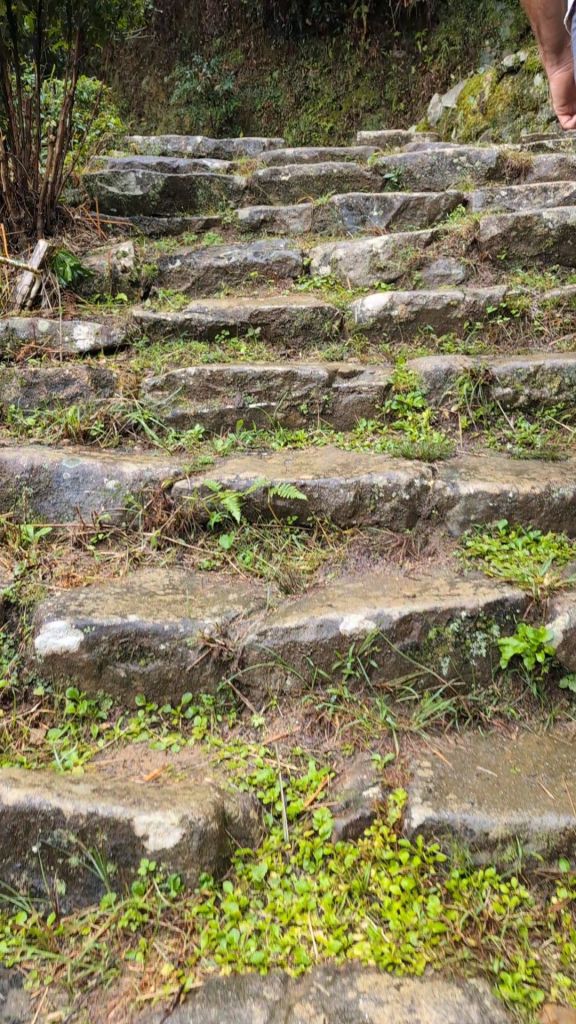
Within moments, we had lost the sounds of modern life and it was just us and nature, with the steady rhythm of rain dripping through the canopy of trees above us.
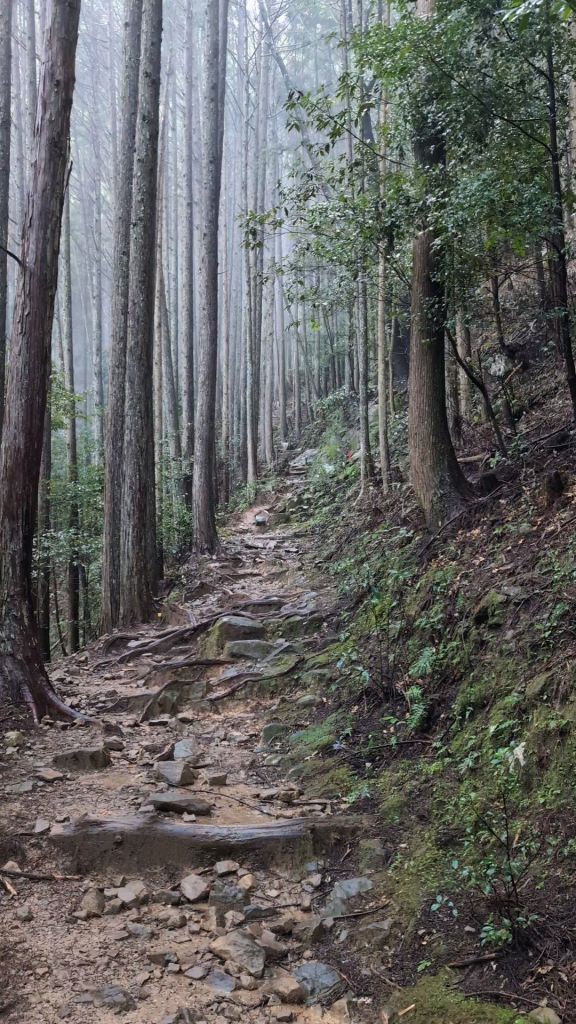
The climb was steep, with an ever-changing trail, from stone steps, to wooden logs, tangled cedar roots and then areas of bedrock too.
The cedar trees lined the trail, standing arrow straight and so tall that we had to crane our necks to see the tops of them. The clouds were caught in the canopy and drifted around us, like shadows from the past keeping us company, as we walked.
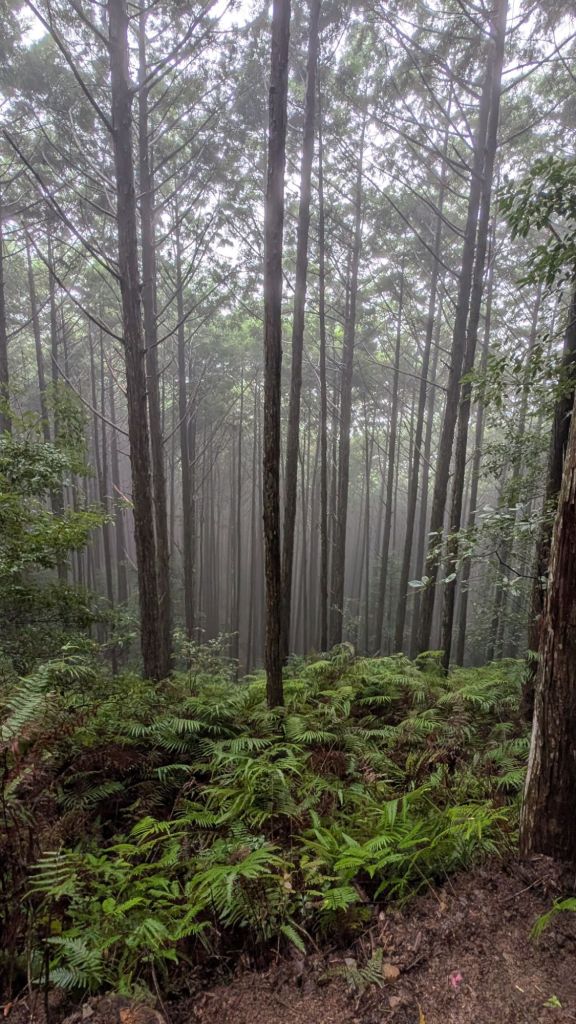
It was atmospheric, tranquil and utterly stunning & the beauty distracted us from the effort that was needed to climb the steep path.
We passed ancient stone shrines and a lovely old rock carving, Hanakake Jizo.
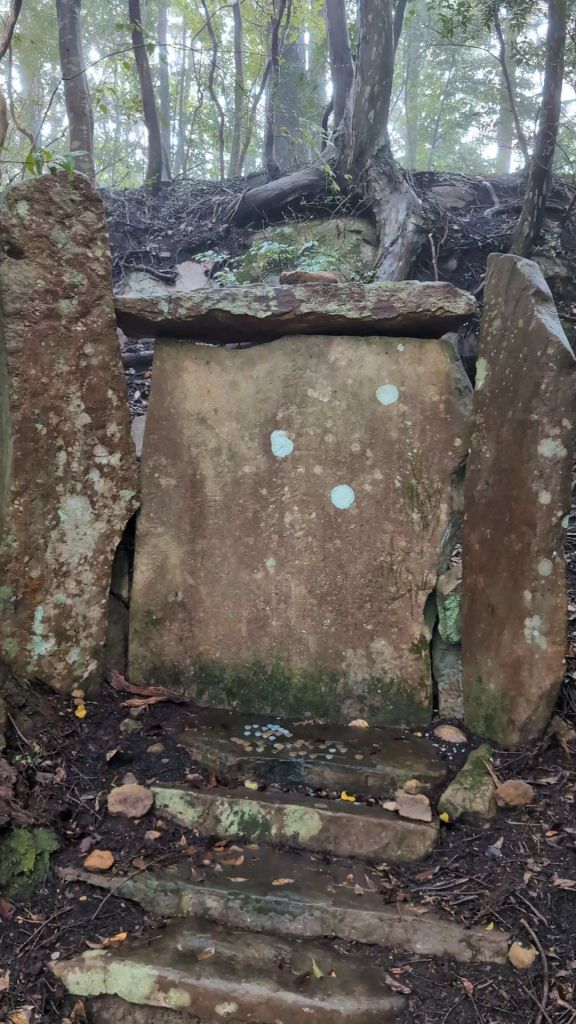
The legend says that a carpenter and his apprentice would walk to Yunomine Onsen & each day they would stop at this point on the trail, where the apprentice would take a bit of rice from the lunch he had prepared for his master, and give it, as an offering, to the carved Jizo.
The Master noticed there was rice missing and believed the apprentice was taking it for himself, so decided to catch him out, waiting for him at the ridge, where the Jizo is carved. As the apprentice sat down and opened the lunch box, the carpenter leapt out and hit him in the face, causing the apprentice to fall with a broken nose.
But when he got up, he was totally fine, but the Jizo had lost its nose and had blood pouring down the rock. The Jizo had protected him, after his kindness of the offerings, and is now called Hanakake Jizo, as it means ‘broken nose’
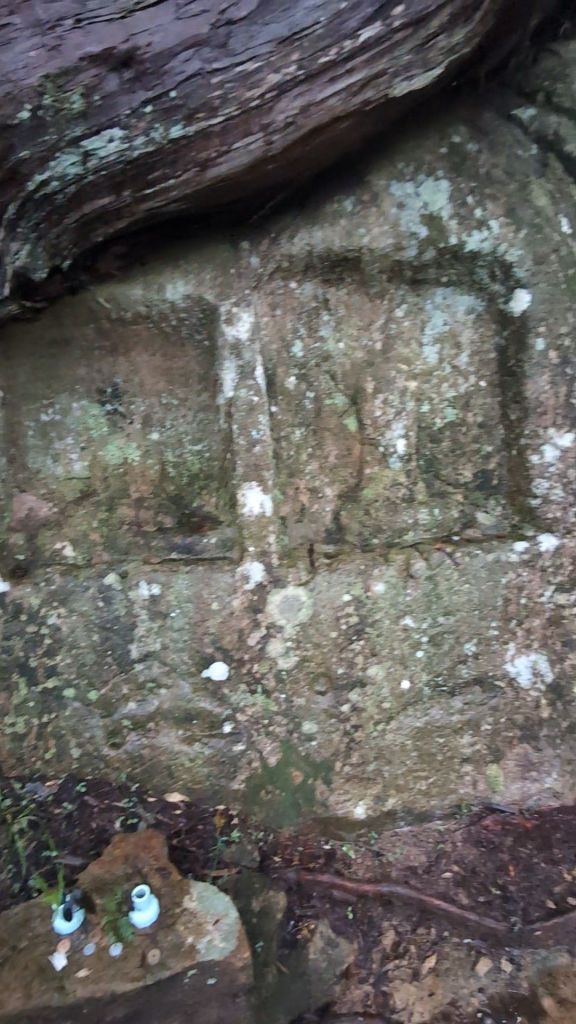
I love these legends that we have seen along the way, and this one was especially nice.
We then started to drop down towards Yunomine Onsen, occasionally catching the scent of sulphur in the air, and imagined that there must be a hot water spring somewhere near the trail.
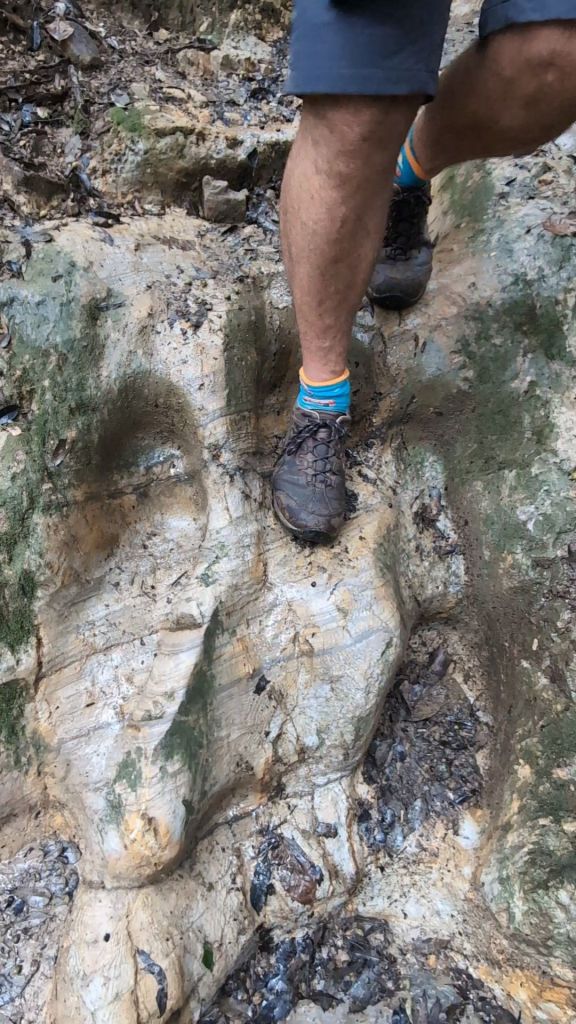
It was a steep walk down, but at times the trail was worn down by millions of footsteps, creating little steps in the bedrock. It was as if everyone who had walked, had done a little something to help those that followed. It was an incredible walk.
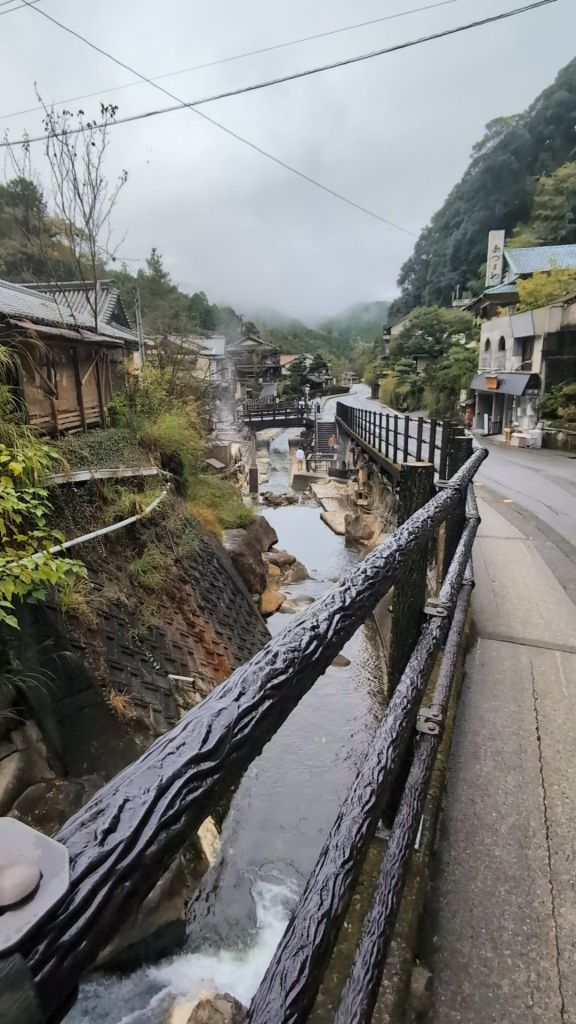
Arriving in Yunomine Onsen, the first thing that hit us was the smell of sulphur. There is no avoiding it, as you walk down the last part of the trail, into the village, where a hot-water sulphur infused stream runs straight through the centre.
Where the trail comes out is a little bath (Tsuboyu), where you can wait in a shed for it to become free and have a bath in the thermally heated waters, We arrived just after 9 and it was already in use, with another couple waiting. It is free to use, and is run on a first-come first-served basis and you can spend 30 minutes in it.
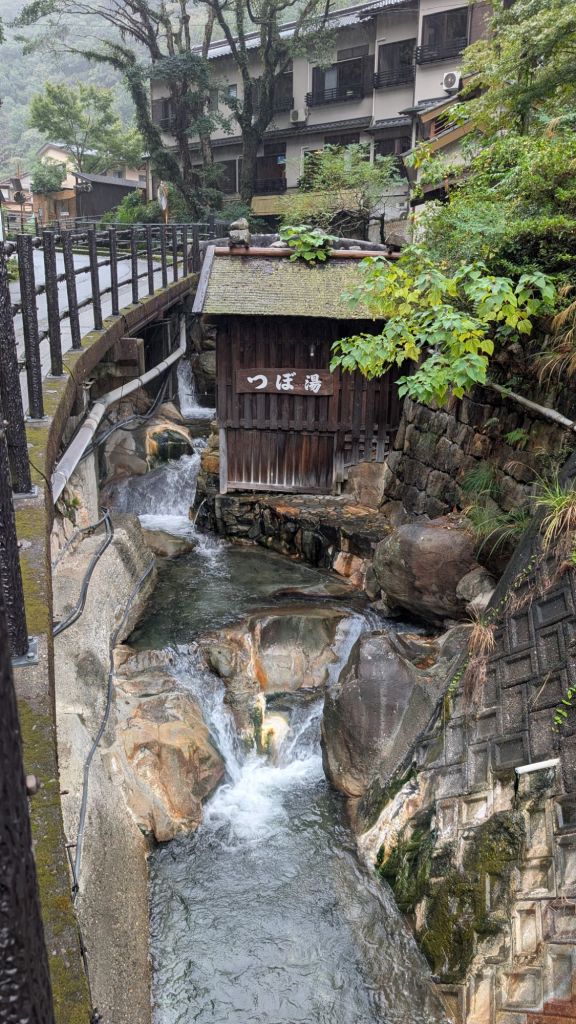
This isn’t any normal private bath though, but is the only UNESCO recognised Onsen in the world, and its story has inspired plays and religious texts too. The legend to this bath dates back many hundreds of years , when a famous military commander bathed there and was healed from an incurable disease, by the water. It is said that the water in the bath there changes colour 7 times each day, and historically bathing there became an important part of the pilgrimage to Hongu Taisha Shrine.
Yunomine Onsen itself, is a historic village and is believed to be the oldest onsen in Japan, with a history that can be dated back nearly 2000 years.
It is said that the village owes its healing waters to the Buddha of Healing, Yakushi Nyorai, which has a hole in its chest. The legend is that the healing waters flowed from his chest, and it is from this that the area was originally called Yunomune ‘Chest of Hot Water’. Over the years, it has changed to Yunomine.
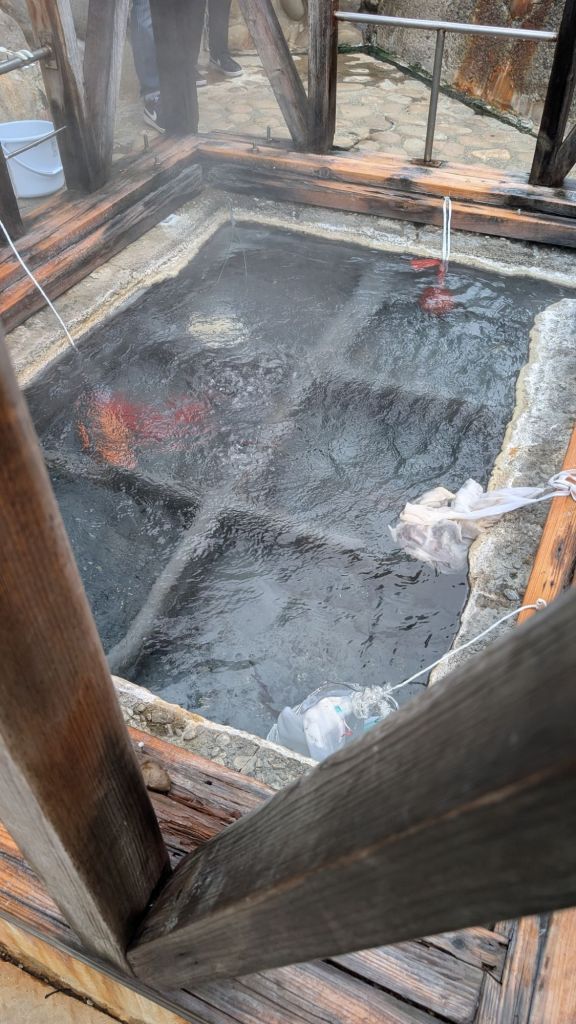
It is just one of several onsen towns in the area, but it was charming. The river was steaming in the morning air, and the open air cooking area in the centre of the village was already filled with eggs and vegetables, being cooked for the day ahead. The items are popped in bags, or nets, and left to cook in the boiling sulphurous water, until tender. The last time we saw the water being used like this was in New Zealand, many years ago, and it was good to see it again.
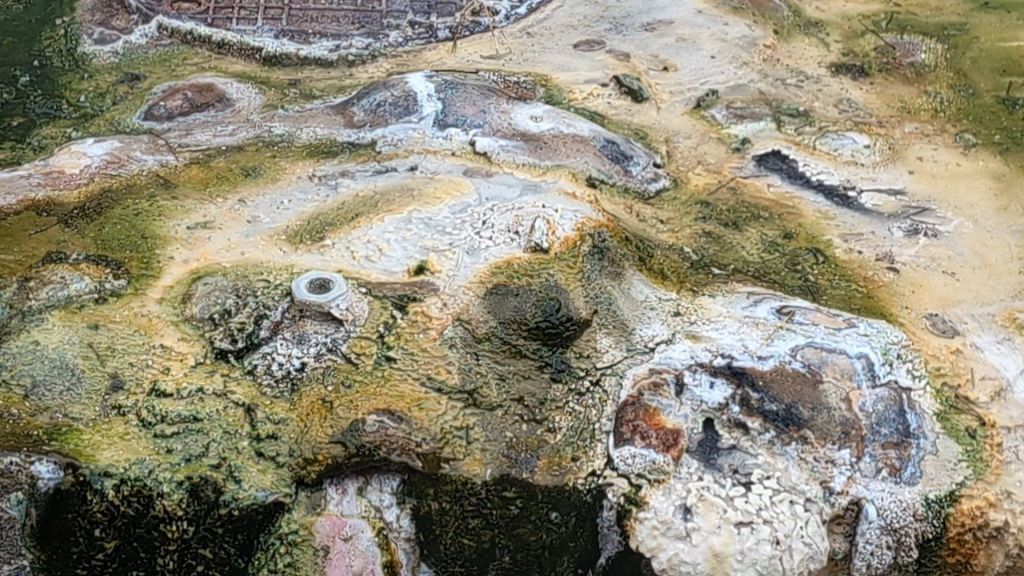
All along the river, the sulphur deposits are evident, with water even breaking through the surface of the path, and bubbling too.
There are pipes everywhere, taking the healing, precious water to the public bath house and inns that line the street.
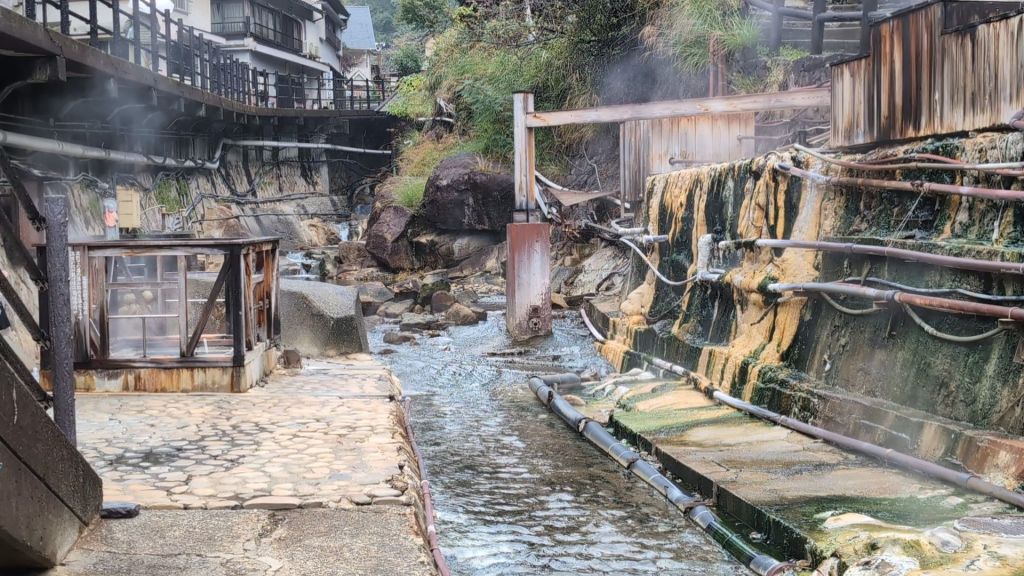
Truly a fascinating, and rather wonderful place to explore.
Eventually though, soggy with sweat, thanks to the humidity and rain, we ambled back, taking a back road round to Hongu, where we walked back under the Tori Gate, and back to the van.
You Can watch a video from today’s walk here
It was still early (well before 11), so after coffee, we headed on, revisiting the onsen we’d stopped at yesterday and having a shower & a soak, now much more aware of the history of the sulphurous, healing waters.
After a rather beautiful drive through the mountains (in pouring rain)
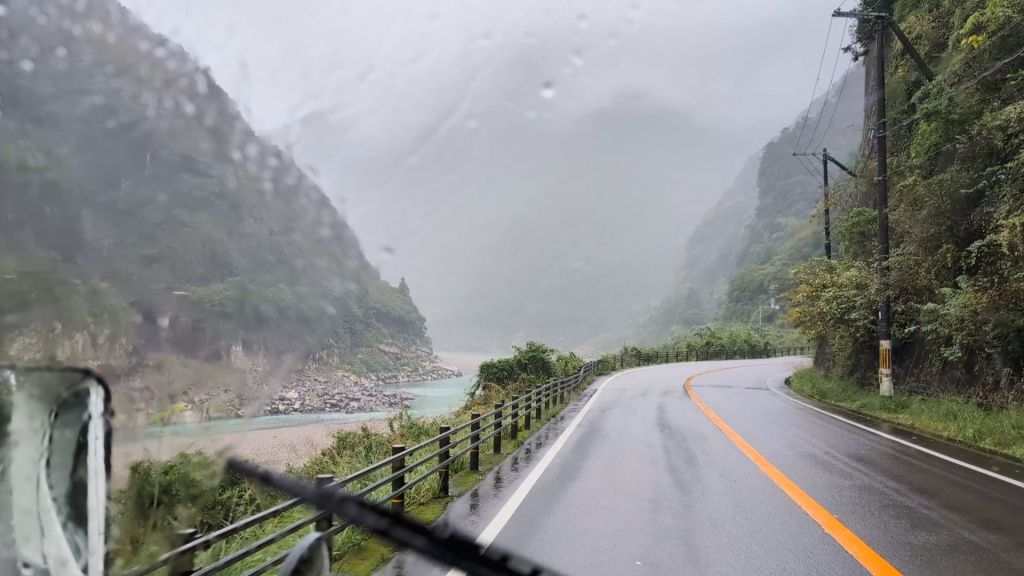
We’re now parked near the beach at Nachi and will head to the temple and waterfall there tomorrow.
Happily, the rain has now stopped and nature celebrated its passing with a beautiful rainbow, over the sea, as we took a walk along the beach, this afternoon.
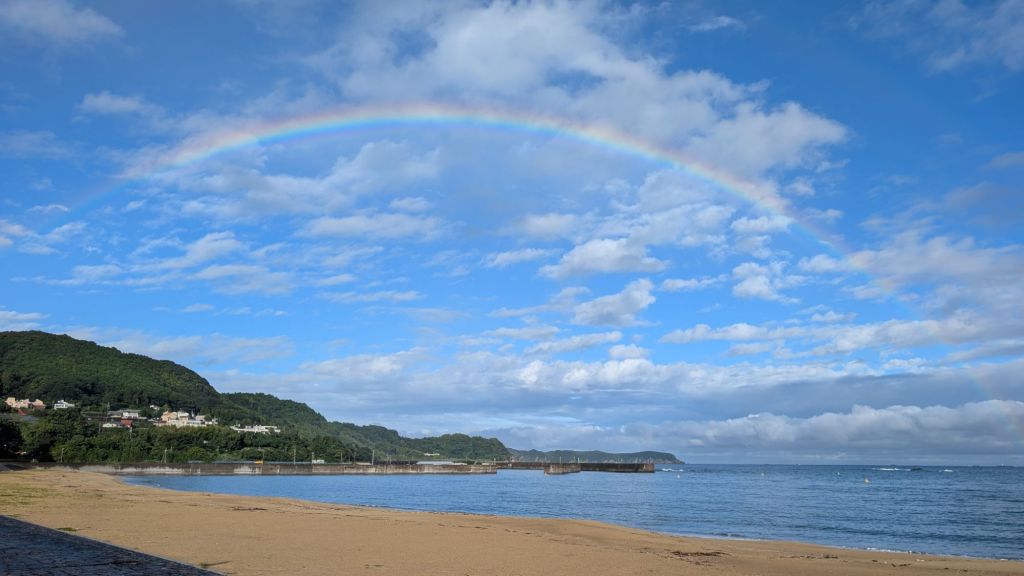
Yet another perfectly wonderful day on the Kii Peninsula, which really has grabbed a little piece of our hearts.
 Postcards from Provence and beyond
That beach looks gorgeous
LikeLiked by 1 person
Really beautiful… We’ve found so many lovely spots like this
LikeLiked by 1 person
I have been taking notes for our next trip to Japan, whenever that might be.
LikeLiked by 1 person
Oh wonderful, I must admit that we have loved every moment of our time here (apart from perhaps that hideous drive in Shikoku), it is such a beautiful country, especially off the well-beaten path
LikeLiked by 1 person
We’ve already done all the sights and want to focus on quieter spots next time.
LikeLiked by 1 person
It’s definitely worth it … I must admit the videos of the crowds in Kyoto and Osaka leave us cold, but rural Japan is stunning
LikeLiked by 1 person
Fortunately we visited there in 2007 when you could count the non-Asian faces on the fingers of one hand.
LikeLiked by 1 person
That must have been wonderful… We have avoided all the honey-pots and are really happy with that decision … The rural areas have been just delightful
LikeLiked by 1 person
It really was, we were most fortunate.
LikeLiked by 1 person
You really were
LikeLiked by 1 person